



































How Women Cybersecurity Pioneers Helped Build the Industry
Think about the cybersecurity industry today: a field dominated by cutting-edge technology, global threats, and constant innovation. Now imagine building that from scratch, often without recognition or resources. That is exactly what many women did, starting from the earliest days of computing. Women like Ada Lovelace, who wrote the first computer program in the 1840s, or Dorothy Denning, who pioneered intrusion detection in the 1980s, laid the foundations for everything from encryption to secure networks. Their contributions were not just technical; they brought fresh perspectives, resilience, and creativity to a male-dominated world. Yet, their stories are often overlooked in history books. In this blog post, we will explore how these pioneers shaped cybersecurity, breaking barriers and inspiring generations. Whether you are a beginner curious about the field or a pro looking to appreciate its roots, join me as we celebrate these remarkable women and their lasting impact.
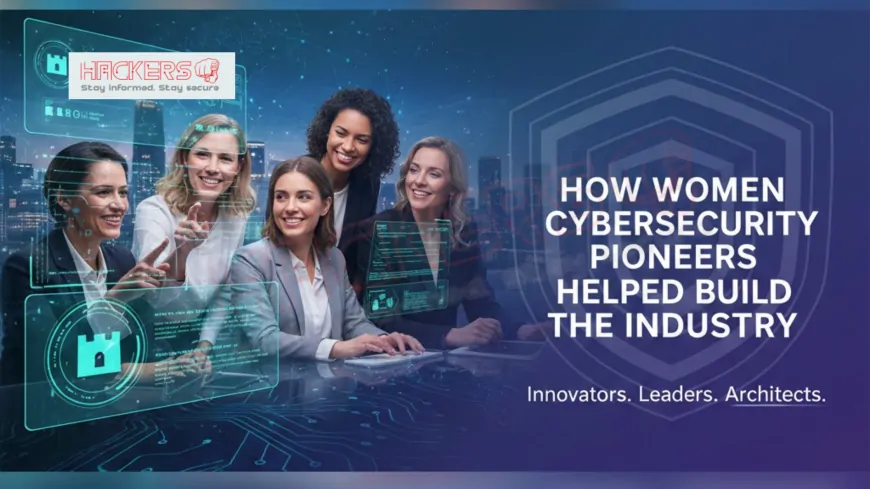
Table of Contents
- Early Computing Foundations: 19th and Early 20th Century
- World War II Codebreakers and Innovators
- Mid-20th Century Advances in Programming and Security
- The 1970s and 1980s: Building Modern Security Concepts
- 1990s and Beyond: Leading in Research and Policy
- Challenges Faced and Overcome
- Their Enduring Legacy in Today's Industry
- Key Women Pioneers and Their Contributions
- Conclusion
- FAQs
Early Computing Foundations: 19th and Early 20th Century
The roots of cybersecurity trace back to the birth of computing itself, and women were there from the start. Ada Lovelace, born in 1815, is often called the world's first programmer. She worked with Charles Babbage on his Analytical Engine, a mechanical computer that never got built. In 1843, Lovelace wrote notes on how the machine could calculate Bernoulli numbers, which is basically an algorithm. An algorithm is a set of instructions for solving a problem. Her work showed that computers could do more than just crunch numbers; they could manipulate symbols and data in complex ways. This idea is fundamental to modern cybersecurity, where algorithms power encryption, which scrambles data to keep it secret.
Lovelace's vision was ahead of her time. She saw potential risks in computing errors, emphasizing the need for accurate programming. Without her insights, the field might have developed slower. Beginners should note that cybersecurity builds on these basics: Understanding how systems work helps protect them.
Moving into the early 20th century, women like Edith Clarke made strides in electrical engineering, which ties into computing. Clarke, in 1919, became the first woman to earn a master's in electrical engineering from MIT. She invented a graphical calculator for power transmission lines, improving reliability. Reliability is key in cybersecurity, as unstable systems are easier to attack. Her work influenced secure infrastructure design.
These early pioneers set the stage. They showed women could excel in technical fields, paving the way for future generations. Their contributions were not always recognized, but they formed the bedrock of the industry.
World War II Codebreakers and Innovators
During World War II, women played crucial roles in cryptography, the art of writing or solving codes. At Bletchley Park in the UK, thousands of women worked on breaking enemy ciphers. Joan Clarke was one of the stars. Born in 1917, she joined in 1940 and helped crack the Enigma code used by Nazis. The Enigma machine encrypted messages, making them hard to read. Clarke's team developed techniques to decipher them faster, saving lives and shortening the war.
Clarke faced discrimination: She was paid less than men for the same work. Yet, her mathematical skills were unmatched. Her story highlights how women contributed to secure communications, a core of cybersecurity. Today, encryption protects our emails and bank transactions, echoing WWII efforts.
In the US, over 11,000 women were codebreakers during the war. They comprised more than 70% of the domestic workforce in this area. Their work on Japanese and German codes was vital. These women demonstrated that diverse teams solve complex problems better, a lesson still relevant in cybersecurity teams today.
Another innovator was Hedy Lamarr, an actress who co-invented frequency-hopping technology in 1942. This method switched radio frequencies to prevent jamming, used for torpedo guidance. It later became the basis for Wi-Fi and Bluetooth security. Lamarr's invention showed how creative thinking from outside tech can advance security. For beginners, frequency-hopping means changing channels quickly to avoid interception, like dodging eavesdroppers.
These WWII pioneers proved women's capabilities in high-stakes security work, influencing post-war developments.
Mid-20th Century Advances in Programming and Security
After the war, women continued to innovate. Grace Hopper, born in 1906, was a Navy rear admiral and computer scientist. In the 1950s, she developed the first compiler, a program that translates human-readable code into machine language. This made programming easier and more accessible. Hopper also helped create COBOL, a language still used in business and finance systems.
Hopper's work impacted cybersecurity by enabling complex software with built-in security features. She coined the term "bug" for computer errors, from a moth in a machine. Debugging, fixing errors, is essential in secure coding. Her legacy inspires women in tech, showing leadership in male-dominated fields.
Margaret Hamilton, born in 1936, led software development for NASA's Apollo program in the 1960s. Her team wrote code for the moon landing. Hamilton focused on error-proofing, creating robust systems that handled failures. This approach is vital in cybersecurity, where systems must withstand attacks.
During the Apollo 11 landing, her software prevented a crash by prioritizing tasks. This "asynchronous" processing influences modern secure systems. Hamilton's work showed software's life-saving potential, encouraging reliable designs.
Marie Van Brittan Brown, in 1966, invented the first home security system with CCTV. Born in 1922, she created a setup with cameras, monitors, and alarms. Patented in 1969, it laid groundwork for modern surveillance, key in physical cybersecurity.
These mid-century women bridged theory and practice, advancing secure technologies.
The 1970s and 1980s: Building Modern Security Concepts
As computers networked, new threats emerged. Elizabeth Feinler, born in 1931, managed ARPANET's directory in the 1970s at Stanford. She created the first WHOIS database for domain info. WHOIS helps track online identities, crucial for cybersecurity investigations.
Feinler suggested domain categories like .edu, organizing the internet. Her work enabled secure, structured networks. As a woman in a male field, she mentored others, promoting diversity.
Dorothy Denning, born in 1945, pioneered intrusion detection in the 1980s. Intrusion detection monitors systems for unauthorized access. At Purdue and Georgetown, she developed models to spot anomalies, like unusual logins.
Denning's 1987 paper on intrusion detection systems became foundational. She advised governments on policy, balancing security and privacy. Her books educated generations, making complex ideas accessible.
Rebecca Bace, known as the "Den Mother of Computer Security," advanced intrusion detection in the 1980s at the NSA. She led projects on network monitoring tools, influencing commercial products.
Bace mentored young professionals, especially women, and wrote key texts. Her work helped transition government tech to industry use.
1990s and Beyond: Leading in Research and Policy
In the 1990s, the internet boomed, and women led in research. Susan Landau, born in 1954, focused on cryptography and policy. At Sun Microsystems and later academia, she researched secure communications.
Landau testified on encryption, arguing against backdoors that weaken security. Her books on surveillance shaped policy debates. She advocates for privacy in digital age.
Shafi Goldwasser, born in 1958, advanced cryptography with zero-knowledge proofs. These allow proving knowledge without revealing it, used in secure voting and blockchain.
Goldwasser won the Turing Award in 2012, highest in computing. Her work at MIT influences AI security.
Modern pioneers like these continue breaking ground, ensuring diverse voices in cybersecurity.
Challenges Faced and Overcome
These women faced barriers: Discrimination, lower pay, lack of recognition. Clarke was underpaid; Lamarr's invention ignored initially due to her fame as actress.
They overcame through persistence and excellence. Hopper advanced despite gender biases. Denning built departments in male fields.
Their resilience inspires. Today, efforts promote women in cybersecurity, but work remains for equality.
Their Enduring Legacy in Today's Industry
These pioneers' work lives on. Lovelace's algorithms in modern code; Hopper's compilers in software; Denning's detection in firewalls.
They diversified the field, showing innovation from varied backgrounds. Current leaders cite them as inspiration. In 2025, with rising threats, their foundations keep us safe.
Key Women Pioneers and Their Contributions
| Name | Year Active | Contribution |
|---|---|---|
| Ada Lovelace | 1840s | First algorithm for computing machines. |
| Joan Clarke | 1940s | Cracked Enigma codes during WWII. |
| Hedy Lamarr | 1940s | Frequency-hopping for secure radio. |
| Grace Hopper | 1950s-1980s | First compiler and COBOL language. |
| Margaret Hamilton | 1960s | Apollo mission software. |
| Marie Van Brittan Brown | 1960s | First home security system with CCTV. |
| Elizabeth Feinler | 1970s | ARPANET directory and WHOIS. |
| Dorothy Denning | 1980s-present | Intrusion detection systems. |
| Rebecca Bace | 1980s-2000s | Network monitoring tools. |
| Susan Landau | 1990s-present | Cryptography policy and research. |
Conclusion
Women pioneers in cybersecurity have been instrumental in building the industry from its earliest days. From Ada Lovelace's algorithms to Dorothy Denning's detection systems, their innovations have shaped how we protect data today. Despite challenges like discrimination, they persevered, contributing to encryption, secure software, and policy. Their legacy inspires diversity and innovation in the field. As cybersecurity evolves, remembering these women reminds us that progress comes from inclusive efforts. Their work ensures a safer digital world for all.
Who was the first woman in computing?
Ada Lovelace, who wrote the first algorithm in the 1840s.
What did Joan Clarke do during WWII?
She helped crack the Enigma code at Bletchley Park.
How did Hedy Lamarr contribute to security?
She co-invented frequency-hopping for secure radio communications.
What is Grace Hopper famous for?
Developing the first compiler and COBOL programming language.
Who invented the home security system?
Marie Van Brittan Brown, with CCTV in 1966.
What role did Margaret Hamilton play in NASA?
She led software development for the Apollo moon landing.
What did Elizabeth Feinler create?
The first ARPANET directory and WHOIS database.
Who pioneered intrusion detection?
Dorothy Denning in the 1980s.
What was Rebecca Bace's contribution?
She advanced network monitoring tools at the NSA.
How does Susan Landau influence cybersecurity?
Through research on cryptography and policy advocacy.
Were women involved in WWII codebreaking?
Yes, over 11,000 women in the US alone.
What challenges did these women face?
Discrimination, lower pay, and lack of recognition.
Is Ada Lovelace considered a cybersecurity pioneer?
Yes, her work laid foundations for secure programming.
How did Grace Hopper impact modern tech?
Her compiler made programming more accessible and secure.
What is frequency-hopping used for today?
In Wi-Fi and Bluetooth for secure connections.
Did Margaret Hamilton's software save lives?
Yes, it prevented a crash during Apollo 11.
Why is WHOIS important in cybersecurity?
It helps track domain owners for investigations.
What makes Dorothy Denning's work foundational?
Her models detect unauthorized access.
How did Rebecca Bace mentor others?
She guided young professionals, especially women.
What does Susan Landau advocate against?
Encryption backdoors that weaken security.
What's Your Reaction?