










How Do Cybercriminals Use Dark Web Marketplaces to Sell Stolen Data in 2025?
Imagine going to a store where everything is stolen, yet it runs like a normal online shop. There are product photos, customer reviews, bulk discounts, live chat support, and even a refund policy. That store exists today, and it is not hidden in some back alley. It lives on the dark web, a part of the internet most people never see. Every day, millions of stolen credit cards, passwords, medical records, and even full identities are bought and sold there with the same ease as buying a phone charger on a regular website. This post will walk you through exactly how this underground economy works, who participates, how they stay anonymous, and what it means for the rest of us.
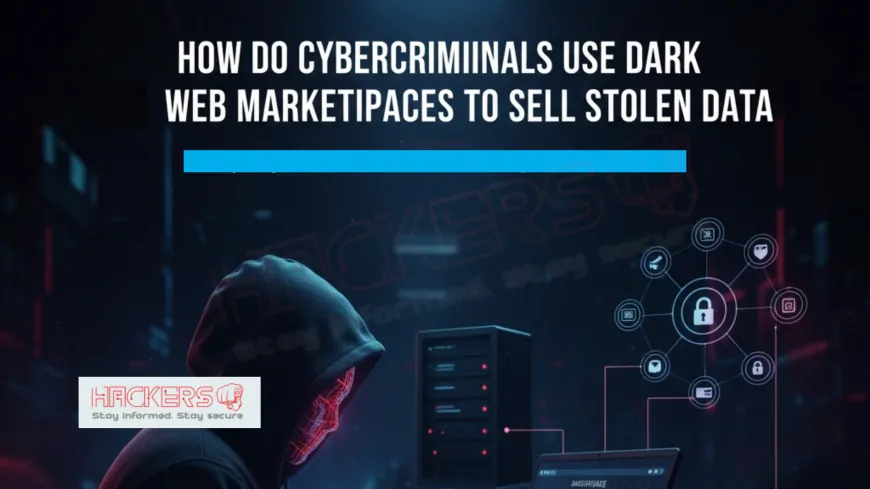
Table of Contents
- What Are Dark Web Marketplaces?
- How Is Stolen Data Obtained?
- How Listings Are Created and Priced
- Payment Methods That Protect Criminals
- Reputation Systems and Trust
- Common Categories of Stolen Data
- Who Buys and Who Sells?
- How Buyers Turn Data Into Cash
- Why Law Enforcement Struggles
- How to Protect Yourself and Your Organization
- Real-World Case Studies from 2024–2025
- Conclusion: The Market Is Not Going Away
What Are Dark Web Marketplaces?
The dark web is the hidden part of the internet that regular search engines cannot index. You reach it using special software, most commonly the Tor browser, which hides your location by routing your connection through multiple volunteer computers around the world.
Dark web marketplaces are websites that operate only on this hidden network. They look and function very much like eBay or Amazon, but everything sold is illegal: drugs, weapons, counterfeit money, hacking tools, and stolen personal data. The biggest ones have hundreds of thousands of daily visitors and generate millions of dollars in sales each month.
How Is Stolen Data Obtained?
Criminals rarely steal data themselves and then sell it on the same day. The process is highly specialized.
- Initial access brokers hack companies and steal raw databases.
- They sell the raw data to middlemen who clean and sort it.
- Some groups use phishing kits or malware to collect credentials directly from victims.
- Insiders at companies sometimes sell access or data directly.
Think of it like fishing: one group catches the fish, another cleans them, and a third sells them at the market.
How Listings Are Created and Priced
When a seller gets a new batch of data, they create a detailed listing. They include samples (a few lines of real data), freshness date, country of origin, and a validity guarantee. Prices are set by supply and demand, just like any normal market.
Data from wealthy countries costs more. Fresh data (less than a week old) costs significantly more than old data. High-balance bank accounts or corporate credentials are priced individually, not in bulk.
Payment Methods That Protect Criminals
Bitcoin was popular years ago, but today most serious markets use Monero, a cryptocurrency designed to be completely private. Even the sender and receiver addresses are hidden.
Many markets also use an escrow system: the buyer’s money is held by the marketplace until the buyer confirms the data works. This protects both sides from simple scams.
Reputation Systems and Trust
Surprisingly, trust is everything on the dark web. Top sellers have thousands of five-star reviews and years of history. New sellers must offer heavy discounts or free samples to build credibility.
Marketplaces have moderators who settle disputes. If a seller repeatedly delivers bad data, they are banned and lose their deposit. This creates a strange but effective honor system among thieves.
Common Categories of Stolen Data
Not all stolen information is equal. Here are the most popular items in 2025:
| Data Type | Typical Price Range | Common Buyer Use Case |
|---|---|---|
| Credit card number + CVV + expiry | $5 – $30 per card | Online shopping fraud, gift card purchases |
| Full identity package (“fullz”) with SSN/DOB | $25 – $120 per person | Tax refund fraud, loan applications, new accounts |
| Corporate VPN or RDP access | $500 – $20,000 per account | Ransomware deployment, internal theft |
| Hacked PayPal or bank login with balance | 10–40% of available balance | Direct cash withdrawal or transfers |
| Selfie holding ID document | $40 – $150 per set | Bypassing bank or crypto KYC checks |
Who Buys and Who Sells?
Sellers are often organized groups from Eastern Europe, Russia, or Southeast Asia. Many operate as real businesses with employees, shifts, and customer support teams.
Buyers range from teenagers running small credit-card scams to sophisticated ransomware gangs looking for corporate access. Some are “cash-out” specialists who only buy high-balance accounts and quickly empty them.
How Buyers Turn Data Into Cash
Most stolen data is not used by the person who bought it on the dark web. Instead, it enters a chain:
- Credit cards are used to buy gift cards or electronics that are resold.
- Full identities are used to file fake tax refunds or open new lines of credit.
- Corporate access is sold to ransomware groups who encrypt the company and demand payment.
- Bank logins are drained within hours using money mules.
Each step takes a cut, and the money is usually laundered through cryptocurrency tumblers or fake online stores.
Why Law Enforcement Struggles
Shutting down one marketplace rarely helps for long. When a site is seized, its users simply move to the next one within days. The operators use bulletproof hosting in countries that ignore international requests.
Tracing Monero payments is extremely difficult, and many operators never touch traditional banking systems. Arrests do happen, but they usually target lower-level members, not the real owners.
How to Protect Yourself and Your Organization
The best defense is to make your data worthless to criminals:
- Use strong, unique passwords and a password manager.
- Enable two-factor authentication everywhere, preferably with an app or hardware key.
- Freeze your credit with all three major bureaus.
- Monitor your accounts daily and set up alerts.
- For businesses: enforce MFA on all corporate accounts, segment networks, and train employees to spot phishing.
Real-World Case Studies from 2024–2025
In April 2025, the National Public Data breach exposed 2.9 billion records. Within nine days, complete identity packages from that breach were being sold in bulk for $12 each.
The AT&T customer database from early 2025 appeared on dark web forums within 48 hours, priced according to the customer’s spending tier. High-value accounts with international roaming were sold individually for up to $800.
A major European airline’s frequent-flyer database was auctioned in October 2025. Criminals used the miles to book first-class tickets that were resold for cash.“These markets have become so efficient that the limiting factor is no longer finding buyers. It is finding fresh data that hasn’t been burned yet.”
Senior analyst at a threat intelligence firm, 2025
Conclusion: The Market Is Not Going Away
The dark web stolen-data economy is a mature, resilient industry that adapts faster than most legitimate businesses. Your personal information is almost certainly already for sale somewhere, often for less than the cost of a pizza.
We cannot stop the market completely, but we can make ourselves terrible customers. Every time you enable two-factor authentication, freeze your credit, or use a password manager, you turn your data from easy profit into wasted inventory.
The criminals will always chase the path of least resistance. Make sure that path does not lead to you.
Frequently Asked Queston
What exactly is the dark web?
It is the part of the internet hidden from normal search engines and only accessible with special software like Tor.
Is visiting dark web marketplaces illegal?
No, visiting is legal in most countries. Buying or selling stolen goods is illegal.
How much is a stolen credit card worth?
Usually between $5 and $30, depending on the limit and country.
Why is stolen data so cheap?
There is an enormous supply from constant large breaches.
Do dark web markets ever get shut down?
Yes, but new ones replace them within days or weeks.
What currency do they use?
Mostly Monero now, because it is much harder to trace than Bitcoin.
Do sellers offer refunds?
Many do, if a large percentage of the data turns out to be invalid.
What does “fullz” mean?
Complete personal information needed to impersonate someone: name, address, SSN, date of birth, etc.
How quickly does new breach data appear for sale?
Often within hours or days of the breach becoming known.
Why do criminals sell data instead of using it themselves?
Specialization increases profit and reduces risk for each participant.
Can police trace Monero payments?
It is extremely difficult and rarely successful.
Can I pay someone to remove my data from the dark web?
No reputable service can do this. Most offers are scams.
Are corporate accounts more valuable?
Yes, a single working VPN login can sell for thousands of dollars.
How do buyers test the data?
Sellers provide free samples and automated checkers for validity.
Do these markets have customer support?
Many have 24/7 support via encrypted chat.
What is the most expensive type of data?
Access to large corporate networks or high-net-worth bank accounts.
Why are selfies with IDs sold?
To pass identity verification when opening new financial accounts.
Has any marketplace stayed online for years?
Yes, several have operated continuously for over five years despite takedown attempts.
Should I be worried if my email appears in a breach?
Yes, change the password immediately and enable two-factor authentication.
What is the single best thing I can do to protect myself?
Use two-factor authentication on every important account, especially email and banking.
What's Your Reaction?