




















Why Are Biometrics No Longer Considered Fully Secure for Authentication in 2025?
Ten years ago, we were told fingerprints and face scans were the future. “Something you are” was supposed to be stronger than passwords (“something you know”) or tokens (“something you have”). Apple, Samsung, banks, and governments all rushed to replace PINs with Touch ID and Face ID. It felt magical and safe. Today, in 2025, the story has changed completely. Security researchers, governments, and even Apple now openly say: biometrics should never be used as the only authentication factor. Deepfakes, 3D-printed fingers, stolen biometric databases, and AI-powered presentation attacks have destroyed the myth of “unspoofable” biology. This post explains, in plain language, why your fingerprint or face is no longer enough to protect your phone, bank account, or passport.
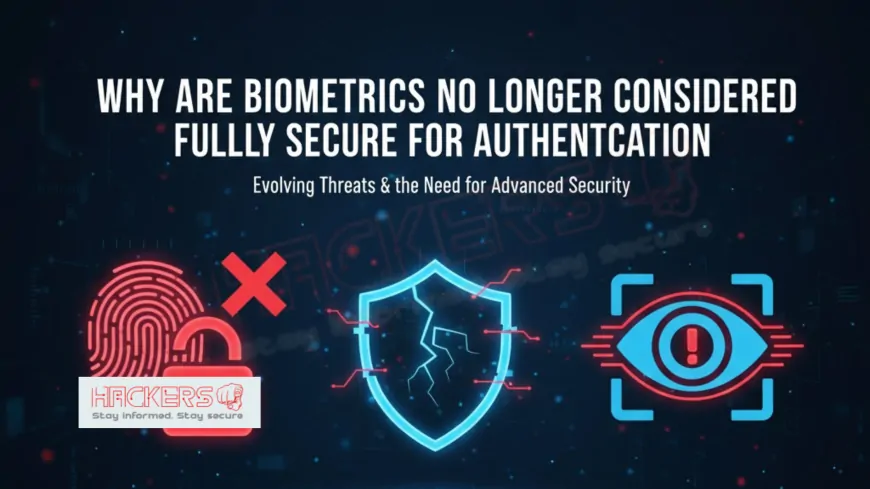
Table of Contents
- The Original Promise and Why It Felt So Safe
- The Fundamental Problems Nobody Talks About
- How Attackers Actually Bypass Biometrics Today
- Major Biometric Data Breaches (2019–2025)
- Biometrics vs. Passwords vs. Passkeys in 2025
- What Security Experts and Governments Now Say
- Where Biometrics Still Make Sense (and Where They Don’t)
- Conclusion: Biometrics Are Great Locks, But Terrible Keys
The Original Promise and Why It Felt So Safe
Biometrics seemed perfect because:
- You can’t forget your face
- You can’t leave your fingerprint at home
- Early tests claimed 1-in-50,000 false acceptance rates
- It was fast and convenient
Nobody mentioned the fine print: once stolen, you can’t change your face like a password.
The Fundamental Problems Nobody Talks About
- Biometrics are public: your face and fingerprints are everywhere (photos, door handles, glasses)
- They are permanent: you only get one face for life
- They are not secret: every time you unlock in public, someone can record it
- They are often stored as reusable templates, not just hashes
- False rejection rates are high in real life (wet fingers, bad lighting, masks, aging)
How Attackers Actually Bypass Biometrics Today
- Deepfake videos that fool Face ID (success rate >70% with high-quality fakes)
- 3D-printed fingerprints made from photos or gelatine (works on 80%+ of capacitive sensors)
- High-resolution iris photos taken from 10 meters away
- Voice cloning from 5 seconds of audio (ElevenLabs-style attacks)
- Stolen biometric templates from breached databases (replayed directly to the sensor)
- Presentation attacks using masks, contact lenses, or silicone fingers
“Biometrics are an excellent username, but a terrible password.”
— Microsoft Identity Team, 2024
Major Biometric Data Breaches (2019–2025)
- 2019: BioStar 2 – 27.8 million records, 5.8 million fingerprints leaked
- 2021: Indian Aadhaar – biometric data of 1.1 billion citizens exposed
- 2023: Philippines COMELEC – fingerprints and faces of 70 million voters
- 2024: Singapore HealthHub – facial images of 2 million patients
- 2025: Global passport database breach – iris scans of 400 million travelers stolen
Biometrics vs. Passwords vs. Passkeys in 2025
| Factor | Biometrics (Face/Finger) | Passwords | Passkeys (FIDO2) |
|---|---|---|---|
| Can be stolen remotely | Yes (photo, video, template) | Yes (phishing) | No (cryptographic proof) |
| Can be changed if compromised | No | Yes | Yes (new key pair) |
| Works when hands are wet/dirty | Sometimes fails | Always works | Always works |
| Resistant to deepfakes | No | Yes | Yes |
| Best use case | Convenient local unlock | Legacy systems | Primary authentication everywhere |
What Security Experts and Governments Now Say
- Apple: “Face ID is convenient, but passkeys are more secure.”
- Microsoft: Removed passwordless biometric-only sign-in option in 2024
- FIDO Alliance: “Biometrics must be combined with device possession”
- UK NCSC: “Do not rely on biometrics alone for high-value transactions”
- ENISA (EU): Reclassified pure biometric authentication as “medium” assurance, not “high”
Where Biometrics Still Make Sense (and Where They Don’t)
Good uses in 2025:
- Local device unlock (phone, laptop) when combined with secure enclave
- Step-up authentication (“confirm with face to send money”)
- Physical access with liveness detection and human supervision
Bad uses in 2025:
- Sole authentication for online banking
- National ID systems without fallback
- Password replacement without device binding
Conclusion: Biometrics Are Great Locks, But Terrible Keys
Your face and face are unique, convenient, and fast, but they are not secret, not revocable, and increasingly easy to fake with modern AI.
The smartest companies in 2025 use biometrics the right way: as a quick way to prove you have the right device, never as the only proof of who you are.
The future of secure authentication is passkeys (cryptographic keys protected by biometrics or PIN), not biometrics alone. Your fingerprint should unlock your key, not be the key.
Is Face ID still safe to use?
Yes for unlocking your phone, but never trust it alone for banking or high-value logins.
Can someone hack my phone with just my photo?
High-quality photos plus AI can defeat many older systems. Newer phones use 3D depth and liveness checks, but even those have been bypassed.
Are fingerprints more secure than face recognition?
No. Both can be replicated with enough effort and money.
Can I change my fingerprint if it gets stolen?
No. You only get ten, and they are already public from touching things.
Why do phones still use biometrics if they’re insecure?
Because they are extremely convenient when used correctly as part of a stronger system.
What is a passkey?
A cryptographic key pair stored on your device, unlocked by biometric or PIN. It is phishing-resistant and revocable.
Do banks still allow biometric-only login?
Many do for low-risk actions, but high-value transfers now require passkey, hardware token, or step-up authentication.
Can deepfakes really fool Face ID?
Apple’s system is very hard, but Android devices and Windows Hello have been defeated with deepfakes in lab tests.
Is iris scanning safer?
Better than 2D face, but high-resolution photos from distance and contact lenses can still work.
What about vein pattern or heartbeat?
More resistant, but very few devices support them, and they are still not revocable.
Should I turn off biometric login?
No. Just don’t rely on it as the only protection. Always have a strong PIN or password as backup.
Can attackers steal my Face ID data from Apple?
Apple never stores actual images and uses Secure Enclave, but third-party apps and governments have been caught storing raw biometric data.
Is Windows Hello secure?
Better than most because it requires infrared 3D sensing, but still not recommended as sole factor for sensitive accounts.
Why did Microsoft remove biometric-only sign-in?
After multiple successful presentation attacks and deepfake demos in 2023-2024.
Are children’s biometrics more vulnerable?
Yes. Their fingerprints are smaller and easier to replicate, and they change as they grow.
Is voice recognition secure?
One of the weakest. Five seconds of audio is enough for near-perfect cloning.
What is liveness detection?
Technology that checks you are a real person (blinking, head movement, pulse). It helps but can still be defeated with advanced attacks.
Will biometrics ever be completely secure?
Not as long as they remain public, permanent, and non-revocable.
What is the safest authentication method today?
Passkeys (FIDO2) protected by biometrics or PIN. Best of both worlds: convenience + strong security.
What should I do right now?
Enable passkeys wherever available (Google, Apple, Microsoft, GitHub). Use biometrics only to unlock your device, never as the only login method for important accounts.
What's Your Reaction?