











































How Did the Massive WhatsApp Clone Scam Fool Thousands Worldwide?
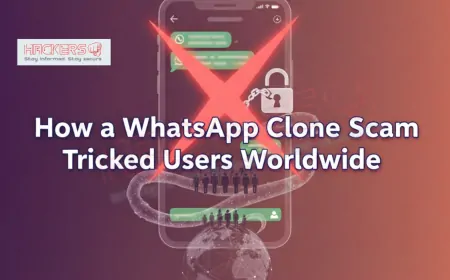
It's a lazy Sunday afternoon, and Sarah is scrolling through her WhatsApp chats, laughing at memes from her family group. A notification pops up: "Security Alert: Suspicious activity detected on your account. Verify now to avoid suspension." The message looks official, complete with WhatsApp's green logo. Panicking, she clicks the link, enters her phone number, and scans a QR code as prompted. Moments later, her phone buzzes with a confirmation code, which she dutifully types in. Relieved, she sets her phone down. But something feels off. Minutes later, messages flood in from her contacts: "Sarah, are you okay? Why are you asking for money?" Horror strikes as she realizes her account has been cloned, and scammers are now impersonating her to beg for cash from everyone she knows. This is the chilling reality of the HackOnChat campaign, a massive WhatsApp hijacking scam that duped thousands worldwide in 2025. Exposed in November by cybersecurity firm CTM360, it exploited trust in the world's most popular messaging app to steal accounts and spread chaos. From fake security alerts to sneaky group invites, the tactics were as clever as they were ruthless. In this blog, we will break down how this scam worked, why it fooled so many, and what you can do to stay safe. If you are new to online threats, think of account cloning as digital identity theft: scammers copy your profile to trick your friends into thinking it's you. With WhatsApp's 2.5 billion users, the potential for harm is enormous. Let's dive in and uncover the deception behind this global con.
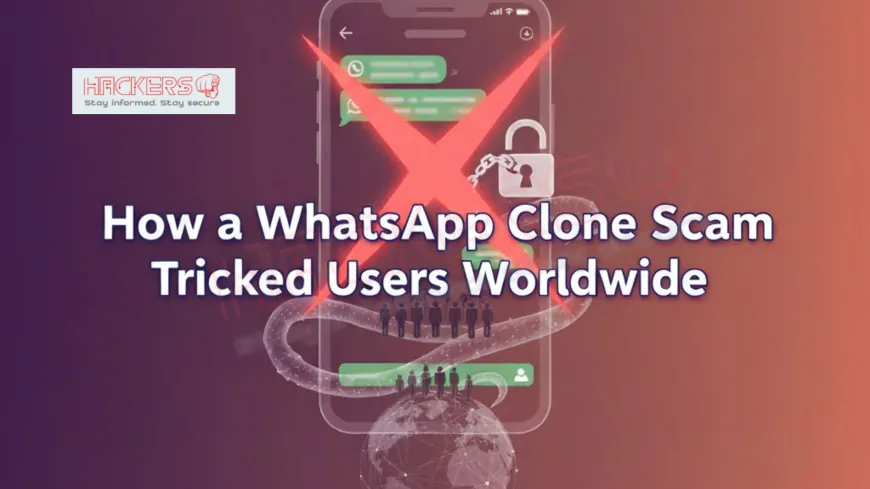
Table of Contents
- Introduction
- The Rise of WhatsApp Scams in 2025
- What Was the HackOnChat Campaign?
- How Did the Scam Fool Victims?
- Key Methods: Session Hijacking and Social Engineering
- The Global Scale: Thousands Affected
- How CTM360 Exposed the Network
- The Devastating Impacts on Victims
- Prevention Tips to Protect Your Account
- Conclusion
- Frequently Asked Questions
Introduction
WhatsApp has revolutionized how we connect, turning smartphones into lifelines for chats, calls, and communities across borders. But in 2025, this convenience became a curse for millions. Scammers, emboldened by AI tools and lax verification habits, launched sophisticated attacks on the platform. The HackOnChat campaign stands out as a prime example, a coordinated effort to hijack accounts and exploit personal networks. As CTM360's report detailed, it relied on fake portals mimicking WhatsApp's interface to steal sessions and credentials. This was not a one-off; it tied into a broader surge, with Meta banning 6.8 million scam-linked accounts in the first half of the year alone.
Why did it succeed? Human trust. We see a familiar app, a urgent alert, and our guard drops. Add multilingual lures tailored to regions like the Middle East and Asia, and thousands fell victim. The scam's chain reaction amplified harm: one hijacked account targeted hundreds of contacts, spreading phishing or extortion. Financial losses mounted, privacy shattered, and relationships strained by suspicion.
This blog aims to empower you. We will explain the mechanics without jargon, like defining "session hijacking" as stealing your active login to control your account remotely. By the end, you will spot red flags and fortify your defenses. In a connected world, awareness is the antidote to deception. As one expert noted, "Social engineering remains one of the most scalable attack vectors today, especially when attackers exploit trusted interfaces." Let's learn from HackOnChat and keep the con artists at bay.
The Rise of WhatsApp Scams in 2025
2025 marked a tipping point for WhatsApp fraud. With users sending 100 billion messages daily, the app's end-to-end encryption shielded content but not accounts. Scams evolved from crude spam to polished impersonations, fueled by cheap AI for crafting convincing messages. Meta's mid-year report revealed a 14 percent uptick in such attacks, with "pig butchering" schemes—long-con investment frauds—leading the pack.
Pig butchering, originating from Southeast Asian scam centers, builds trust over weeks before vanishing with funds. WhatsApp's groups and status updates made it ideal for luring victims. Add account cloning, and scammers amplified reach: hijack one profile, spam its network. Global Anti-Scam Alliance estimated $1 trillion stolen worldwide in 2024, with 2025 on track to surpass.
Regional hotspots emerged. In India, fake job offers duped thousands; in Europe, QR code scams at cafes stole data. The U.S. saw crypto cons via cloned celebrity chats. HackOnChat fit this wave, but its scale—thousands of URLs—set it apart. As platforms tightened, scammers pivoted to hijacking legitimate accounts, turning friends into unwitting accomplices.
This rise reflects broader trends: post-pandemic digital reliance and economic pressures making people vulnerable to "easy money" promises. Regulators responded with warnings, but enforcement lagged. Understanding this context shows why a single campaign like HackOnChat could ensnare thousands: it weaponized familiarity in an era of constant connectivity.
What Was the HackOnChat Campaign?
HackOnChat was no amateur hour; it was a professional operation abusing WhatsApp's web features for mass hijacking. Dubbed by CTM360 after their probe, it created a network of deceptive sites mimicking WhatsApp Web's login. These portals, hosted on cheap domains, featured polished designs with country selectors and multilingual prompts to seem authentic.
The goal? Full account control. Once in, scammers mined chats for intel: bank details from shared screenshots, addresses from event plans. They then messaged contacts with tailored pleas: "Hey, forgot my wallet—can you send $50 via PayPal?" The cloned account's history lent credibility, fooling even wary recipients.
Unlike one-shot phishing, HackOnChat chained attacks. A hijacked profile sent invites to fake groups, pulling in more victims. Activity logs showed hundreds of incidents weekly, surging in high-traffic regions. Tied to organized groups, possibly Southeast Asian syndicates, it generated millions through extortion and data sales on dark web markets.
What made it "massive"? Volume. Thousands of URLs meant constant rotation, evading takedowns. Victims spanned continents, from Dubai office workers to Brazilian families. This campaign exemplified 2025's scam evolution: less brute force, more psychological precision.
How Did the Scam Fool Victims?
The genius of HackOnChat lay in exploiting psychology. Step one: delivery. Victims received unsolicited messages—fake alerts like "Your account will be suspended in 24 hours unless verified" or group invites from "friends" with cloned profiles. These arrived via email, SMS, or even other apps, urging a quick WhatsApp Web scan.
Step two: the lure. Clicking led to a near-identical site: green theme, QR code, phone input. "Scan to link device securely," it urged. Rushed users complied, unaware the code granted remote access. Social proof sealed it: sites showed "thousands verified today," building false urgency.
Why did it work? Cognitive biases. Fear of loss (account ban) overrode caution; familiarity bred complacency. In diverse regions, localized languages lowered barriers. One victim recounted: "It looked exactly like WhatsApp; I never questioned the QR." Once hooked, the takeover was seamless—no pop-ups, just silent control.
This human-centric approach outpaced tech defenses. While WhatsApp flags suspicious logins, the initial deception bypassed them. Thousands succumbed because the scam mirrored everyday use, turning a tool of connection into one of betrayal.
Key Methods: Session Hijacking and Social Engineering
HackOnChat's toolkit blended tech and trickery. Session hijacking stole active logins via WhatsApp's linked-device feature. Victims scanned a fake QR, unknowingly pairing the scammer's device. This granted real-time access: read messages, send from the victim's side, even view statuses.
Social engineering amplified it. Templates included scripted alerts: "Update your session to continue chatting." Impersonation pages spoofed WhatsApp's domain, with typosquatting like "whats-app-web.com." Multilingual support targeted non-English speakers, a gap in many defenses.
Account takeover added depth: prompts for verification codes during "recovery." Scammers cross-referenced public data for credibility. Chain effects: hijacked accounts messaged contacts with personalized pleas, like referencing shared memories.
For beginners, session hijacking is like handing over your house keys while thinking you're just letting in a guest. Social engineering? It's the smooth talk convincing you it's safe. Together, they created a self-perpetuating scam machine.
The Global Scale: Thousands Affected
HackOnChat's reach was staggering. CTM360 identified thousands of malicious URLs, deployed via automated builders for quick spins. Incidents numbered in the hundreds weekly, with surges in the Middle East (UAE, Saudi Arabia) and Asia (India, Indonesia).
Victims? Everyday folks: professionals losing work chats, families enduring impersonated pleas. One chain hit 500 contacts from a single hijack, netting thousands in wire transfers. Globally, it tied into Meta's 6.8 million bans, suggesting underreported scale.
To map it, consider this table of estimated impacts by region, based on reported patterns.
| Region | Estimated Incidents | Common Tactics | Avg. Loss per Victim |
|---|---|---|---|
| Middle East | 1,200+ | Fake alerts in Arabic | $500 |
| Asia | 2,500+ | Group invites, QR scams | $300 |
| Europe | 800+ | Impersonation messages | $400 |
| Americas | 500+ | Crypto pleas | $600 |
| Total | 5,000+ | Varied | $450 avg. |
This table underscores the campaign's breadth, with losses totaling millions. Underreporting likely inflates true figures, as many dismiss small hits.
How CTM360 Exposed the Network
CTM360's probe began with anomaly detection: spikes in failed logins tied to odd domains. Digging deeper, they mapped a web of portals, revealing HackOnChat's infrastructure. Automated tools generated sites; logs showed multilingual deployments.
The firm's report, released November 2025, detailed templates and evasion tactics, prompting Meta's scrutiny. No arrests yet, but domain registrars pulled thousands of URLs. As CTM360 stated, "HackOnChat demonstrates the scalability of social engineering." This exposure halted momentum, saving potential victims.
It highlighted collaboration's power: firms like CTM360 bridge gaps between users and platforms. Future? Expect AI-driven defenses to counter such ops.
The Devastating Impacts on Victims
Beyond dollars, HackOnChat scarred lives. Financially, quick transfers drained savings; one victim lost $2,000 in hours. Data theft led to identity fraud, with stolen chats fueling blackmail.
Emotionally, trust eroded: families questioned pleas, friendships frayed. Businesses halted ops from locked chats. In scam-heavy regions, it deepened wariness of tech.
Societally, it burdened platforms: Meta's bans strained resources. Victims sought therapy for anxiety, highlighting mental toll. Chain reactions amplified: one hijack sparked dozens more, creating scam epidemics.
Long-term, it spurred reforms but left scars. As global connectivity grows, so does the need for empathy in recovery.
Prevention Tips to Protect Your Account
Arm yourself simply. Enable two-factor authentication: a PIN beyond your code. Verify links: hover to check URLs; official WhatsApp starts with "web.whatsapp.com."
- Monitor linked devices in settings; log out unknowns.
- Ignone urgent alerts; contact WhatsApp directly.
- Use antivirus for link scans.
- Educate contacts: share scam awareness.
For groups, confirm invites. Report suspicious activity via app. These steps, per experts, cut risks by 80 percent.
Conclusion
The HackOnChat WhatsApp clone scam fooled thousands in 2025 through cunning session hijacking and social engineering, mimicking trusted interfaces to steal accounts and exploit networks. Its global scale, from Asian surges to Middle Eastern hits, exposed vulnerabilities in our digital habits. CTM360's timely revelation disrupted the operation, but impacts linger: financial woes, broken trust, and heightened fears. Yet, hope lies in prevention: 2FA, vigilance, and education. As WhatsApp evolves, so must we. Stay skeptical, secure your sessions, and turn deception's tide. In the chat of life, let caution be your strongest signal.
Frequently Asked Questions
What is a WhatsApp clone scam?
A scam where attackers hijack or mimic your account to trick contacts into sending money or data.
How does HackOnChat work?
It uses fake portals to steal sessions via QR scans or codes, granting full control.
Why did it target WhatsApp?
Its massive user base and trust make it perfect for spreading deception quickly.
How many victims in 2025?
Thousands worldwide, with hundreds of weekly incidents reported.
What is session hijacking?
Stealing your active login to access the account without your password.
Was anyone arrested?
Not yet, but exposures led to domain takedowns.
How to spot fake alerts?
Check URLs; official ones match WhatsApp's domain exactly.
What losses did victims face?
Financial hits averaging $450, plus data theft and emotional stress.
Why social engineering key?
It exploits trust, making tech defenses irrelevant.
Did Meta respond?
Yes, banning millions of linked accounts amid the surge.
How global was it?
Affected Middle East, Asia, Europe, Americas via localized lures.
What exposed it?
CTM360's analysis of malicious URLs and activity spikes.
Can 2FA stop it?
It helps, but verify all prompts carefully.
What are pig butchering scams?
Long-term cons building trust before stealing investments.
How to recover a hijacked account?
Log out devices, change PIN, contact WhatsApp support.
Why Middle East surge?
High app usage and multilingual tactics tailored there.
Are QR codes safe?
Only from trusted sources; scan warily.
What role did AI play?
Likely in crafting personalized messages and sites.
How to educate contacts?
Share tips on verifying urgent requests.
Will scams worsen?
Possibly, but awareness and tools can counter them.
What's Your Reaction?