



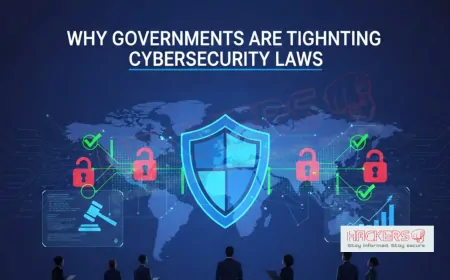























Why Are Governments Tightening National Cybersecurity Laws in 2025?
Imagine waking up one morning to find your bank account empty, the power grid in your city down, and hospitals turning patients away because their computers are locked by hackers. This is no longer science fiction. In just the last few years, ransomware attacks jumped over 150%, critical infrastructure has been hit again and again, and state-sponsored hacking groups have grown bolder than ever. Governments worldwide are finally treating cybersecurity as a core national security, not just an IT issue. In 2025 we are seeing a wave of stricter laws from the United States and the European Union to China, India, and Australia. This post explains, in plain language, exactly why this is happening right now.
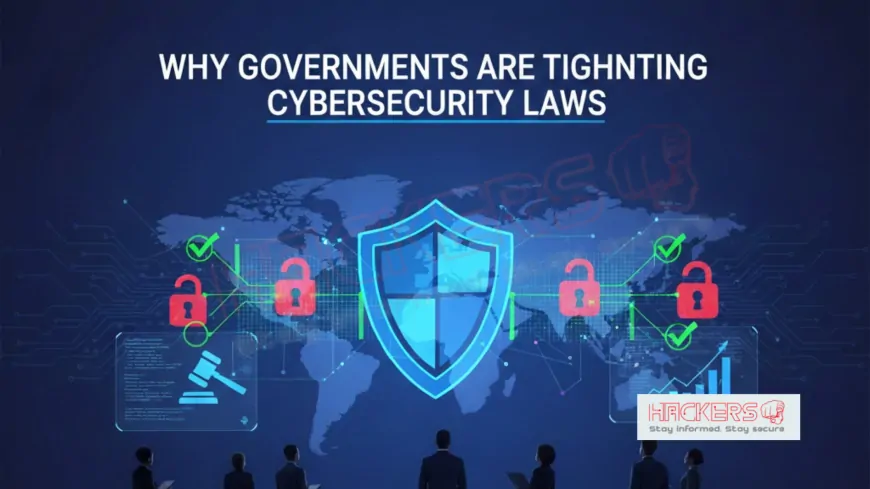
Table of Contents
- The Wake-Up Calls of 2021–2024
- The Explosion of Major Cyber Attacks
- Protecting Critical Infrastructure
- Supply-Chain Attacks Changed the Game
- Ransomware Became a National Emergency
- Rise of State-Sponsored Cyber Warfare
- Personal Data: The New Oil and Weapon
- The Internet of Things Nightmare
- Companies Were Not Doing Enough Voluntarily
- Major Cybersecurity Laws Coming in 2025
- What This Means for Businesses and Citizens
- Conclusion
The Wake-Up Calls of 2021–2024
Between 2021 and 2024, cyber attacks stopped being theoretical. Pipelines, hospitals, meat plants, water facilities, and even entire countries were paralyzed. Each incident proved how deeply digital systems run our daily lives and how fragile they still are.
The Explosion of Major Cyber Attacks
Cybercrime is now estimated to cost the world more than $10 trillion annually, larger than the global illegal drug trade. Ransomware attacks now happen every few seconds, and the damage is no longer limited to a single company; it spreads to entire regions.
Protecting Critical Infrastructure
When the Colonial Pipeline was shut down in 2021, gas stations from Florida to Virginia ran dry. When Ireland’s health service was hit the same year, cancer treatments were postponed. Governments realized that private companies owning power grids, water plants, and hospitals sometimes cut security corners to save money.
Supply-Chain Attacks Changed the Game
Attacks like SolarWinds (2020), Log4j (2021), and XZ Utils (2024) showed that hackers can compromise one piece of widely used software and instantly reach millions of victims. Traditional “defend your own perimeter” strategies became obsolete overnight.
Ransomware Became a National Emergency
Criminal gangs started hitting schools, local governments, and hospitals without mercy. Several countries have now banned or severely restricted ransom payments because paying only funds and encourages more attacks.
Rise of State-Sponsored Cyber Warfare
Russia, China, Iran, and North Korea run professional hacking units. When attacks threaten military readiness, elections, or critical services, cybersecurity becomes a defense ministry problem, not just a police problem.
Personal Data: The New Oil and Weapon
Stolen personal data is now used for identity theft, targeted disinformation, and even blackmail of politicians and executives. Governments want far stricter rules on how companies collect, store, and share our information.
The Internet of Things Nightmare
Billions of cheap cameras, routers, and smart devices are connected with almost no security. Massive botnets can knock entire countries offline. New laws now require minimum security standards even for $20 webcams and baby monitors.
Companies Were Not Doing Enough Voluntarily
Despite years of warnings, many organizations still use default passwords, skip updates, and have no backup or incident-response plans. Voluntary guidelines were simply not enough; mandatory rules with real fines were needed.
Major Cybersecurity Laws Coming in 2025
| Country / Region | Law or Regulation | Key Requirements | Effective Date |
|---|---|---|---|
| European Union | NIS2 Directive | 24-hour incident reporting, supply-chain risk management, executive personal liability | Full enforcement 2025 |
| United States | CIRCIA Act | 72-hour incident reporting, 24-hour ransom-payment reporting | March 2025 |
| United Kingdom | PSTI Act + Telecom Security updates | No default passwords on IoT devices, fines up to 4% global turnover | 2025 |
| Australia | Security of Critical Infrastructure Act amendments | Expanded sectors, mandatory risk programs | 2025 |
| China | Cybersecurity + Data Security Law updates | Data localization, mandatory security audits | Throughout 2025 |
What This Means for Businesses and Citizens
- Higher compliance costs for companies, but clearer rules to follow
- Small businesses usually get delayed deadlines or lighter rules
- Consumers will see fewer huge data breaches (and slightly higher prices)
- Security teams finally have legal backing to demand proper budgets
- Real penalties: millions or even billions in fines for serious failures
Conclusion
Governments are tightening cybersecurity laws in 2025 for one simple reason: doing nothing became far more expensive and dangerous than acting. Cyber threats evolved from nuisance to existential risk. The new rules are not perfect and compliance will be painful for many, but the old “voluntary” approach was clearly not working.
Combined with better technology and growing awareness, these laws should noticeably reduce successful attacks over the coming years. The era of treating cybersecurity as optional is over. Digital security is now as basic as locks on doors and seat belts in cars.
Why are cybersecurity laws suddenly getting stricter everywhere?
The number and real-world damage of attacks between 2021 and 2024 reached a breaking point. Voluntary measures were too slow.
Will these laws stop all cyber attacks?
No law stops every attack, but they force basic protections that block most common threats and make attacks much more expensive for criminals.
Do these laws only affect big companies?
Most start with critical infrastructure and large organizations, but many also cover medium firms and even consumer-device manufacturers.
What happens if a company breaks the new rules?
Fines can reach 4% of global turnover in Europe and the UK, or tens of millions in the US. Executives can face personal liability.
Why the focus on 24-hour or 72-hour reporting?
Fast reporting lets authorities warn others and disrupt the attackers before they hit the next victim.
Are ordinary people affected?
Indirectly, yes: slightly higher prices, more security steps when using services, but hopefully far fewer successful breaches.
Why do some countries ban ransom payments?
Paying funds criminal gangs and guarantees more attacks. Bans aim to break that cycle.
What is critical infrastructure?
Energy, water, healthcare, transport, banking, and digital services whose long disruption would cause serious harm society.
Will my smart TV or router be affected?
Yes. UK, EU, and other laws now ban default passwords on all internet-connected consumer devices.
Why do laws now cover supply chains?
One compromised supplier (SolarWinds, Log4j, XZ Utils) can instantly affect thousands of organizations.
Is AI making attacks worse?
Yes. AI makes phishing and vulnerability discovery easier and faster. Specific AI rules are still being written now.
Do I need to hire a cybersecurity expert?
If your organization falls under any of these regulations, you will almost certainly need professional help for assessments and policies.
Will cyber insurance still be available?
Yes, but insurers now demand proof of basic controls (MFA, patching, backups) before covering you.
What can I do personally to stay safe?
Use a password manager, enable multi-factor authentication everywhere, keep software updated, and never click suspicious links.
When will we know if the laws are working?
Experts expect measurable drops in ransomware and major breaches by 2027–2028 if companies actually comply.
What's Your Reaction?