






Why Do Ransomware Groups Target Colleges and Universities?
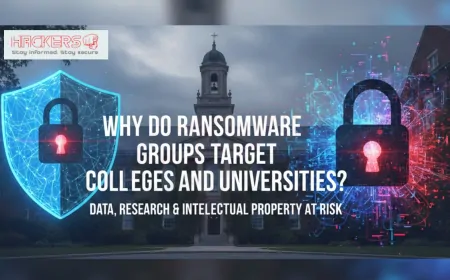
It is finals week at a mid-sized state university. Students are cramming in the library, professors are grading papers, and suddenly every screen after screen turns red with a ransom note: “Pay $3 million in Bitcoin within 72 hours or we leak every student record, medical file, and research project.” Classes are canceled, graduation is delayed, and parents are panicking. This is not a movie plot. It happened to Lincoln College (forcing it to close forever close in 2022), and it has happened to hundreds of schools since. In 2025, colleges and universities are the favorite hunting ground for ransomware gangs. According to Emsisoft, education was the most attacked sector for the fifth year in a row, with over 360 U.S. schools hit in 2024 alone. Why do criminals love campuses so much? The answer is simple: universities are treasure chests full of valuable data, run on outdated systems, and cannot afford to stay offline for long. This post explains exactly why ransomware groups treat higher education like an all-you-can-eat buffet, what they steal, how they get in, and what schools can do to fight back.
Table of Contents
- They Are Walking Treasure Chests
- Weak and Fragmented Defenses
- They Cannot Afford Downtime
- How Ransomware Gangs Actually Get In
- Real Attacks That Made Headlines
- Ransomware in Education: The Numbers (Table)
- The Real-World Consequences
- How Colleges Fight Back: Practical Steps
- Conclusion
They Are Walking Treasure Chests
Universities hold three things criminals love:
- Highly valuable research data (medical trials, defense contracts, patents)
- Sensitive personal information (Social Security numbers, health records, passport scans)
- Financial details (donor records, payroll, grant money)
One stolen faculty laptop can contain decades of grant-funded research worth millions. One compromised student portal can expose 50,000 records that sell for years on the dark web. Unlike hospitals, universities rarely have the same level of regulatory pressure (HIPAA, PCI), so the data is often less protected but just as valuable.
Weak and Fragmented Defenses
Most universities run like small cities:
- Hundreds of departments, labs, and dorms manage their own servers
- Legacy systems from the 1990s still power registration and payroll
- Students and professors bring personal laptops, IoT devices, and lab equipment
- Budget goes to classrooms and research, not cybersecurity
- IT teams are small and overworked (average 1 cybersecurity staff per 4,000 users)
This chaos creates thousands of doors for attackers to try.
They Cannot Afford Downtime
Imagine a factory shut down for a week: bad, but it can recover. Now imagine a university missing course registration, final exams, or graduation. The pressure to restore systems quickly is enormous. Ransomware gangs know this and use it. Many schools pay because the alternative (weeks without email, grades, or research access) feels worse than the ransom.
How Ransomware Gangs Actually Get In
Common entry points in 2025:
- Phishing emails to students or staff (works because young users click fast)
- Exposed Remote Desktop Protocol (RDP) on lab computers
- Unpatched VPN appliances (remember the 2024 Pulse Secure wave?)
- Compromised third-party vendors (food services, bookstore software)
- Weak or reused passwords on research portals
Once inside, attackers often live undetected for months, moving between departments until they encrypt everything at once.
Real Attacks That Made Headlines
- Lincoln College (2022): Ransomware in December 2021 crippled systems; school never recovered and closed permanently.
- University of Manchester (2024): LockBit leaked 1.2 TB of research and student data after unpaid ransom.
- Howard University (2021): Classes canceled for days.
- University of California (2023): Paid $1.14 million to regain research data.
- Ontario College System (Christmas 2023): 2,000 servers encrypted, exams delayed.
Ransomware in Education: The Numbers (Table)
| Statistic | Source (2024–2025) | Why It Matters |
|---|---|---|
| Education is the #1 most attacked sector for 5 years running | Emsisoft 2025 Threat Report | Colleges are the favorite target |
| 360+ U.S. K–12 and higher-ed incidents in 2024 | Emsisoft | Almost one per day |
| Average ransom demand against universities: $3.5 million | Sophos State of Ransomware 2025 | Demands are higher than average |
| 73% of attacked schools had data stolen (double extortion) | Sophos | Encryption + leak threat |
| Average downtime: 3 weeks | Comparitech 2025 | Longer than any other sector |
| Only 8% of universities have full cyber insurance coverage | EdTech Magazine Survey | Most pay out of pocket or close |
The Real-World Consequences
Beyond the ransom, attacks cause:
- Canceled or delayed classes and exams
- Leaked student mental health records
- Stolen research handed to competitors or foreign governments
- Millions in recovery costs (forensics, new hardware, PR)
- Reputation damage that lasts years
- In extreme cases (Lincoln College), permanent closure
How Colleges and Universities Can Fight Back
Practical, budget-friendly steps that work:
- Enable multi-factor authentication (MFA) on every account
- Segment the network (student Wi-Fi separate from research labs)
- Patch systems monthly, especially VPN and RDP
- Back up critical data offline and test restores
- Train students and staff with short phishing quizzes
- Use Endpoint Detection and Response (EDR) tools, not just antivirus
- Create an incident response plan and practice it yearly
- Buy or expand cyber insurance that covers ransomware
Conclusion
Ransomware groups target colleges because universities combine three perfect ingredients: mountains of valuable data, outdated and fragmented technology, and extreme pressure to restore systems quickly. Criminals are not attacking schools because they hate education. They attack because the math works in their favor.
The good news? Awareness is growing. More schools are turning on MFA, improving backups, and practicing incident response. You do not need a Fortune-500 budget to make yourself a harder target. Every step you take (starting with MFA and offline backups) pushes the criminals to look for easier prey.
Students, researchers, and communities depend on universities staying open. Protecting them from ransomware is not just an IT problem. It is a mission-critical priority for everyone on campus.
Why are universities hit more than hospitals?
Hospitals have stricter regulations and better funding for security. Universities have similar valuable data but weaker, decentralized defenses.
Do attackers ever delete stolen university data after payment?
Rarely. Most keep it and sell or leak it anyway.
What is double extortion?
Attackers encrypt systems and threaten to publish stolen data if the ransom is not paid.
Has any university refused to pay and survived?
Yes. University of Vermont and many others restored from backups and refused payment.
Are community colleges targeted too?
Yes. They often have even smaller IT teams and older systems.
Do students cause most breaches?
No. Most initial infections come through staff or faculty phishing or exposed services.
Is ransomware insurance worth it for schools?
Yes, but only if you already have MFA, backups, and segmentation in place. Insurers deny claims otherwise.
Can offline backups really stop ransomware?
They stop encryption from being catastrophic, but not data theft. Combine with strong access controls.
Why do some gangs leak research data?
Research can be worth millions to competitors or nation-states. Some gangs sell it separately.
Are public or private universities hit more?
Both equally. Public schools often have larger attack surfaces; private ones have valuable donor data.
What is the average recovery cost beyond ransom?
$1.5–$4 million in forensics, hardware, and lost tuition, per Sophos.
Do attackers target finals week on purpose?
Yes. Many time attacks for maximum pressure (registration, finals, graduation).
Is it safe to pay the ransom?
No guarantee of recovery, and it funds more attacks. FBI advises against payment.
Which ransomware group hits education most?
In 2024–2025, Vice Society, LockBit, and Akira were the most active against schools.
Can students help prevent attacks?
Yes! Not clicking suspicious links and using university VPN protects everyone.
Are online-only universities safer?
Not really. They still hold the same valuable student data and often use third-party platforms.
What is the number one thing a university should do today?
Turn on multi-factor authentication for every account that supports it. It stops 99% of account takeovers.
Do attackers ever feel bad about hitting schools?
No. Some groups (Conti, LockBit) have publicly said education is a top target because “they always pay.”
Are international universities targeted too?
Yes. UK, Canada, Australia, and Europe saw huge spikes in 2024–2025.
Where should a university president start?
Hire or appoint a Chief Information Security Officer, fund MFA and backups, and run a tabletop ransomware exercise this year.
What's Your Reaction?