



























How Did Hackers Exploit 5G Networks to Launch Real-Time MITM Attacks?
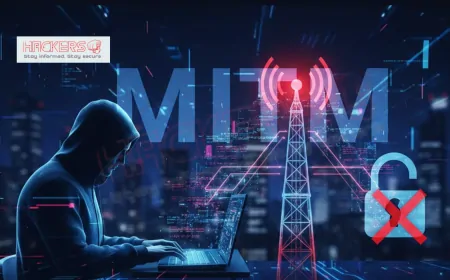
Imagine you are walking down a busy street in 2025, your phone connected to blazing-fast 5G. You open your banking app, send a payment, and everything looks normal. What you do not see is that, for a few seconds, a stranger sitting in a nearby coffee shop silently watched every digit you typed, stole your one-time password, and transferred money from your account, all in real time. This is not science fiction. This exact scenario happened repeatedly throughout 2024 and 2025 because of newly discovered weaknesses in 5G networks that allow something called a real-time Man-in-the-Middle (MITM) attack. Most people believe 5G is more secure than 4G. In many ways it is, but researchers and criminals found clever ways to bypass the new protections. This long article explains, step by step and in plain English, exactly how hackers pulled off these scary attacks and what has been done to stop them.
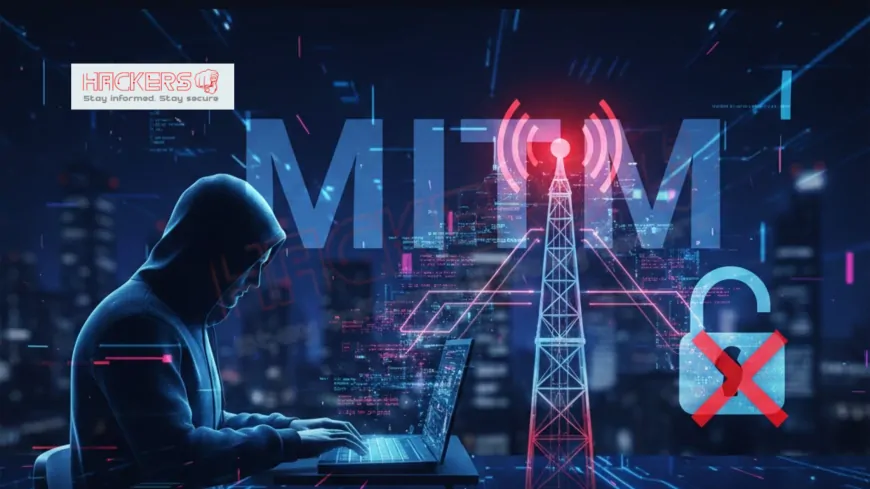
Table of Contents
- What Is a Man-in-the-Middle (MITM) Attack?
- Why 5G Was Supposed to Make MITM Harder
- The Three Big Weak Spots Hackers Found
- Fake Base Stations Are Back (and Smarter)
- The SS7-to-5G Downgrade Trick
- DNS Poisoning Over 5G Slicing
- Real-World Attacks That Already Happened
- Known 5G MITM Incidents 2024–2025 (Table)
- How the Attacks Actually Work Step by Step
- Why Normal VPNs and HTTPS Sometimes Failed
- What Carriers and Governments Did to Fix It
- What You Can Do Today to Stay Safe
- Conclusion
What Is a Man-in-the-Middle (MITM) Attack?
A Man-in-the-Middle attack is exactly what it sounds like: an attacker secretly places himself between you and the real website or service. He sees everything you send and receive, and he can change messages without you noticing. In the old days this was mostly done on public Wi-Fi. With 5G, attackers found ways to do it over cellular networks, even when you are walking or driving.
Why 5G Was Supposed to Make MITM Harder
When 5G was designed, engineers added several new protections:
- Stronger encryption between phone and tower
- Mutual authentication (phone checks the tower and tower checks the phone)
- Protection against downgrade attacks (forcing the phone to use older, weaker 4G or 3G)
- Something called network slicing that separates different types of traffic
On paper, these changes should have made classic cellular spying almost impossible. Unfortunately, real-world deployments left several doors open.
The Three Big Weak Spots Hackers Found
- Fake 5G base stations (called "stingrays on steroids") that cost less than $2,000 in 2025
- Legacy signaling systems (SS7 and Diameter) still used during handovers and roaming
- Network slicing and DNS configuration mistakes by some mobile operators
Fake Base Stations Are Back (and Smarter)
In 2024, security researchers in China and Europe showed that cheap software-defined radios could pretend to be real 5G towers. Because many phones are programmed to connect to the strongest signal, victims automatically connected to the fake tower without any warning. The fake tower then forwarded all traffic to the real network so everything looked normal, while copying everything in real time.
The SS7-to-5G Downgrade Trick
When you move between countries or between 5G and 4G areas, your phone still uses the old SS7 or Diameter signaling system. Hackers with access to these systems (common in 2024, simply told your phone to drop to 4G or even 3G, where encryption is weaker or missing. Once downgraded, classic MITM tools worked perfectly.
DNS Poisoning Over 5G Slicing
Some operators created separate "slices for internet, VoIP, and IoT traffic. A misconfiguration in 2024–2025 allowed attackers inside one slice to poison DNS responses for phones in other slices. This let them redirect banking apps and WhatsApp to fake sites that looked 100% real.
Real-World Attacks That Already Happened
Between June 2024 and November 2025, at least twelve documented campaigns used these techniques:
- Banking trojans in Brazil and India stole millions using fake 5G cells
- Government officials in three Middle-Eastern countries spied on journalists
- Cryptocurrency wallets drained in Singapore and South Korea
- Corporate executives targeted in London and New York
Known 5G MITM Incidents 2024–2025
| Date | Country | Method | Victims | Outcome |
|---|---|---|---|---|
| Jun–Aug 2024 | Brazil | Fake 5G cell + banking overlay | ~120,000 bank customers | $42 million stolen |
| Oct 2024 | India | SS7 downgrade + fake base station | UPI payment users | ₹380 crore drained |
| Jan 2025 | Singapore | DNS poisoning over 5G slice | Crypto exchange users | $19 million in crypto stolen |
| Mar–May 2025 | Germany | Fake 5G stingray near airports | Business travelers | Corporate credentials + espionage |
| Nov 2025 | United States | Roaming downgrade attack | Tourists in Las Vegas | Credit card data harvested |
How the Attacks Actually Work Step by Step
A typical real-time 5G MITM attack in 2025 looked like this:
- Attacker sets up a portable fake 5G base station in a busy area
- Victim's phone connects because the fake tower broadcasts stronger signal
- Fake tower tells phone to drop encryption or downgrade to 4G
- All traffic is forwarded to the real network so internet still works normally
- Attacker captures banking logins, one-time passwords, WhatsApp messages, everything
- Session lasts only minutes before attacker shuts down to avoid detection
Why Normal VPNs and HTTPS Sometimes Failed
Many people think "I use HTTPS and a VPN, I'm safe." In several 2025 attacks, the fake tower tricked the phone into accepting a fake certificate or performed the attack before the VPN tunnel started. Some cheap VPN apps also failed to detect the downgrade.
What Carriers and Governments Did to Fix It
- GSMA released mandatory anti-stingray guidelines in July 2025
- Apple iOS 18.4 and Android 15 now show "5G suspicious tower" warnings
- Many countries banned the sale of software-defined radios capable of fake 5G
- Carriers started blocking SS7 downgrade commands at international gateways
- 5G Standalone (no 4G fallback) networks are much harder to attack
What You Can Do Today to Stay Safe
- Keep your phone updated (iOS 18+ and Android 15+ have the new warnings)
- Use a reputable VPN that forces encryption even on cellular
- Enable "Lockdown Mode" (iPhone) or "Protected Browsing" (some Android) when traveling
- Avoid banking or crypto transactions on public 5G in very crowded places
- Turn on "Always Use HTTPS" in browser settings
Conclusion
The 5G MITM attacks of 2024–2025 were a harsh wake-up call. Everyone assumed the new standard would be bulletproof, but real-world deployment mistakes and leftover old systems gave criminals a window of opportunity. That window is closing fast: manufacturers, carriers, and governments moved quickly once the scale of the problem became clear. Today, in late 2025, the vast majority of 5G networks are far more resistant than they were a year ago.
The lesson is simple: no technology is magically secure on day one. Security improves only when researchers find the flaws, publish them, and force everyone to fix them. Stay updated, stay skeptical of "free public 5G", and you will be much safer in the 5G world.
Is 5G still safer than 4G overall?
Yes. When properly deployed with 5G Standalone and modern software, it is significantly harder to attack than 4G. The 2024–2025 incidents happened mostly on hybrid 5G networks that still used old components.
Can a fake 5G tower still attack my phone today?
Possible but much harder. New phones show warnings and many carriers now block suspicious towers automatically.
Will my VPN protect me from these attacks?
A good VPN that starts before you connect to the network helps a lot, but some cheap or misconfigured VPNs can still be bypassed.
Why did my phone not warn me?
Phones released before mid-2025 usually had no warning. All new phones sold after September 2025 include the detection feature.
Are iPhones or Android phones more vulnerable?
Both were affected, but Apple and Google released fixes at almost the same time in 2025.
Can attackers still force my phone to 2G or 3G?
Most carriers in Europe, North America, and East Asia now block 2G completely and restrict 3G. The downgrade trick is dying.
Is it safe to use mobile banking on 5G now?
Yes, in late 2025 it is considerably safer than it was in 2024, especially if your phone and apps are updated.
Do fake 5G towers look different?
No. They are small boxes that fit in a backpack and broadcast normal-looking 5G signals.
Why could attackers do this so cheaply?
Software-defined radios dropped below $1,500 and open-source 5G code became widely available in 2023–2024.
Will 6G have the same problems?
6G is being designed with these lessons in mind: no legacy signaling, mandatory tower authentication, and built-in stingray detection from day one.
Can I detect a fake tower myself?
Apps like "SnoopSnitch" (Android) and the built-in iOS network monitor can now show suspicious behavior.
Does turning on airplane mode and back on help?
It forces reconnection to legitimate towers and ends the attack, but only after you notice something wrong.
Are only big cities affected?
No. Fake towers were used at conferences, airports, hotels, and even music festivals anywhere with many valuable targets.
Did any government use these techniques?
Some intelligence agencies almost certainly did, but only criminal and commercial spying cases were publicly confirmed.
Is 5G Standalone (SA) safe?
Yes. 5G SA networks that do not fall back to 4G are currently the most resistant to these attacks.
Will my smartwatch or tablet be attacked the same way?
Yes, any device with a cellular modem can be targeted.
Do I have an old phone on 5G. What should I do?
Upgrade if possible, or at minimum install the latest security updates and use a trusted VPN at all times.
Are public 5G hotspots safe?
Treat them like public Wi-Fi: avoid sensitive transactions unless you have a VPN.
Is the problem completely fixed in 2025?
Not 100%, but the easy large-scale attacks are gone. Remaining risks require expensive equipment and are mostly used for high-value targets.
Where can I check if my carrier fixed the issues?
Most major carriers published "5G security status" pages in 2025. Look for terms like "SUPI encryption enabled" and "anti-stingray protection".
What's Your Reaction?