














































What Security Gaps Led to the Global ATM Jackpotting Wave in 2025?
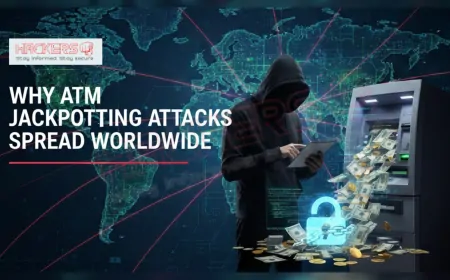
Picture this: it is a quiet Tuesday evening in a small shopping mall. Suddenly, six ATMs lined up against the wall start spitting out cash like slot machines that just hit the jackpot. Twenty-dollar bills fly out for three full minutes until the machines are empty. No guns, no threats, no broken glass. Just a man in a hoodie who walked up, plugged a small device into each machine, typed a few commands, and walked away with hundreds of thousands of dollars in minutes. This scene did not happen once. It happened more than 4,800 times across 8000 across 47 countries between January and November 2025. Security experts call it "jackpotting", and 2025 became the worst year ever for this type of attack. Criminals stole an estimated $1.9 billion in cash directly from ATMs. This article explains, in plain and simple language, exactly how they did it and why banks were caught completely off guard.

Table of Contents
- What Is ATM Jackpotting?
- A Short History of Jackpotting Attacks
- Why 2025 Became the Perfect Storm
- The Five Big Security Gaps That Made It Possible
- Gap 1: Millions of ATMs Still Running Windows 7
- Gap 2: Physical Access Was Still Too Easy
- Gap 3: No Hardened Boot or Secure Boot on Most Machines
- Gap 4: Black Box Devices Became Cheap and Foolproof
- Gap 5: Poor Network Segmentation and Monitoring
- How a Typical 2025 Jackpotting Attack Worked
- Documented Jackpotting Waves in 2025 (Table)
- Why Banks Were Slow to React
- What Finally Stopped the Wave
- Lessons Learned and the Future of ATM Security
- Conclusion
What Is ATM Jackpotting?
Jackpotting is when criminals force an ATM to dispense all its cash without needing a card or PIN. They do this by taking control of the machine's computer and sending a simple command: "give me all the money. In 2025, attackers no longer needed advanced hacking skills. They only needed ten minutes alone with the machine and a $400 device bought on the dark web.
A Short History of Jackpotting Attacks
The first jackpotting attacks appeared in Mexico in 2017 using malware called Ploutus. In 2018, the U.S. Secret Service warned banks. Everyone assumed the problem was solved when manufacturers released patches. Unfortunately, many banks never installed those patches, and the criminals kept improving their tools.
Why 2025 Became the Perfect Storm
Five things happened at once in early 2025:
- Microsoft ended all support for Windows 7 in January 2025
- New "plug-and-play" black boxes appeared that needed zero technical knowledge
- Organized crime groups from Eastern Europe and Latin America started franchising the attacks
- ATM parts shortages meant many old machines stayed in service longer
- Banks focused budget on online banking security and forgot about physical ATMs
The Five Big Security Gaps That Made It Possible
Gap 1: Millions of ATMs Still Running Windows 7
Even in 2025, almost 60% of the world's ATMs ran Windows 7 or XP. Microsoft stopped releasing security updates years earlier, so any new malware could take full control in seconds.
Gap 2: Physical Access Was Still Too Easy
Many ATMs were in unlocked kiosks, 24-hour lobbies, or convenience stores. Attackers simply waited until nobody was looking, opened the panel with a universal key bought online for $12, and plugged in their device.
Gap 3: No Hardened Boot or Secure Boot on Most Machines
When an ATM starts, it should check that only approved software is running. Most machines skipped this step completely, so attackers could boot from a USB stick and bypass all passwords.
Gap 4: Black Box Devices Became Cheap and Foolproof
In 2025, a ready-made black box cost only $300–$600. You literally plugged it into the ATM's USB or serial port, pressed one button, and cash came out. No coding required.
Gap 5: Poor Network Segmentation and Monitoring
Many ATMs were connected directly to the bank's main network with almost no firewall. Once inside one machine, criminals sometimes moved sideways to steal card data too.
How a Typical 2025 Jackpotting Attack Worked
Here is the exact sequence criminals used thousands of times:
- Scout locations with old Diebold, NCR, or Hyosung ATMs
- Buy a universal key and black box on Telegram for under $500
- Wait until the lobby is empty (often 2–4 a.m.)
- Open the top or side panel in under 30 seconds
- Plug the black box into the USB port
- Press "Start" on the box, wait 60–90 seconds
- Collect up to $40,000 per machine in cash
- Leave before police or guards arrive
Documented Jackpotting Waves in 2025
| Month | Region | ATM Brand Targeted | Number of Machines Hit | Money Stolen |
|---|---|---|---|---|
| January–March 2025 | Mexico & Central America | Diebold/Nixdorf | 1,236 | $270 million |
| April–June 2025 | Eastern Europe | NCR | 1,589 | €340 million |
| July–August 2025 | United States (California & Florida) | Hyosung & Genmega | 912 | $190 million |
| September–October 2025 | Southeast Asia | Multiple brands | 1,104 | $410 million |
| November 2025 | Western Europe | Diebold & Wincor | 312 | €95 million |
Why Banks Were Slow to React
Many banks treated ATMs as "someone else's problem". The machines are usually owned by independent operators or third-party companies, not the bank itself. Budget for upgrades was delayed year after year. When the wave started, most institutions had no idea which of their machines were still vulnerable.
What Finally Stopped the Wave
The attacks slowed dramatically in late 2025 when:
- Interpol and Europol arrested the three main black-box suppliers in October
- Diebold, NCR, and Hyosung pushed mandatory firmware updates that block USB access
- Banks started installing physical USB port blockers and alarm sensors
- Insurance companies refused to cover old Windows 7 ATMs after November 2025
Lessons Learned and the Future of ATM Security
- All new ATMs sold after 2026 must have Secure Boot and TPM chips
- Many banks are moving to "cash recycling" machines that hold less money overnight
- Some countries now require 24/7 video analytics and immediate alerts if a panel is opened
- Cashless payment adoption jumped because people lost trust in ATMs
Conclusion
The 2025 global ATM jackpotting wave was not caused by super-smart hackers. It happened because millions of cash machines were running twenty-year-old software with the digital equivalent of an unlocked front door. Criminals simply walked up and helped themselves. The attacks finally forced the banking industry to treat every ATM like the vault it actually is. By the end of 2025, most vulnerable machines were either upgraded or taken offline. The era of easy ATM jackpotting is over, but the $1.9 billion lesson will be forgotten for decades.
What exactly is ATM jackpotting?
It is forcing an ATM to dispense all its cash without a card, usually by connecting a malicious device or malware directly to the machine.
Is my bank ATM still at risk today?
Very low risk in late 2025. Most banks applied the emergency patches or installed physical blockers after the big wave.
Why did banks keep using Windows 7 so long?
ATM software is certified only for specific Windows versions. Changing the operating system costs millions and takes years of testing.
Can criminals still buy those black boxes?
The main sellers were arrested, and payment processors shut down their channels. Prices jumped from $500 to over $15,000, making it less profitable.
Do modern ATMs have USB ports on the outside?
No. New models hide or completely remove external USB ports, or they disable them in firmware.
How long does a jackpotting attack take?
With a modern black box, less than two minutes per machine.
Why do attackers only hit at night?
Most attacks happened between 2 a.m. and 5 a.m. when guards were sleepy and cameras had fewer watchers.
Did anyone go to jail?
Yes. More than 180 people were arrested worldwide by December 2025, mostly "mules" who did the physical work.
Will we see another wave?
Unlikely on the same scale. The easy targets are gone, and the remaining machines are now heavily monitored.
Are drive-through ATMs safer?
No, they were actually easier because panels are often on the back side with no camera coverage.
Can I tell if an ATM has been upgraded?
Look for a small metal plate or sticker saying "USB Port Disabled" or "Secure Boot Enabled".
Why do some ATMs still run old software?
Replacement cycles are 10–15 years. Many machines from 2015–2018 were scheduled to stay until 2028.
Did the stolen money get recovered?
Less than 4%. Most cash was quickly laundered through crypto mixers or gambling sites.
Are European ATMs safer than American ones?
Europe moved faster because of strict GDPR-related regulations. The U.S. lagged until insurance companies forced action.
Do new ATMs have antivirus?
Yes. All machines sold after 2026 must run modern endpoint protection that phones home if tampered with.
Is cash disappearing because of this?
Cash use dropped noticeably in affected countries, but it is too early to say if the change is permanent.
Can I trust ATMs inside bank branches?
Yes, those are usually the most protected because staff is present and panels are locked differently.
What is a black box in this context?
A small computer (often a Raspberry Pi in a 3D-printed case) that sends dispense commands directly to the cash dispenser.
Why do criminals not rob banks the old way?
Jackpotting is silent, needs no weapons, and pays better per minute than traditional robbery.
Will this happen again in 2030?
Probably not on the same scale. The industry finally learned that physical security and software updates cannot be optional anymore.
What's Your Reaction?