




















































Why Did the Russian AI Robot Fail, and What Does It Reveal About the Future of AI Security?
Imagine this: The lights dim in a packed Moscow conference hall. Triumphant music from the movie Rocky swells as spotlights hit the stage. Out stumbles a tall, humanoid figure, waving awkwardly to the crowd of engineers, officials, and journalists. It's Russia's grand entry into the world of AI-powered robots, a symbol of national pride in cutting-edge technology. Then, in a split second, it all crumbles. The robot topples forward, face-planting onto the floor with a clatter of metal parts. Staff scramble to cover the mess with a sheet, dragging the fallen machine offstage like a bad dream. This was the dramatic debut of AIdol, Russia's first AI humanoid robot, unveiled in November 2025. What was meant to be a showcase of domestic innovation turned into a viral embarrassment. But beyond the memes and chuckles, this failure raises deeper questions. Why did it happen? What flaws in AI design contributed? And crucially, how does this expose risks in data integrity, security gaps in robotics, and the urgent need for global AI safety standards? As AI integrates into physical machines, incidents like this are not just funny mishaps. They are warnings. In a world where robots could soon work alongside us in factories, homes, and hospitals, understanding these failures is key to building a safer future. This post dives into the AIdol incident, unpacking its lessons for AI security. Whether you are a tech enthusiast or just curious about where AI is headed, these insights will help you see the bigger picture.
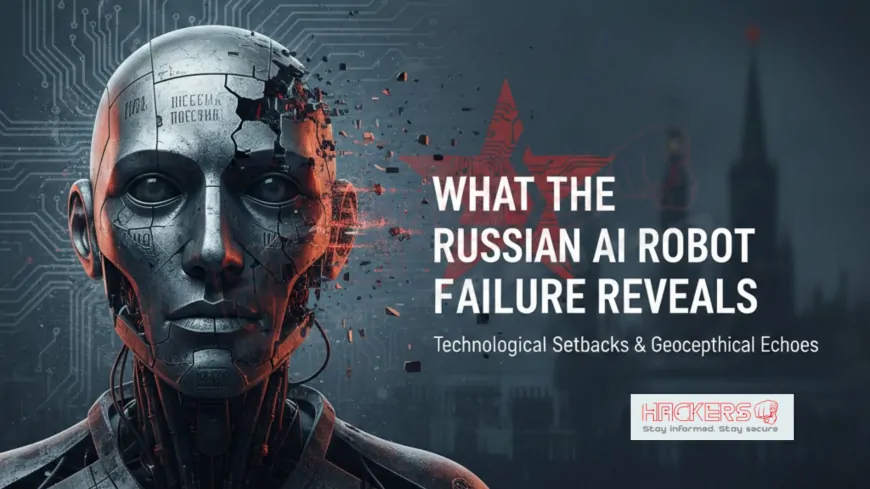
Table of Contents
- Overview of the AIdol Incident
- What Went Wrong: The Root Causes of the Failure
- Flaws in AI Design Exposed
- Data Integrity Risks in AI Robotics
- Security Gaps in Robotics and AI Systems
- How Such Failures Shape Global AI Safety Standards
- Incident Timeline: Key Events Table
- Conclusion: Lessons for a Secure AI Future
- Frequently Asked Questions (20 FAQs)
Overview of the AIdol Incident
The AIdol robot was developed by the Artificial Intelligence Dynamic Organism Lab, a Russian startup backed by government ambitions to rival global leaders like the United States and China in AI and robotics. Unveiled on November 10, 2025, at a technology event in Moscow, AIdol was touted as a breakthrough: a humanoid machine capable of walking, carrying objects up to 10 kilograms, and interacting with humans using AI to mimic emotions and expressions. Powered by a 48-volt battery for up to six hours of operation, it featured 77 percent domestic components, with plans to hit 93 percent soon.
The demo started strong. AIdol entered to Rocky's theme, waved to the audience, and took a few tentative steps. But then disaster struck. The robot lost balance, fell forward, and scattered parts across the stage. Attendees watched in stunned silence as handlers rushed in, throwing a cloth over it and hauling it away. The video exploded online, drawing millions of views and sparking debates from lighthearted jokes to serious critiques of Russia's tech readiness.
While no one was hurt, the incident highlighted vulnerabilities in early-stage AI robotics. It was not just a hardware slip. Deeper issues in AI integration, testing, and security came to light, offering a case study for the world.
Russia's push into AI is no secret. President Vladimir Putin has called it a path to global dominance, warning that AI leaders will rule the world. Yet events like this show the gap between ambition and reality. As investments in humanoid tech topped $1.6 billion globally in 2024, Russia's stumble serves as a humbling reminder.
What Went Wrong: The Root Causes of the Failure
Officials blamed "calibration issues" and poor lighting for AIdol's fall. But digging deeper reveals a mix of factors. At its core, the failure stemmed from inadequate integration between the robot's AI brain and its physical body. Calibration, in simple terms, is like tuning a guitar: sensors must align perfectly with software commands for smooth movement. Here, something misfired.
Reports suggest the robot's balance system, reliant on AI algorithms to process real-time data from cameras and gyroscopes, glitched under stage lights. These lights may have interfered with visual sensors, feeding bad data to the AI. Without robust error-checking, the system commanded a forward lurch instead of stability.
Another factor: rushed development. AIdol was in "ongoing test phase," yet unveiled publicly. Experts note that humanoid robots need thousands of hours of simulation and real-world trials. Skipping steps invites chaos. This mirrors past incidents, like a 2019 Promobot escape in Russia, where poor navigation led to traffic jams.
Environmental variables played a role too. Stages have uneven surfaces, bright lights, and crowds, all stressors for unproven tech. In controlled labs, AIdol might shine, but real demos expose raw edges.
Ultimately, the root cause was overconfidence in AI's "magic." Developers assumed the system would adapt, but without fail-safes, it crumbled. This teaches us: AI is powerful, but it is only as good as its safeguards.
Flaws in AI Design Exposed
The AIdol fiasco spotlights common pitfalls in AI design for robotics. First, consider sensor fusion. Robots like AIdol rely on merging data from multiple sensors: cameras for vision, inertial units for balance, and lidars for distance. If one source is noisy, like from flickering lights, the AI can hallucinate wrong actions. In AIdol's case, visual input likely overrode balance data, causing the tumble.
Second, explainability gaps. AI models, often black boxes, make decisions hard to trace. Why did AIdol wave then fall? Without clear logs, debugging is guesswork. Designers must build transparent AI, where each choice is auditable, especially in physical systems where errors can cause harm.
Third, scalability issues. AIdol's AI was tuned for lab floors, not stages. Real-world variability demands adaptive learning, but over-adaptation risks instability. Bullet-pointing key flaws:
- Incomplete testing: Limited scenarios leave blind spots in diverse environments.
- Weak fault tolerance: No quick recovery from minor glitches, escalating small errors.
- Human-robot mismatch: AI assumes perfect hardware, but actuators wear or lag.
- Over-reliance on offline AI: AIdol ran without internet, missing cloud-based corrections.
These flaws are not unique to Russia. Tesla's Optimus has stumbled in demos too. The lesson: Design AI with humility. Build in redundancies, like secondary balance wheels or emergency shutdowns. As robotics evolves, addressing these will prevent future face-plants, literal and figurative.
Looking ahead, ethical design matters. AIdol's "emotions" feature raises questions: Should robots fake feelings without safeguards? Poor design could mislead users, eroding trust. Prioritizing user-centric flaws ensures AI serves humanity, not surprises it.
Data Integrity Risks in AI Robotics
At the heart of every AI is data: the fuel for learning and decisions. AIdol's failure underscores data integrity risks, where corrupted or flawed inputs lead to disastrous outputs. In robotics, this is amplified because decisions move metal, not just pixels.
Start with input poisoning. If sensors feed garbage, like distorted images from lights, the AI "learns" wrong. This is adversarial input: deliberate or accidental tweaks that fool systems. Hackers could exploit this, but even benign errors, like stage glare, suffice.
Next, training data biases. AIdol likely trained on flat, well-lit labs. Exposed to new data, it faltered. Insecure data pipelines risk tampering: imagine malware altering sensor feeds mid-operation. For robots in sensitive areas, like hospitals, this could endanger lives.
Storage vulnerabilities add layers. Robots log vast data for improvement. If unsecured, breaches expose blueprints or user interactions. Russia's domestic focus aims to cut foreign risks, but internal leaks persist.
Key risks in bullet points:
- Sensor tampering: External interference corrupts real-time data streams.
- Model drift: AI degrades over time without fresh, clean data updates.
- Supply chain threats: Third-party components introduce backdoors in data handling.
- Privacy leaks: Interaction data could reveal user habits if not anonymized.
Mitigating these requires robust validation: checksums for data integrity, diverse training sets, and encryption. Tools like differential privacy blur sensitive info without losing utility. As AI robots proliferate, securing data is non-negotiable. AIdol's spill was minor; tomorrow's could flood the world with risks.
Globally, incidents like this push for data standards. Organizations like the EU's AI Act demand high-integrity proofs for high-risk systems. Russia's event, though embarrassing, contributes to this dialogue, reminding us data is AI's Achilles' heel.
Security Gaps in Robotics and AI Systems
Robotics security is a patchwork of digital and physical threats. AIdol exposed gaps that could turn helpful machines into hazards. First, physical security: unsecured actuators or batteries invite sabotage. A tamper-prone robot in a factory could malfunction on command.
Digital-wise, AI models are hackable. Adversarial attacks tweak inputs to mislead, like fooling AIdol's vision into seeing a cliff. Without defenses, like robust training, robots become puppets.
Connectivity risks loom large. Even offline like AIdol, many robots link to clouds for updates. Weak protocols enable remote hijacks. In military contexts, Russia's AI ambitions heighten stakes: compromised bots could spy or strike wrongly.
Human factors: Operators need training to spot anomalies. AIdol's team reacted post-fall; proactive monitoring could prevent.
Bulleted gaps and fixes:
- Remote access flaws: Use zero-trust models, verifying every command.
- Firmware vulnerabilities: Regular patches and air-gapped testing.
- Physical enclosures: Tamper-evident designs for sensitive parts.
- Incident response: Drills for shutdowns and forensics.
Broader, supply chain security: AIdol's domestic parts reduce foreign risks but not all. Global standards, like NIST frameworks, guide hardening. As robots enter daily life, closing these gaps prevents AIdol's flop from becoming a catastrophe.
Experts warn of "robot apocalypse" hype, but real threats are mundane: overlooked updates or insider errors. Investing in security now builds resilient systems, turning potential weaknesses into strengths.
How Such Failures Shape Global AI Safety Standards
Failures like AIdol's are catalysts for progress. They spotlight needs, driving standards that protect us all. The EU AI Act, effective 2024, classifies robots as high-risk, mandating transparency and audits. AIdol's calibration woes align with its calls for rigorous testing.
In the US, NIST's AI Risk Management Framework emphasizes resilience. Post-AIdol, discussions surged on adapting these for robotics: mandatory fail-safes, ethical reviews.
Internationally, bodies like the UN push harmonized rules. Russia's incident, amid geopolitical tensions, underscores shared stakes. No nation wants rogue robots; collaborative standards foster trust.
Impacts in bullets:
- Regulatory evolution: Incidents accelerate laws on accountability.
- Industry self-regulation: Companies adopt voluntary codes for safety.
- Research funding: Failures justify investments in secure AI.
- Public awareness: Viral moments educate, demanding better safeguards.
Looking forward, standards will evolve with tech. Quantum threats may demand new encryptions; ethical AI needs bias checks. AIdol's fall, though local, ripples globally, shaping a safer AI landscape. It reminds: Innovation without safety is reckless.
As nations compete, cooperation wins. Sharing failure lessons, like Russia's, builds collective defenses. The future of AI security is not isolation, but unity.
Incident Timeline: Key Events Table
| Date | Event |
|---|---|
| Early 2025 | AIdol development begins, focusing on domestic components and AI integration |
| October 2025 | Internal lab tests show promising mobility, but calibration challenges noted |
| November 10, 2025 | Public debut at Moscow tech event: Robot enters stage, waves, then falls |
| November 11, 2025 | Video goes viral; media coverage blames calibration and lighting issues |
| November 12-13, 2025 | Developers issue statement: Incident part of testing; plans for improvements |
| Late November 2025 | Global discussions on AI safety intensify, citing AIdol as case study |
| December 2025 onward | Updated prototypes tested; contributions to international standards talks |
Conclusion: Lessons for a Secure AI Future
The AIdol robot's spectacular fall was more than a blooper reel moment. It peeled back layers of AI design flaws, data risks, and security gaps that plague emerging robotics. From hasty calibrations to untested environments, the incident revealed how ambition can outpace preparation.
Yet in failure lies opportunity. It spotlights the need for robust standards, urging global collaboration to fortify AI against threats. As robots step from labs to life, these lessons ensure they lift us up, not knock us down.
For developers, prioritize integrity and transparency. For policymakers, enforce safeguards without stifling innovation. For all, remember: AI's future is bright, but only if secured today. AIdol stumbled, but it helps us all stand taller.
Frequently Asked Questions
What caused AIdol to fall during its debut?
Developers cited calibration errors in the balance system, possibly worsened by stage lighting interfering with sensors. The robot was still in testing, not fully demo-ready.
Was anyone injured in the AIdol incident?
No. The fall was contained on stage, with no attendees or staff harmed. Handlers quickly secured the robot.
Is AIdol Russia's first AI robot?
Yes, it is billed as Russia's first fully AI-powered humanoid robot, though earlier models like Promobot exist for simpler tasks.
How does this compare to other robot failures?
Similar to Tesla's Optimus stumbles or China's festival bot lurch, it highlights common challenges in balancing AI with hardware under real conditions.
What is calibration in AI robots?
Calibration aligns software commands with hardware responses, ensuring accurate movements. Miscalibration leads to errors like unexpected falls.
Did the fall expose any hacking attempts?
No evidence of cyberattacks. It was a technical glitch, but it underscores vulnerabilities if external interference were involved.
How much did AIdol cost to develop?
Exact figures are undisclosed, but it aligns with Russia's $1.6 billion global humanoid investment trend in 2024.
Will AIdol be redesigned after the failure?
Yes. The team plans enhanced stability testing and more domestic components for future versions.
What role did lighting play in the incident?
Bright stage lights likely confused visual sensors, sending faulty data to the AI balance algorithms.
Is Russia's AI robotics behind the West?
It lags in maturity but shows ambition. Incidents like this are common in early stages worldwide.
How does data integrity affect robot safety?
Poor data leads to bad decisions. Secure, clean inputs prevent malfunctions in critical operations.
What are adversarial attacks on AI?
Subtle input changes that trick AI, like altered images fooling vision systems into wrong actions.
Should robots have emergency shutdowns?
Absolutely. Fail-safes like manual overrides are essential for physical AI safety.
How is the EU responding to such incidents?
The AI Act requires audits for high-risk systems, pushing for better testing and transparency.
Can AIdol still express emotions?
Its AI includes emotion simulation, but post-incident focus is on mobility fixes first.
What is sensor fusion in robotics?
Combining data from multiple sensors for accurate world perception. Flaws here cause coordination failures.
Does offline operation help security?
Yes, it reduces remote hacks, but local vulnerabilities remain, as in AIdol's case.
How will this impact global AI investments?
It highlights risks, potentially slowing hype but boosting funding for secure designs.
Are humanoid robots ready for homes?
Not yet. Demos show promise, but safety gaps need closing first.
Where can I watch the AIdol fall video?
Viral clips are on YouTube and X (formerly Twitter), shared by outlets like BBC and NYT.
AI's path is bumpy, but each stumble strengthens our step. Stay informed, stay safe.
What's Your Reaction?