
































How Cybersecurity Has Become a Critical Part of National Security Today
Once upon a time, national security meant armies, borders, and spies in trench coats. Fast forward to December 2025, and the battlefield has shifted to the digital realm. Cybersecurity is no longer just about protecting your personal email from spam. It has evolved into a cornerstone of national defense, where a single breach can cripple power grids, disrupt elections, or steal military secrets. Governments worldwide now treat cyber threats with the same gravity as traditional warfare. From Russia's alleged interference in elections to China's industrial espionage, cyber attacks have real-world consequences that affect economies, infrastructures, and lives. But how did we get here? This blog post explores the journey of cybersecurity from a niche IT concern to a vital element of national security. We'll look at historical roots, key turning points, current strategies, and what the future holds. If you're new to this topic, don't worry: We'll break it down simply, explaining terms as we go. By the end, you'll see why cybersecurity matters to everyone, not just tech experts.
Table of Contents
- Historical Roots: From Early Computing to the Cold War
- Key Turning Points: Incidents That Changed Everything
- Government Strategies and Policies
- Protecting Critical Infrastructure
- International Dimensions and Cyber Warfare
- The Role of AI and Emerging Technologies
- Challenges Ahead in 2025 and Beyond
- Conclusion
- FAQs
Historical Roots: From Early Computing to the Cold War
Cybersecurity's link to national security began long before the internet existed. In the 1940s, during World War II, codebreaking was a key part of military strategy. Machines like the Enigma used by Germany encrypted messages, and Allied forces worked tirelessly to crack them. This early form of cybersecurity involved protecting communications from enemies. After the war, as computers became tools for governments, the need to secure them grew.
In the 1950s and 1960s, the Cold War intensified this focus. The US and Soviet Union competed in space and nuclear technology, both relying on computers. In 1967, a US Department of Defense study called the Ware Report highlighted vulnerabilities in computer systems. It warned that as networks connected more devices, risks would increase. This report is often seen as the first formal recognition of cybersecurity as a national concern.
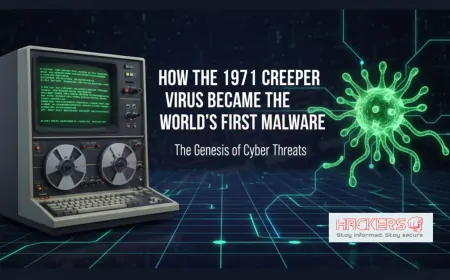
By the 1970s, ARPANET, the precursor to the internet, was operational. It connected universities and military sites, but security was an afterthought. The first computer virus, Creeper, appeared in 1971, spreading harmlessly but showing potential dangers. In response, Reaper was created to hunt and delete it, marking an early antivirus effort.
The 1980s brought more awareness. The Computer Fraud and Abuse Act of 1986 in the US made unauthorized access a federal crime, linking cyber acts to national laws.
Overall, these roots show how cybersecurity grew alongside computing. What started as protecting wartime codes evolved into safeguarding national interests in a connected world. This foundation set the stage for the dramatic incidents that would follow.
Key Turning Points: Incidents That Changed Everything
Certain events made governments realize cybersecurity's critical role. The Morris Worm in 1988 was a wake-up call. Created by a student, it spread across the early internet, slowing thousands of computers. While not malicious, it exposed network vulnerabilities and led to the creation of CERT, a response team at Carnegie Mellon University.
In the 2000s, attacks grew more sophisticated. The 2007 cyber assault on Estonia crippled government websites, banks, and media during a dispute with Russia. This "cyber war" showed how digital attacks could disrupt a nation without physical invasion. Estonia responded by building one of the world's strongest cyber defenses, including a volunteer cyber army.
Stuxnet in 2010 marked another shift. This worm, allegedly from the US and Israel, targeted Iran's nuclear program, damaging centrifuges. It proved cyber tools could cause physical destruction, blurring lines between cyber and kinetic warfare. For newcomers, a worm is like a virus but spreads without human help.
The 2016 US election interference by Russia highlighted cyber's role in democracy. Hackers stole and leaked emails, influencing public opinion. This led to new policies on election security. More recently, the 2021 Colonial Pipeline ransomware attack shut down fuel supplies, causing shortages and panic. Ransomware is software that locks data until a ransom is paid. The US government treated it as a national security issue, leading to executive orders on infrastructure protection.
In 2025, incidents continue. Hacking reports to US health authorities reached 364 by October, showing healthcare's vulnerability.
Government Strategies and Policies
Governments have developed comprehensive strategies to integrate cybersecurity into national security. In the US, the Comprehensive National Cybersecurity Initiative started in 2008 under President Obama, focusing on protecting networks and countering threats.
The US Cyber Command, established in 2010, operates like a military branch for cyber operations. It defends against nation-state actors, who are countries using cyber tools for espionage or sabotage.
In Europe, the EU's NIS Directive requires member states to have cybersecurity strategies. Countries like the UK have the National Cyber Security Centre, coordinating responses. China's approach integrates cybersecurity into its military doctrine, viewing it as part of information warfare.
International agreements, like the Budapest Convention on Cybercrime, promote cooperation. But challenges remain, as not all nations agree on norms. For beginners, these strategies mean governments treat cyber threats like physical ones, with budgets, agencies, and laws dedicated to them.
These policies show cybersecurity's elevation. They involve public-private partnerships, where governments work with companies to share threat info.
Protecting Critical Infrastructure
Critical infrastructure includes power grids, water supplies, transportation, and healthcare: Systems essential for society. Cyber attacks on them can cause chaos. The US Department of Homeland Security identifies cybersecurity threats to infrastructure as a top risk.
Nation-states target these for strategic advantage. For example, Russia's NotPetya malware in 2017 disrupted Ukraine's grid and spread globally, costing billions. In 2025, threats persist, with AI enabling more sophisticated attacks.
Governments respond with regulations. The US CISA agency coordinates protections, issuing alerts and guidelines. In Europe, the Cyber Resilience Act mandates security in products.
Public-private collaboration is key. Companies like utilities share data with governments to detect threats early. Exercises simulate attacks to prepare responses.
For beginners, think of infrastructure as a nation's backbone. A cyber hit there affects everyone, from electricity to hospitals. Protecting it is why cybersecurity is national security.
International Dimensions and Cyber Warfare
Cyber threats ignore borders, making international cooperation essential. Nation-state actors like China, Russia, Iran, and North Korea conduct espionage and sabotage.
Cyber warfare involves attacks without troops. The Tallinn Manual, from NATO experts, applies international law to cyber operations.
Alliances like Five Eyes share intelligence. The UN discusses norms, but agreements are slow.
In 2025, tensions rise with AI-driven threats. Countries build offensive capabilities, but defense is priority. For newcomers, cyber warfare is like traditional but in digital space, with keyboards as weapons.
This global aspect means national security now includes cyber alliances and diplomacy.
The Role of AI and Emerging Technologies
AI transforms cybersecurity and national security. It enables autonomous attacks that adapt and evade detection.
In 2025, predictions focus on AI's impact.
Governments invest in AI research for security. The US National AI Initiative includes cybersecurity. Challenges include workforce shortages.
For beginners, AI is like a smart assistant: It helps both sides in cyber battles. Emerging tech makes cybersecurity more critical, as threats evolve faster.
Challenges Ahead in 2025 and Beyond
Despite progress, challenges loom. Workforce shortages hinder responses.
Supply chain attacks, like SolarWinds in 2020, show vulnerabilities in interconnected systems. Geopolitical tensions fuel state-sponsored hacks.
Privacy vs. security debates continue. Mass surveillance raises concerns, as noted in policy discussions.
Future needs include better training, international norms, and resilient tech. In 2025, cybersecurity remains dynamic, requiring constant vigilance.
Conclusion
Cybersecurity has transformed from a technical niche to a core component of national security. Historical roots in wartime codebreaking led to modern strategies protecting infrastructure and democracy. Key incidents like Stuxnet and Colonial Pipeline underscored risks, prompting policies and international cooperation. AI and emerging tech add complexity, but also tools for defense. Challenges like workforce gaps persist, but the integration of cybersecurity into national frameworks ensures better protection. In our connected world, safeguarding cyberspace is safeguarding the nation. Understanding this evolution helps us appreciate the ongoing efforts to keep us safe.
What is the historical link between cybersecurity and national security?
It began with WWII codebreaking and evolved during the Cold War with computer vulnerabilities.
When did the first major cyber incident affect national security?
The Morris Worm in 1988 exposed network risks and led to response teams.
How does cybersecurity protect critical infrastructure?
By defending systems like power grids from attacks that could cause physical harm.
What is a nation-state actor?
A country or group sponsored by a government conducting cyber operations.
Why is AI important in cybersecurity?
It enables smarter attacks and defenses, like detecting anomalies quickly.
What was Stuxnet?
A worm that damaged Iran's nuclear program, showing cyber-physical impacts.
How do governments respond to cyber threats?
Through agencies like US Cyber Command and strategies focusing on defense.
What is ransomware?
Malware that locks data until a ransom is paid, often targeting infrastructure.
Why are bug bounties used?
To encourage ethical hackers to find vulnerabilities before attackers do.
What role does international cooperation play?
It helps share intelligence and establish norms for cyber behavior.
How has the US addressed cybersecurity?
Through initiatives like the Comprehensive National Cybersecurity Initiative.
What are backdoors in encryption?
Secret ways to access data, which can be exploited by threats.
Why is workforce shortage a challenge?
There aren't enough trained experts to handle growing threats.
What is the Tallinn Manual?
A guide applying international law to cyber operations.
How does cyber warfare differ from traditional?
It uses digital means instead of physical force but can have similar effects.
What is the NIS Directive?
An EU law requiring cybersecurity measures for critical sectors.
Why protect election systems?
To prevent interference that undermines democracy.
What emerging tech threatens encryption?
Quantum computing, which could break current methods.
How can individuals contribute?
By using strong passwords and staying informed on threats.
Is cybersecurity only a government concern?
No, it involves private sectors and individuals too.
What's Your Reaction?