

































How the First Computer Forensics Case Helped Create Digital Investigation Methods
Imagine a time when computers were bulky machines filling entire rooms, and the internet was just a fledgling network connecting a handful of researchers. Back then, the idea of digital crimes seemed like something from a science fiction novel. But in 1986, an astronomer named Clifford Stoll noticed a tiny 75-cent discrepancy in his lab's computer billing. What started as a minor puzzle unraveled into one of the first major computer forensics investigations, known as the "Cuckoo's Egg" case. This landmark event not only caught international spies but also laid the groundwork for modern digital investigation methods we use today. From logging digital trails to tracing connections across borders, Stoll's pursuit showed how to gather and analyze electronic evidence effectively. In this blog post, we'll dive into this pivotal case and explore how it sparked the development of computer forensics as a field. Whether you're a beginner curious about tech history or someone interested in how we fight cybercrime now, join me as we uncover the story behind the methods that keep our digital world safer.
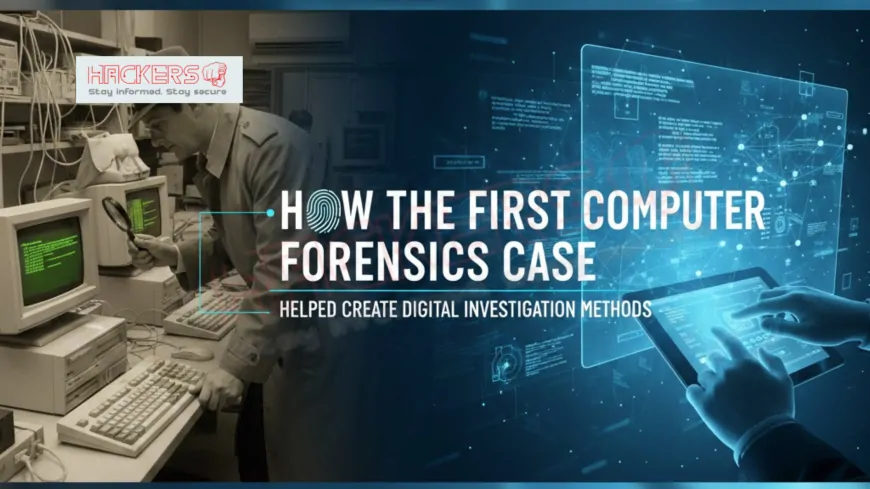
Table of Contents
- Background: The Dawn of Digital Crimes
- The Discovery: A 75-Cent Clue
- The Investigation: Tracking the Intruder
- Methods Developed During the Case
- Collaboration with Authorities
- The Honeypot Trap and Evidence Gathering
- The Arrest and Legal Proceedings
- Influence on Digital Investigation Methods
- Evolution of Computer Forensics Post-Case
- Computer Forensics Today
- Timeline of Key Events
- Conclusion
- FAQs
Background: The Dawn of Digital Crimes
In the early 1980s, computers were becoming more connected through networks like ARPANET, the precursor to the internet. This connectivity brought convenience but also new risks. Hackers, often curious students or enthusiasts, began exploring these systems. However, some had malicious intent, seeking to steal information or disrupt operations. The first computer crimes were recognized in laws like the 1978 Florida Computer Crimes Act, which addressed unauthorized access and data theft.
Computer forensics, the process of collecting, analyzing, and preserving digital evidence, was in its infancy. The FBI started developing programs in 1984 to examine computer evidence, marking the beginning of formal digital investigations.
For beginners, digital evidence includes things like files, emails, or logs of activity on a computer. Preserving it means ensuring it's not altered, so it can be used in court. The 1980s saw the need for such evidence grow as computers entered businesses and governments.
The Discovery: A 75-Cent Clue
Clifford Stoll was an astronomer at Lawrence Berkeley National Laboratory in California. In August 1986, he was asked to fix a small accounting error: 75 cents worth of unpaid computer time. Labs billed users for usage, and discrepancies were unusual. Stoll dug in and found an unauthorized user had accessed the system.
The intruder used a vulnerability in the movemail program of GNU Emacs to gain superuser privileges, allowing full control. Superuser means having admin rights, like owning the keys to every door. Stoll could have just blocked the account, but his curiosity led him to monitor instead.
This tiny clue revealed a larger issue: Someone was sneaking into sensitive networks. Stoll's decision to investigate rather than ignore marked the start of a groundbreaking case. It showed how small anomalies can signal big problems, a principle still used in forensics today.
The Investigation: Tracking the Intruder
Stoll set up monitoring tools to log the hacker's actions without alerting them. He used spare equipment to record keystrokes and commands. The hacker searched for military terms like "SDI" (Strategic Defense Initiative) and "nuclear," suggesting espionage.
To trace the source, Stoll worked with network providers like Tymnet. Connections routed through Virginia, then to West Germany. He analyzed timing: Sessions during US off-hours pointed to Europe.
Stoll's methods were innovative. He attached printers to lines for real-time data. This manual tracing was early network forensics, examining data flows. For beginners, forensics here means analyzing digital footprints, like following tracks in snow.
The investigation lasted ten months, showing patience's importance. Stoll documented everything, crucial for legal evidence.
Methods Developed During the Case
Stoll pioneered several techniques. Keystroke logging captured commands, now standard in forensics tools. Network tracing identified paths, foundational for IP tracking.
He emphasized chain of custody, ensuring evidence handling is documented to avoid tampering claims. This became a core principle.
Stoll used open-source tools and improvised, showing resourcefulness. His approach influenced guidelines for digital evidence collection, like preserving originals and using copies for analysis.
Collaboration with Authorities
As evidence mounted, Stoll contacted the FBI. Initially skeptical due to no clear damage, they engaged when military links emerged. The CIA and NSA joined, but jurisdiction issues arose.
Stoll provided logs, showing collaboration's value. This case highlighted multi-agency needs for cyber crimes, leading to teams like FBI's CART in 1984, expanded post-case.
International cooperation was key. Stoll worked with German authorities, setting precedents for cross-border investigations.
The Honeypot Trap and Evidence Gathering
To gather proof, Stoll created a honeypot: Fake files on SDI to lure the hacker. A honeypot is a decoy system attracting attackers for study.
The hacker downloaded them, staying online long enough for traces. A KGB-linked contact confirmed espionage.
This technique became standard. Honeypots collect evidence without alerting suspects. Stoll's evidence was crucial for conviction.
The Arrest and Legal Proceedings
Traces led to Markus Hess in Hanover, West Germany. Hess sold info to the KGB. Arrested in 1987, he was convicted in 1990 of espionage, serving time.
Stoll testified, presenting digital evidence. This was among the first times such evidence was used in court, setting legal precedents.
The case showed digital logs could be admissible if properly collected. It influenced laws on computer crimes.
Influence on Digital Investigation Methods
The Cuckoo's Egg case revolutionized forensics. It established logging and monitoring as key methods. Stoll's book, published in 1989, educated many on techniques.
It promoted honeypots and chain of custody. The case led to formal programs, like FBI's CART expansion.
It highlighted international aspects, influencing treaties. Overall, it transformed ad-hoc investigations into structured methods.
Evolution of Computer Forensics Post-Case
After the case, forensics grew. In the 1990s, tools like EnCase developed for evidence handling. Certifications like CCE emerged.
The 2000s saw integration with law enforcement. Cases like BTK Killer in 2005 used forensics on floppy disks.
Today, forensics includes mobile and cloud data. AI aids analysis. The case's influence persists in standards like ISO 27037 for evidence collection.
Computer Forensics Today
In 2025, forensics is advanced. Tools analyze vast data. Cloud forensics examines remote servers. Mobile forensics extracts phone data.
Law enforcement uses it for crimes from fraud to terrorism. Private firms offer services. The field emphasizes ethics and legality.
For beginners, it's like detective work but for digital clues. It's essential in our connected world.
Timeline of Key Events
| Year | Event |
|---|---|
| 1984 | FBI starts CART for computer evidence. |
| 1986 | Stoll discovers discrepancy, begins investigation. |
| 1987 | Hess arrested in Germany. |
| 1988 | Morris Worm highlights need for forensics. |
| 1989 | "The Cuckoo's Egg" published. |
| 1990 | Hess convicted. |
| 2005 | BTK Killer caught using forensics. |
Conclusion
The first computer forensics case, the Cuckoo's Egg, transformed digital investigations. From a small billing error, Stoll developed methods like logging, tracing, and honeypots that form the basis of modern forensics. It influenced laws, tools, and international cooperation. Today, these methods help solve crimes and protect systems. As technology evolves, the principles from this case remain vital, reminding us that curiosity and diligence can uncover hidden threats.
What was the Cuckoo's Egg case?
It was a 1986 investigation by Clifford Stoll into a computer intrusion at a lab.
Who was Clifford Stoll?
An astronomer who became a digital detective after spotting a billing error.
What clue started the investigation?
A 75-cent discrepancy in computer usage billing.
Who was the hacker in the case?
Markus Hess, working for the KGB.
What is a honeypot?
A decoy system to attract and trap hackers for evidence.
How long did the investigation last?
About ten months.
What methods did Stoll pioneer?
Keystroke logging, network tracing, and honeypots.
What agencies were involved?
FBI, CIA, NSA, and German authorities.
What was Hess convicted of?
Espionage in 1990.
How did the case influence forensics?
It established evidence gathering and chain of custody principles.
What book did Stoll write?
"The Cuckoo's Egg" in 1989.
Was this the absolute first forensics case?
It's one of the earliest documented, starting in 1986.
What is chain of custody?
Documenting evidence handling to ensure integrity.
How has forensics evolved since?
From manual tracing to AI and cloud analysis.
What is intrusion detection?
Monitoring for unauthorized access.
Why was the case landmark?
It showed digital evidence's value in court.
What vulnerability was exploited?
A flaw in GNU Emacs movemail.
How was the hacker traced?
Through network providers and timing analysis.
What role did honeypots play?
They kept the hacker online for tracing.
Is computer forensics still relevant?
Yes, essential for cybercrime investigations.
What's Your Reaction?