

























Why Y2K Fear Pushed the World Toward Stronger Cybersecurity
Do you remember where you were on New Year’s Eve 1999? Millions of people stocked canned food, filled bathtubs with water, and waited for planes to fall from the sky. The reason was a simple programming shortcut from the 1960s: computers stored years as two digits (98 instead of 1998) to save memory. When the clock hit 2000, many feared systems would read “00” as 1900 and crash. Banks could lose records. Power plants might shut down. Elevators could stop. The panic became known as the Y2K bug. In the end, almost nothing dramatic happened on January 1, 2000. Planes flew. Lights stayed on. Yet that global scare quietly gave the world one of its greatest gifts: the first serious investment in modern cybersecurity. This blog post explains how the fear of Y2K forced governments, banks, hospitals, and companies to finally take computer security seriously, and why many of the defenses we rely on today were born in those anxious years between 1997 and 2000.
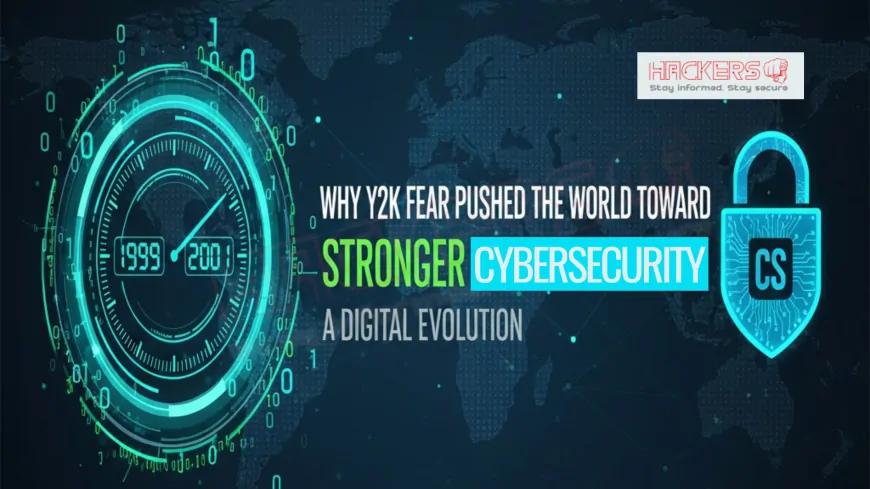
Table of Contents
- What Was the Y2K Bug, Really?
- The Scale of Fear: From Jokes to Doomsday Predictions
- Trillions Spent on Fixes: The Largest IT Project Ever
- Forced Inventory: Companies Finally Knew What They Owned
- Massive Testing Revealed Hidden Weaknesses
- Birth of Incident Response Teams and Disaster Plans
- Governments Passed New Laws and Created Agencies
- A Permanent Culture Change in IT Departments
- Timeline: Y2K Fear to Cybersecurity Boom
- Conclusion
- Frequently Asked Questions
What Was the Y2K Bug, Really?
In the 1960s and 1970s, computer memory and storage were extremely expensive. Programmers saved space by storing years as two digits (77 instead of 1977). Everyone assumed the software would be replaced long before 2000. It was not. By the 1990s, billions of lines of old code still used this shortcut in banks, airlines, utilities, and government systems. The fear was that when the date rolled to “00,” computers would think it was 1900, causing miscalculations in interest, flight schedules, or even nuclear missile timers.
The Scale of Fear: From Jokes to Doomsday Predictions
- 1996: Programmers start warning clients quietly
- 1997: Media stories explode (“The end of the world as debugged”)
- 1998: Survivalist websites sell generators and dried food
- 1999: Governments tell citizens to keep extra cash and water
Even experts disagreed. Some said nothing would happen. Others predicted weeks of chaos. The uncertainty itself forced action.
Trillions Spent on Fixes: The Largest IT Project Ever
Worldwide spending on Y2K fixes is estimated between $300 billion and $600 billion (in 1999 dollars). The U.S. government alone spent $8.5 billion. Banks spent tens of billions. Every large organization hired armies of programmers to find and fix old code. Small businesses bought new computers just to be safe. This was the biggest coordinated technology effort in history until that point.
Forced Inventory: Companies Finally Knew What They Owned
Before Y2K, many organizations had no idea how many computers, programs, or custom applications they ran. Fixing the bug forced them to create complete inventories. They discovered forgotten mainframes in basements, ancient payroll systems written in languages no one understood anymore, and critical equipment controlled by embedded chips (like factory robots or hospital machines). This mapping became the foundation of modern asset management in cybersecurity.
Massive Testing Revealed Hidden Weaknesses
To prove systems would survive January 1, 2000, companies set clocks forward in test labs. They found far more than date bugs:
- Weak passwords on critical systems
- Old software with known security holes
- Back doors left by former employees
- Devices that had never been patched
Many organizations fixed these problems while they were already paying programmers to work on Y2K.
Birth of Incident Response Teams and Disaster Plans
Y2K forced every major company and government agency to create “war rooms” for New Year’s Eve 1999. They wrote disaster recovery plans, appointed incident response teams, and practiced what to do if systems failed. After January 1 passed quietly, those same teams and plans did not disappear. They became the first formal cybersecurity incident response programs.
Governments Passed New Laws and Created Agencies
- 1998: U.S. creates the National Infrastructure Protection Center (predecessor to today’s CISA)
- 1999: President Clinton signs executive order making cybersecurity a national priority
- 2000: Many countries pass first data protection and critical infrastructure laws
Y2K proved that computer failures could threaten an entire nation, not just one company.
A Permanent Culture Change in IT Departments
Before Y2K, IT was often seen as a cost center. After spending billions to prevent disaster, executives finally understood that computers were critical infrastructure. Budgets for security, backups, patching, and training increased dramatically and never went back down. The phrase “we can’t risk it” became common when discussing upgrades or patches.
Timeline: Y2K Fear to Cybersecurity Boom
| Year | Event | Cybersecurity Impact |
|---|---|---|
| 1995–1996 | First serious Y2K warnings | Companies begin code audits |
| 1997 | Media panic begins | Governments create Y2K task forces |
| 1998 | U.S. National Infrastructure Protection Center founded | First federal cybersecurity agency |
| 1999 | Peak spending and testing | Billions poured into IT security |
| Jan 1, 2000 | Almost nothing happens | World breathes relief |
| 2000–2003 | Y2K teams become permanent security departments | Cybersecurity budgets stay high |
Conclusion
The Y2K bug turned out to be mostly a false alarm, but it was one of the most useful false alarms in history. The fear forced the largest technology cleanup and inventory project ever undertaken. It created the first global awareness that computers were now critical infrastructure. Billions of dollars, millions of programmer hours, and thousands of new security teams were put in place "just in case." When the clocks rolled over and the world kept working, those investments did not vanish. They became the foundation of modern cybersecurity. Every time your bank has a disaster recovery plan, every time a hospital tests its backup generators, and every time a government agency has a cybersecurity division, you are seeing the quiet, lasting legacy of the great Y2K scare.
What exactly was the Y2K bug?
A programming shortcut that stored years as two digits, risking confusion when 2000 arrived.
Did anything bad actually happen on January 1, 2000?
Very minor glitches, but no planes crashed and no major systems failed globally.
How much money was spent fixing Y2K?
Between $300 billion and $600 billion worldwide.
Why did companies spend so much if nothing happened?
They could not risk finding out the hard way; the potential cost of failure was too high.
Did Y2K create jobs?
Yes, hundreds of thousands of temporary programming and testing jobs.
What is an embedded system?
A small computer chip inside equipment like elevators, factory machines, or medical devices.
Did small businesses fix Y2K?
Many just bought new computers, which indirectly improved security.
Why do people say Y2K was a waste?
Because the fixes worked so well that nothing broke, making the effort look unnecessary.
Did hospitals prepare for Y2K?
Yes, many stocked extra supplies and had backup power plans that are still used.
What happened to the programmers who fixed Y2K?
Many moved into permanent cybersecurity and IT management roles.
Did banks really think they might lose all records?
Some older systems could have miscalculated interest or account ages, so yes.
Was Y2K the first global IT project?
Yes, the largest coordinated technology effort until that time.
Did any country ignore Y2K?
Almost none; even small nations spent heavily because global systems were linked.
Why do some experts say Y2K was good for security?
It forced inventory, testing, planning, and budgeting that became permanent.
What replaced the Y2K teams after 2000?
Formal information security and risk management departments.
Did the U.S. government create new agencies because of Y2K?
Yes, including early versions of today’s Cybersecurity and Infrastructure Security Agency.
Are there still two-digit date problems?
Rarely, but similar issues (like the 2038 problem) are being watched.
Did Y2K affect home computers?
Most new PCs after 1997 were already compliant, but older ones sometimes showed wrong dates.
Was the fear exaggerated?
Yes and no; some predictions were extreme, but real risks existed in old systems.
What is the biggest lesson from Y2K?
Investing in prevention early is always cheaper than fixing a disaster later.
What's Your Reaction?