



Why Are Zero-Knowledge Proofs the Future of Privacy in Blockchain?
Imagine proving you are over 21 years old to buy something online without showing your ID, date of birth, or even your name. You simply prove the fact, and nothing more. That is the magic of zero-knowledge proofs, often called ZKPs. In a world where blockchain promises transparency but sometimes exposes too much personal data, ZKPs are quietly becoming the most important privacy tool we have. By 2025, projects like Zcash, Polygon, Starknet, Mina, and even Ethereum’s upcoming upgrades are all betting heavily on zero-knowledge technology. Billions of dollars in value now move privately and securely thanks to ZKPs, and the trend is only accelerating. This blog post explains, in plain language, what zero-knowledge proofs are, why they matter so much for blockchain privacy, and why many experts believe they are the future. Whether you are completely new to crypto or already hold some coins, you will finish this article understanding why ZKPs are one of the most exciting developments in the space today.
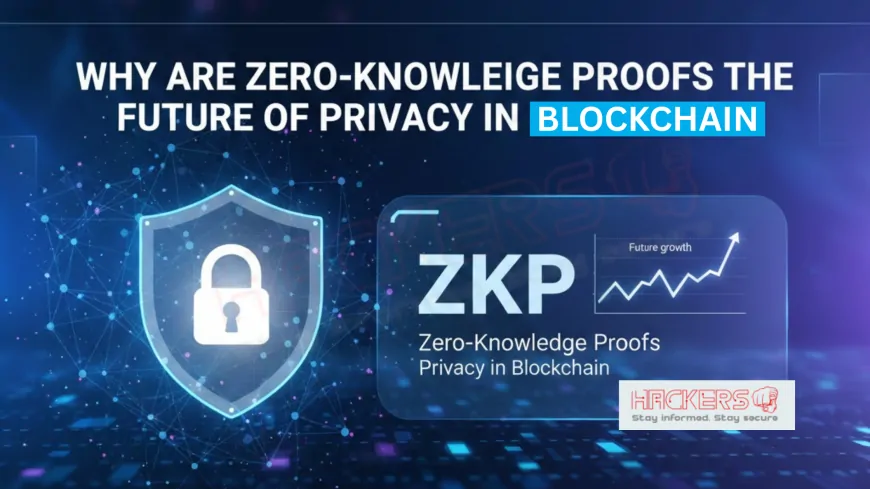
Table of Contents
- What Are Zero-Knowledge Proofs?
- Why Privacy Matters in Blockchain
- How Zero-Knowledge Proofs Work (Simply Explained)
- Main Types of Zero-Knowledge Proofs
- Real Projects Using ZKPs in 2025
- Key Benefits of ZKPs
- Challenges and Limitations
- The Future of ZKPs
- Conclusion
- Frequently Asked Questions
What Are Zero-Knowledge Proofs?
A zero-knowledge proof is a cryptographic method that lets one party (the prover) convince another party (the verifier) that a statement is true without revealing any extra information. The classic example is the cave analogy: imagine a cave with a door that only opens if you know a secret word. You can prove you know the word without ever saying it, simply by walking through the door in front of someone. In blockchain, ZKPs let you prove things like “I have enough money to make this payment” or “I am a citizen of this country” without showing your balance or passport.
The idea was invented in the 1980s by cryptographers Shafi Goldwasser, Silvio Micali, and Charles Rackoff. For decades it stayed mostly theoretical because it was too slow for real use. But in the last few years, massive breakthroughs have made ZKPs fast and cheap enough for everyday blockchain transactions.
Why Privacy Matters in Blockchain
Public blockchains like Bitcoin and Ethereum are completely transparent by default. Anyone can see every transaction, amount, and wallet address forever. This transparency is great for trust and auditing, but terrible for personal privacy. Your salary, spending habits, and even medical payments can be traced if someone connects your address to your identity.
Privacy is also crucial for businesses. Companies do not want competitors to see their exact trading volumes or supply chain costs. Regulated institutions like banks cannot use fully public blockchains because of laws like GDPR in Europe or financial secrecy rules.
Finally, privacy protects users from theft and targeting. If a hacker sees you own a large amount of crypto, you become a target. Zero-knowledge proofs solve these problems while keeping the benefits of transparency for those who need it.
How Zero-Knowledge Proofs Work (Simply Explained)
At a high level, ZKPs use clever math to create a proof that something is true without revealing the underlying data. There are two main modern approaches used in blockchain:
- zk-SNARKs (Zero-Knowledge Succinct Non-Interactive Argument of Knowledge): Small, fast proofs that do not require back-and-forth communication. Used by Zcash and many layer-2 solutions.
- zk-STARKs (Zero-Knowledge Scalable Transparent Argument of Knowledge): Do not need a trusted setup (a potential weak point) and are more quantum-resistant. Used by Starknet and others.
Think of it like this: instead of showing your entire bank statement to prove you have $1,000, you hand over a sealed envelope containing a mathematical proof. The recipient runs a quick check on the envelope and confirms “yes, this person definitely has at least $1,000” without ever opening it.
Main Types of Zero-Knowledge Proofs
Here is a simple comparison of the most popular ZKP systems in 2025:
| Type | Size of Proof | Verification Speed | Trusted Setup? | Quantum Resistant? | Popular Projects |
|---|---|---|---|---|---|
| zk-SNARKs | Very small (~300 bytes) | Very fast | Yes (but ceremonies are secure) | No | Zcash, Polygon zkEVM, Loopring |
| zk-STARKs | Larger (~30 KB) | Fast | No | Yes | Starknet, Immutable X |
| PLONK | Small | Very fast | Universal setup | Improving | Aztec, Mina, Scroll |
| Bulletproofs | Small | Fast | No | Yes | Grin, Monero (partially) |
Real Projects Using ZKPs in 2025
- Zcash: The original privacy coin using zk-SNARKs for fully shielded transactions.
- Polygon zkEVM: A layer-2 on Ethereum that offers full privacy and low fees.
- Starknet: Uses zk-STARKs for scalable, private smart contracts.
- Mina Protocol: The world’s lightest blockchain (22 KB) thanks to recursive ZKPs.
- Aztec Network: Private DeFi on Ethereum with zk-SNARKs.
- Railgun: Privacy system that works on any Ethereum token.
- Aleo: A layer-1 built from the ground up for private applications.
- Worldcoin: Uses ZKPs to prove unique humanity without revealing identity.
Key Benefits of ZKPs
- Real privacy: Hide transaction amounts, sender, and receiver while staying on a public chain.
- Regulatory compliance: Prove compliance (e.g., KYC/AML) without exposing personal data.
- Scalability: ZK-rollups bundle thousands of transactions into one proof, making Ethereum cheaper and faster.
- Selective disclosure: Share only the information you want (e.g., prove you are over 18 without showing birthdate).
- Security: No need to trust intermediaries; math guarantees correctness.
- Future-proofing: Some ZKP systems resist quantum computer attacks.
Challenges and Limitations
ZKPs are not perfect yet:
- Proof generation can still be slow and CPU-intensive on low-end devices.
- Developer complexity: Writing ZKP circuits is harder than normal code.
- Trusted setups (in some systems) require ceremonies that must stay secure.
- Larger proof sizes in some systems (though shrinking fast).
Fortunately, every year brings huge improvements in speed, size, and ease of use.
The Future of ZKPs
In 2025 and beyond, zero-knowledge proofs are moving from “nice to have” to “must have.” Ethereum’s next upgrades will make ZK-rollups the default scaling solution. Privacy-focused layer-1 chains like Aleo and Mina are gaining users. Governments and banks experimenting with CBDCs (central bank digital currencies) are looking at ZKPs to protect citizen privacy. Identity systems like Worldcoin and Polygon ID use ZKPs to create self-sovereign identities. The dream of private, scalable, and compliant blockchains is becoming reality, and zero-knowledge proofs are the key technology making it possible.
Conclusion
Zero-knowledge proofs are the breakthrough that finally gives blockchain real, usable privacy without sacrificing security or transparency when needed. They let you prove what needs proving and hide everything else, all backed by mathematics instead of trust. From private payments to scalable layer-2 networks to self-sovereign identity, ZKPs are quietly powering the next generation of blockchain applications. As the technology becomes faster, cheaper, and easier to use, it is clear why so many projects and experts believe zero-knowledge proofs are not just a feature, but the future of privacy in blockchain.
Frequently Asked Questions
What exactly is a zero-knowledge proof?
It is a way to prove something is true without revealing any supporting information.
Who invented zero-knowledge proofs?
Shafi Goldwasser, Silvio Micali, and Charles Rackoff in the 1980s.
Which coin first used ZKPs?
Zcash, launched in 2016 with zk-SNARKs.
What is the difference between zk-SNARKs and zk-STARKs?
zk-SNARKs are smaller and faster but need a trusted setup; zk-STARKs are larger, transparent, and quantum-resistant.
Can ZKPs make Ethereum transactions private?
Yes, projects like Aztec, Railgun, and Tornado Cash (legacy) do exactly that.
Are ZKPs quantum-resistant?
zk-STARKs and some newer systems are; most zk-SNARKs are not yet.
How do ZK-rollups work?
They bundle thousands of transactions off-chain and post one small proof on Ethereum.
Why are ZKPs better than mixing services?
They are mathematically private, not just obscured, and do not rely on trusting a pool.
Which layer-2 uses ZKPs?
Polygon zkEVM, zkSync, Starknet, Scroll, Linea, and many more.
Can I use ZKPs on Bitcoin?
Not natively yet, but sidechain and layer-2 projects are exploring it.
What is a trusted setup?
A one-time ceremony to generate parameters; if compromised, fake proofs could be created.
Is proof generation slow?
It used to be; in 2025 most systems generate proofs in seconds or less.
What is recursive ZKPs?
Proofs that verify other proofs, used by Mina to keep the chain tiny.
Can ZKPs be used for identity?
Yes, prove citizenship, age, or credentials without revealing personal data.
Are ZKPs regulated?
Not specifically, but privacy coins using them sometimes face regulatory scrutiny.
Will Ethereum become fully private?
Not the base layer, but private transactions and applications will be easy with ZKPs.
What is PLONK?
A universal and efficient ZKP system used by Aztec, Mina, and others.
Why do banks like ZKPs?
They allow compliance (prove rules are followed) while protecting customer data.
Is Worldcoin using ZKPs?
Yes, to prove unique human identity without revealing biometric data.
Are zero-knowledge proofs the final answer for privacy?
They are the strongest cryptographic privacy tool we have today, and likely for decades to come.
What's Your Reaction?