





























How Is Blockchain Used to Secure IoT Networks?
Imagine your smart home: lights that turn on with a voice command, a refrigerator that orders groceries when you run low, and a security camera that alerts your phone to intruders. This is the promise of the Internet of Things, or IoT, where everyday devices connect to the internet to make life easier. But with convenience comes risk. In 2025, IoT devices number in the billions, and hackers see them as easy targets for attacks that can steal data, disrupt services, or even cause physical harm. Traditional security methods struggle to keep up because IoT networks are decentralized and vast. That is where blockchain technology steps in. Best known for powering cryptocurrencies like Bitcoin, blockchain offers a way to secure these networks by creating tamper-proof records and decentralizing control. By ensuring data integrity and verifying device identities, blockchain helps protect against threats that could otherwise turn your smart home into a hacker's playground. This blog post explores how blockchain secures IoT networks, breaking it down into simple terms so beginners can understand. We will look at the challenges, how it works, real examples, and more, showing why this combination is shaping the future of connected devices.
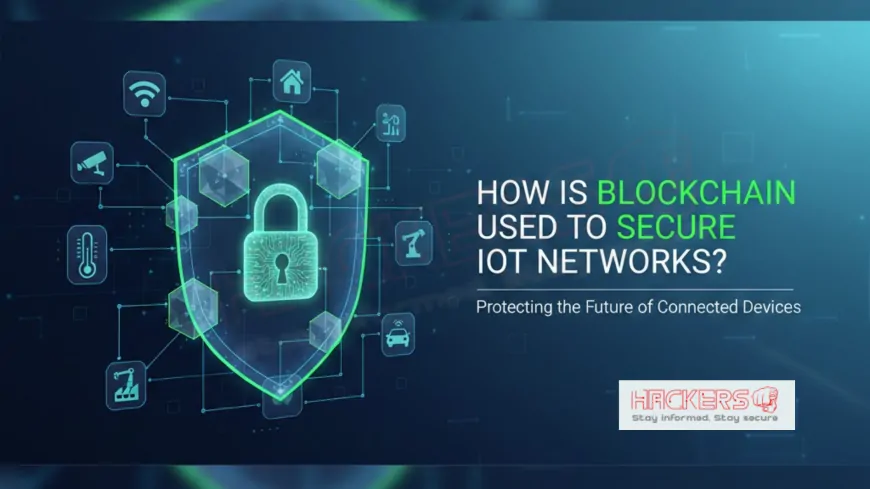
Table of Contents
- What Is IoT and Why Does It Need Better Security?
- The Basics of Blockchain Technology
- How Blockchain and IoT Work Together
- Key Security Mechanisms Provided by Blockchain
- Benefits of Using Blockchain for IoT Security
- Real-World Applications and Examples
- Challenges and Limitations
- Future Outlook in 2025 and Beyond
- Conclusion
- Frequently Asked Questions
What Is IoT and Why Does It Need Better Security?
The Internet of Things, or IoT, refers to the network of physical devices connected to the internet, collecting and sharing data. These include smart thermostats, wearable fitness trackers, industrial sensors, and even connected cars. By 2025, there are over 75 billion IoT devices worldwide, each generating data that helps automate tasks and provide insights.
IoT works by embedding sensors and software in devices, allowing them to communicate. For example, a smart factory uses IoT sensors to monitor machines, predicting failures before they happen. In homes, IoT devices like voice assistants control lights and music.
However, this connectivity brings security challenges. Devices often have weak passwords or outdated software, making them easy targets for hackers. A compromised device can serve as an entry point to larger networks, leading to data theft or ransomware attacks. In 2025, IoT attacks have surged, with hackers using botnets, networks of infected devices, to launch massive denial-of-service assaults.
Centralized systems, where data flows to a single server, are vulnerable to single-point failures. If hacked, the whole network is at risk. Privacy is another concern, as devices collect personal data that could be misused.
These issues highlight the need for better security. Blockchain offers a decentralized alternative, distributing control and ensuring data cannot be altered without detection. This makes IoT networks more resilient and trustworthy.
The Basics of Blockchain Technology
Blockchain is a digital ledger that records transactions in a secure, transparent way. It consists of blocks linked in a chain, each containing data and a unique code called a hash. The hash depends on the block's content, so changing data breaks the chain, alerting the network.
Key features include decentralization: no single entity controls it, with copies on many computers. Immutability: once added, data cannot be changed. Transparency: records are visible, but encryption protects privacy.
Blockchain uses consensus mechanisms, like proof-of-work or proof-of-stake, to agree on data validity. Smart contracts are self-executing code that automates actions.
Originally for cryptocurrencies like Bitcoin, blockchain now secures votes, supply chains, and IoT. In IoT, it verifies device identities and secures data exchanges.
For beginners, blockchain is like a shared notebook where entries are permanent and everyone can check them, but only authorized people add new ones. This builds trust without a central authority.
How Blockchain and IoT Work Together
Blockchain and IoT complement each other. IoT generates massive data; blockchain secures it. Devices send data to blockchain, where it is recorded immutably.
For security, blockchain verifies device identities with unique keys, preventing fakes from joining. Data from sensors is timestamped and hashed, ensuring integrity.
Smart contracts automate responses: if a sensor detects an issue, a contract alerts maintenance.
Decentralization means no central server to hack; data is distributed. This reduces risks in large IoT networks.
Integration uses platforms like IOTA, designed for IoT with feeless transactions. Or Ethereum, with smart contracts for complex logic.
Together, they create secure, efficient systems for industries like manufacturing or healthcare.
Key Security Mechanisms Provided by Blockchain
Blockchain secures IoT through several mechanisms.
Device authentication: Each device has a blockchain identity, verified cryptographically. This prevents unauthorized access.
Data integrity: Hashes ensure data is not altered in transit or storage.
Decentralized control: No single point of failure; hacks on one device do not compromise the network.
Transparent logging: All actions are recorded, allowing audits to spot anomalies.
Smart contract enforcement: Automates security rules, like revoking access if behavior is suspicious.
Encryption: Data is encrypted, with keys managed on blockchain for secure sharing.
Consensus: Ensures only valid data is added, rejecting malicious inputs.
These mechanisms make IoT networks harder to breach.
Benefits of Using Blockchain for IoT Security
Combining blockchain with IoT offers many advantages.
Enhanced security: Reduces risks from hacks and data tampering.
Improved trust: Transparent records build confidence among users and partners.
Efficiency: Automation cuts manual checks, saving time.
Cost savings: Fewer breaches mean lower recovery costs.
Scalability: Handles growing device numbers without central bottlenecks.
Privacy: Users control data sharing.
Innovation: Enables new uses, like secure autonomous systems.
To compare, here is a table showing traditional IoT vs. blockchain-enhanced:
| Aspect | Traditional IoT | Blockchain-Enhanced IoT |
|---|---|---|
| Control | Centralized servers | Decentralized network |
| Data Integrity | Vulnerable to tampering | Immutable records |
| Authentication | Weak passwords | Cryptographic keys |
| Privacy | Central data collection | User-controlled sharing |
| Efficiency | Manual processes | Automated contracts |
These benefits drive adoption in 2025.
Real-World Applications and Examples
Blockchain secures IoT in various fields. In manufacturing, IBM's system tracks parts, ensuring authenticity.
In agriculture, farmers use blockchain-IoT to monitor crops, securing data from tampering.
Healthcare: Wearables send data to blockchain for secure storage, protecting patient privacy.
Smart cities: IoT sensors for traffic use blockchain to prevent hacks disrupting systems.
Energy: Smart grids use it for secure metering.
Projects like IOTA focus on IoT with feeless transactions.
These applications show practical value.
Challenges and Limitations
Blockchain-IoT has obstacles. Scalability: Blockchains handle limited transactions; IoT needs high volume. Solutions: Sharding or layer-2.
Energy use: PoW is power-hungry; PoS is better for IoT.
Interoperability: Devices from different makers need standards.
Cost: Setup can be expensive for small ops.
Regulation: Data laws vary; compliance is key.
Complexity: Requires expertise to implement.
Addressing these makes it viable.
Future Outlook in 2025 and Beyond
In 2025, blockchain-IoT grows. 5G enables faster data, paired with blockchain for security.
AI integrates for smarter analysis of secure data.
Standards emerge for interoperability.
Adoption in smart cities and industry rises.
Quantum-resistant blockchain prepares for future threats.
The future is integrated, secure networks.
Conclusion
Blockchain secures IoT by providing authentication, integrity, and decentralization. It addresses vulnerabilities, offering benefits in security and efficiency. Real applications in manufacturing and healthcare prove its worth. Challenges like scalability exist, but solutions are advancing. As IoT expands, blockchain is essential for safe, reliable networks.
Frequently Asked Questions
What is IoT?
IoT is the network of connected devices sharing data over the internet.
Why is IoT insecure?
Devices have weak protections and centralized systems are hackable.
What is blockchain?
A secure, decentralized ledger for recording data.
How does it secure IoT?
By verifying identities and ensuring data integrity.
What is decentralization?
Spreading control across many nodes, no single failure point.
What are smart contracts?
Automated code for enforcing rules.
How many IoT devices in 2025?
Over 75 billion worldwide.
What is data integrity?
Ensuring data is not altered unauthorized.
Give an example.
IBM's system for tracking manufacturing parts.
What is scalability challenge?
Handling high transaction volumes from IoT.
How does encryption help?
It protects data from unauthorized access.
What is consensus?
The process for agreeing on data validity.
Is it energy-efficient?
PoS versions are, better for IoT.
What is IOTA?
A blockchain for IoT with feeless transactions.
How does it improve privacy?
Users control data sharing.
What are benefits?
Security, efficiency, cost savings.
What is 5G's role?
Faster data for IoT-blockchain integration.
Can small businesses use it?
Yes, with cloud-based solutions.
What is quantum-resistant?
Protection against future quantum computers.
Why now in 2025?
IoT growth demands better security.
What's Your Reaction?