





























Why Are Quantum Computers a Threat to Blockchain Encryption?
Picture this: one morning in the not-so-distant future, someone turns on a machine the size of a small room. Within hours, that machine can crack secrets that today would take every computer on Earth billions of years to break. Your Bitcoin private key, the digital signature that proves you own your Ethereum, even the encryption protecting entire blockchains could suddenly become readable to anyone with that machine. That machine is a large-scale quantum computer, and experts now believe we might see one capable of breaking today’s blockchain encryption sometime between 2030 and 2040. The good news? The industry is already preparing. The bad news? We are in a race against time. This blog post explains, in simple and honest language, exactly why quantum computers scare blockchain security experts, which parts are truly at risk, how long we probably have, and what solutions are being built right now in 2025.
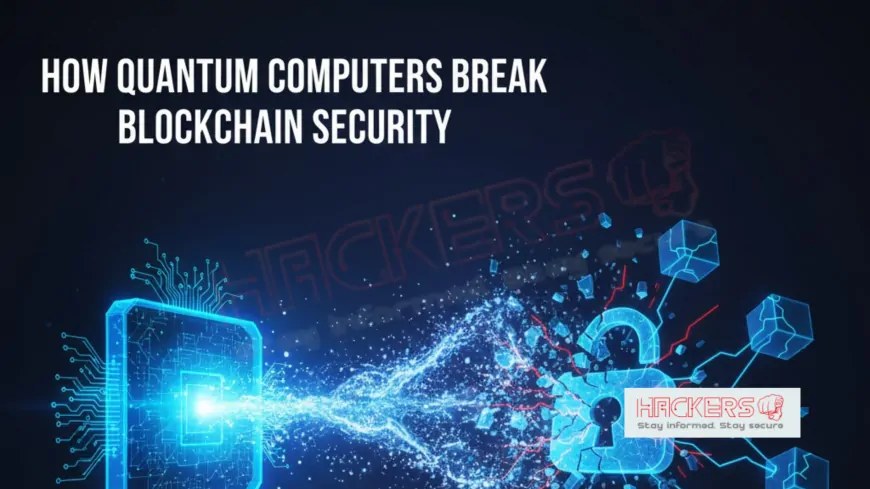
Table of Contents
- What Is a Quantum Computer, Really?
- How Today’s Blockchain Encryption Works
- The Two Quantum Attacks That Matter: Grover and Shor
- Which Parts of Blockchain Are Actually at Risk?
- Realistic Timeline: When Could This Happen?
- Current Encryption vs. Quantum-Resistant Encryption
- What the Blockchain Industry Is Doing in 2025
- Winners and Losers in a Post-Quantum World
- Conclusion
- Frequently Asked Questions
What Is a Quantum Computer, Really?
A normal computer uses bits that are either 0 or 1. A quantum computer uses qubits that can be 0, 1, or both at the same time thanks to a property called superposition. It also uses entanglement, which lets qubits instantly affect each other no matter the distance. The result? A quantum computer with enough stable qubits can solve certain math problems exponentially faster than any regular computer ever could.
How Today’s Blockchain Encryption Works
Most blockchains rely on two types of math for security:
- Elliptic Curve Cryptography (ECDSA): Turns your private key into a public address (used by Bitcoin, Ethereum, Solana, etc.)
- SHA-256 hashing: Protects blocks and creates wallet addresses
The Two Quantum Attacks That Matter: Grover and Shor
- Shor’s algorithm: Can factor huge numbers and solve the elliptic-curve problem almost instantly. This breaks private keys from public keys.
- Grover’s algorithm: Gives a square-root speedup for searching unsorted data. This weakens hashing and symmetric encryption, but the effect is smaller.
Which Parts of Blockchain Are Actually at Risk?
| Blockchain Component | Vulnerable to Shor? | Vulnerable to Grover? | Real Risk Level in 2035 |
|---|---|---|---|
| ECDSA signatures (private → public key) | Yes, completely broken | No | Very high |
| SHA-256 hashing | No | Weakened (needs 256→512 bit) | Medium |
| Unused wallets (P2PKH Bitcoin) | Public key exposed = instant theft | No | Immediate danger |
| Active wallets (reuse addresses rarely) | Only vulnerable during transaction | No | Lower if upgraded fast |
| Proof-of-Stake consensus | Signatures broken | No | High |
Realistic Timeline: When Could This Happen?
- 2025-2028: Quantum computers reach 1,000–5,000 logical qubits (still too noisy)
- 2030-2035: First cryptographically relevant quantum computer (CRQC) possible according to most experts
- 2035-2040: More likely date for a machine that can run Shor on 256-bit keys in hours/days
- Google, IBM, China, and the U.S. government are all racing
Current Encryption vs. Quantum-Resistant Encryption
| Algorithm Type | Examples | Status 2025 | Key Size Increase |
|---|---|---|---|
| Current (vulnerable) | ECDSA secp256k1, RSA-2048 | Used everywhere | Small |
| Lattice-based (leading) | Kyber, Dilithium | NIST standard 2024 | 2-10× larger |
| Hash-based signatures | SPHINCS+ | Ready, very large keys | 50-100× larger |
| Multivariate | Rainbow (broken), others | Some still in race | Medium |
What the Blockchain Industry Is Doing in 2025
- Bitcoin: BIP-340 Schnorr is quantum-aware, but still vulnerable; post-quantum signature discussions ongoing
- Ethereum: Planning “The Verge” upgrade with quantum-resistant options
- NIST standardization finished 2024: Kyber and Dilithium are official
- Projects already quantum-resistant: QANplatform, Quantum Resistant Ledger, Cardano (research), Hedera (hash-based option)
- Major wallets adding address migration tools
- Enterprise chains (Hyperledger, Corda) moving fastest
Winners and Losers in a Post-Quantum World
- Winners: New layer-1 chains built quantum-resistant from day one, privacy coins using lattice crypto
- Losers: Old dormant Bitcoin wallets with exposed public keys (billions at risk), chains that delay upgrades
- Neutral: Most active users who move funds regularly and upgrade when prompted
Conclusion
Quantum computers are a real, serious threat to today’s blockchain encryption, especially ECDSA signatures that protect private keys. Shor’s algorithm could expose any public key in minutes once a large enough quantum computer exists, probably in the 2030s. The good news is that we know exactly which math is broken, and we already have replacement algorithms (Kyber, Dilithium, etc.) that even quantum computers cannot crack with known methods. The race is now about upgrading billions of dollars in infrastructure before the first cryptographically relevant quantum computer goes online. In 2025, the smartest projects and users are already preparing. The ones who wait may wake up to empty wallets one day.
Frequently Asked Questions
When will quantum computers break Bitcoin?
Best estimates: 2030-2040 for a machine large and stable enough.
Is my Bitcoin safe today?
Yes in 2025. No quantum computer can break ECDSA yet.
Which coins are already quantum-resistant?
QANplatform, XX Network, some configurations of Cardano and Hedera.
Will Ethereum survive quantum?
Yes, it has clear upgrade paths and is actively researching.
Are dormant Bitcoin wallets in danger?
Yes, any P2PKH address that has ever spent reveals the public key.
What is the safest post-quantum algorithm?
NIST chose Kyber (key exchange) and Dilithium (signatures) in 2024.
Will transaction fees go up?
Yes, new signatures are larger, but compression techniques help.
Can I protect my coins now?
Use wallets that hide public keys (Taproot, new address types) and plan to migrate when upgrades arrive.
Is SHA-256 broken by quantum?
No, but collision resistance drops, so we move to SHA-512 or BLAKE3.
Who is building quantum computers fastest?
Google, IBM, China (Jiuzhang, Zuchongzhi), and startups like PsiQuantum.
Will privacy coins be safer?
Some (like lattice-based ones) yes; ring-signature coins like Monero will need upgrades.
Does proof-of-stake help?
No, staking signatures are still vulnerable to Shor.
Can quantum computers steal staking rewards?
Yes, if they can forge signatures.
Is there a quantum-resistant Bitcoin fork?
Not mainstream yet, but proposals exist.
Should I sell my crypto because of quantum?
No. We have years to upgrade, and the industry is moving.
Who pays for the upgrade?
Network participants via soft or hard forks; wallet providers add support.
Can quantum computers mine faster?
Grover gives only quadratic speedup, not enough to matter for mining.
Is NIST standardization finished?
Yes, round 4 completed in 2024.
Will old transactions become unsafe?
Only if the public key was ever exposed (old-style addresses).
What should I do today?
Avoid reusing addresses, use Taproot/Segwit, follow quantum-resistant wallet announcements.
What's Your Reaction?