










What Was the First Ever Cyberattack in History?
Imagine a world where information flows like water through pipes, and someone finds a way to tamper with that flow for personal gain. Today, we hear about cyberattacks almost daily: hackers stealing data, ransomware locking up systems, or nations disrupting each other's networks. But where did it all start? What was the very first cyberattack? The answer might surprise you, as it depends on how we define "cyber." If we think of it as tampering with information networks, the story goes back nearly two centuries. In this blog post, we dive into the history, exploring early incidents that laid the groundwork for modern cybersecurity. We will look at key events, the people behind them, and how these moments shaped our digital defenses. Even if you are new to this topic, we will keep things simple and explain any tricky terms along the way.
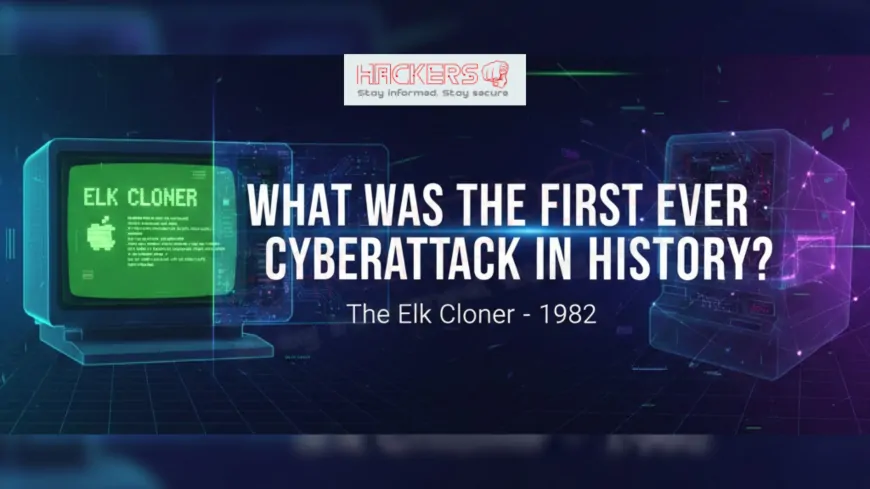
Table of Contents
- The Pre-Digital Era: The 1834 French Telegraph Hack
- The Dawn of Computers: 1940s to 1960s
- The 1970s: Creeper, Reaper, and the Birth of Malware
- The 1980s: The Morris Worm and Rising Threats
- The 1990s: Internet Boom and Sophisticated Attacks
- Evolution into Modern Cyberattacks
- A Timeline of Early Cyberattacks
- Conclusion
- Frequently Asked Questions
The Pre-Digital Era: The 1834 French Telegraph Hack
Long before computers existed, people relied on other systems to send information quickly over long distances. In the early 19th century, France had a sophisticated network called the optical telegraph. This system used towers with mechanical arms that could be positioned in different ways to represent letters and numbers, much like a visual code. Messages were passed from tower to tower, allowing news to travel across the country faster than by horse.
In 1834, two brothers, Francois and Joseph Blanc, saw an opportunity to profit from this network. They were bankers who wanted an edge in the stock market. At the time, government bonds were traded based on political news, and getting that news first could mean big profits. The Blanc brothers bribed a telegraph operator in Tours to insert specific error codes into messages. These codes were meaningless to most but signaled market changes to accomplices in Bordeaux. By corrupting the data stream, they gained advance knowledge of bond price shifts and made a fortune.
This incident is often cited as the first cyberattack because it involved manipulating an information network for illicit gain. It was not digital, but it shares key traits with modern hacks: unauthorized access, data tampering, and financial motive. The brothers were eventually caught and tried, but since no specific law against such actions existed, they were convicted only on bribery charges. This event highlights how vulnerabilities in communication systems have always attracted those looking to exploit them.
Why consider this a cyberattack? The term "cyber" comes from "cybernetics," which deals with control and communication in systems. Even though it was mechanical, the telegraph was a communication system, and the attack disrupted its integrity. Some historians argue this predates computer-based attacks by over a century, showing that the core ideas of cybersecurity are timeless. As technology advanced, these principles carried over to electronic systems.
This early example set a precedent. It showed that any network carrying valuable information is a target. Fast forward to the invention of computers, and we see similar patterns emerge in a new form.
The Dawn of Computers: 1940s to 1960s
The 1940s brought the birth of electronic computers during World War II. Machines like ENIAC, built in 1945, were massive and used for calculating artillery trajectories. Security back then was physical: guards and locked rooms protected these expensive devices. But as computers handled sensitive data, like military secrets, the need for better protection grew.
Cryptography, the art of writing or solving codes, became key. During the war, the German Enigma machine encrypted messages, and Allied codebreakers, including Alan Turing, worked to crack it. Turing's efforts at Bletchley Park not only helped win the war but also influenced computer design. His ideas about machines that could think and process information securely laid groundwork for digital security.
In the 1950s, the Cold War intensified concerns. The U.S. created the National Security Agency (NSA) in 1952 to protect communications and spy on enemies. Computers started storing classified data, leading to early access controls, like passwords. But threats were still mostly from insiders or spies, not remote attacks.
By the 1960s, computers began connecting. In 1962, at MIT, passwords were introduced for shared computers to allocate time fairly among students. However, Allan Scherr, a student, printed out the password file using punch cards, allowing extra access. This was an early hack, showing that even simple security could be bypassed.
In 1965, Donald Davies proposed packet switching, breaking data into packets for transmission. This made networks more efficient and secure, as packets could take different routes, harder to intercept fully. In 1969, ARPANET launched, connecting four universities. The first message was "LO" for "LOGIN," but the system crashed. ARPANET was the internet's precursor, and with connection came new risks.
These decades built the foundation. Computers went from isolated calculators to networked devices, creating opportunities for attacks. The stage was set for the first digital threats in the next era.
The 1970s: Creeper, Reaper, and the Birth of Malware
The 1970s saw computers become more common in research and business. ARPANET grew, and with it, experiments that tested network limits. In 1971, Bob Thomas at BBN Technologies created Creeper. This program moved from computer to computer on ARPANET, displaying "I'm the Creeper: catch me if you can." It was not meant to harm but to show self-replication was possible.
Creeper is often called the first computer worm, a type of malware that spreads without human help. Malware is short for malicious software, programs designed to disrupt or steal. Though Creeper was harmless, it proved code could travel networks independently.
In response, Ray Tomlinson, inventor of email, made Reaper. This program hunted and deleted Creeper copies. Reaper was the first antivirus, software that detects and removes threats. This back-and-forth marked the start of the ongoing battle between attackers and defenders.
Other developments included the Diffie-Hellman key exchange in 1976, allowing secure key sharing over open channels. It is like agreeing on a lock combination without saying it aloud. In 1977, the Data Encryption Standard (DES) was adopted for encrypting data, making it unreadable without a key.
Hackers like Kevin Mitnick began activities, using social engineering, tricking people into revealing info. His methods showed security involves people, not just tech.
The 1970s shifted focus from physical to digital protection. Creeper and Reaper showed threats could spread fast, prompting early tools and standards.
The 1980s: The Morris Worm and Rising Threats
Personal computers arrived in homes during the 1980s, expanding the attack surface. In 1983, the 414s, teenage hackers from Milwaukee, broke into ARPANET systems, including Los Alamos National Laboratory. They exposed flaws but caused no major harm. Their arrest led to the Computer Fraud and Abuse Act in 1986, the first U.S. law against unauthorized access.
In 1986, the Brain virus spread via floppy disks, marking files as bad sectors to hide. It was the first to target PCs widely.
In 1987, the Vienna virus destroyed files, but Bernd Fix created an antivirus to stop it. John McAfee released VirusScan, the first commercial antivirus.
The landmark event was the Morris Worm in 1988. Robert Tappan Morris, a Cornell student, released a worm to gauge internet size. It exploited vulnerabilities, replicating uncontrollably and slowing 10 percent of connected computers. Damages reached millions. Morris was convicted, fined, and did community service. The worm led to CERT, the first team for responding to cyber incidents.
The 1980s saw threats evolve from experiments to disruptions, birthing the antivirus industry and laws.
The 1990s: Internet Boom and Sophisticated Attacks
The internet exploded in the 1990s, connecting millions. Threats grew too. Polymorphic viruses in 1991 changed code to dodge detection.
Firewalls, barriers controlling network traffic, became standard. Ethical hacking emerged in 1995, where experts test systems legally.
Kevin Mitnick's 1995 arrest after hacking major companies highlighted risks. The Melissa virus in 1999 spread via email, causing $80 million in damages by mailing itself to contacts.
Phishing started, tricking users into giving info. The decade saw layered defenses and awareness rise.
Evolution into Modern Cyberattacks
From these early days, cyberattacks have grown complex. The 2000s brought worms like ILOVEYOU, affecting millions. Stuxnet in 2010 targeted Iran's nuclear program, showing state-sponsored attacks.
Today, ransomware locks data for payment, and DDoS floods sites with traffic. The internet of things adds devices like smart fridges as targets.
Lessons from history: Security must evolve. Early attacks like the telegraph hack or Creeper remind us vigilance is key.
A Timeline of Early Cyberattacks
Timeline of the Earliest Cyberattacks and Key Security Milestones
| Year | Event | Description |
|---|---|---|
| 1834 | French Telegraph Hack | Blanc brothers tampered with telegraph for stock market gain. |
| 1945 | ENIAC Built | First electronic computer, focus on physical security. |
| 1952 | NSA Created | Agency for securing U.S. communications. |
| 1962 | MIT Password Hack | Allan Scherr stole passwords via punch cards. |
| 1969 | ARPANET Launched | First network, precursor to internet. |
| 1971 | Creeper Worm | First self-replicating program. |
| 1971 | Reaper Antivirus | First program to remove a worm. |
| 1976 | Diffie-Hellman Key Exchange | Secure key sharing method. |
| 1977 | Data Encryption Standard | Standard for data encryption. |
| 1983 | 414s Hacking Group | Teenagers exposed ARPANET vulnerabilities. |
| 1986 | Brain Virus | Spread via floppy disks. |
| 1987 | Vienna Virus | File-destroying virus neutralized by antivirus. |
| 1987 | VirusScan Released | First commercial antivirus. |
| 1988 | Morris Worm | Major disruption, led to CERT. |
| 1991 | Polymorphic Viruses | Mutating to evade detection. |
| 1995 | Ethical Hacking Coined | Term for legal system testing. |
| 1999 | Melissa Virus | Email-spreading, $80 million damages. |
Conclusion
The history of cyberattacks is a tale of innovation and exploitation. From the 1834 telegraph hack to the Morris Worm and beyond, each incident pushed us to build better defenses. What started as simple tampering has become a global challenge. Understanding these roots helps us appreciate cybersecurity's importance today. Stay informed, use strong passwords, and keep software updated to protect yourself.
Frequently Asked Question
What is considered the first cyberattack?
The 1834 French telegraph hack by the Blanc brothers is often seen as the first, involving data tampering for gain.
Was the 1834 incident really a cyberattack?
Yes, in a broad sense, as it manipulated an information network, similar to modern hacks.
What was Creeper?
Creeper was a 1971 program that spread on ARPANET, the first computer worm.
Who created Reaper?
Ray Tomlinson created Reaper to delete Creeper, the first antivirus.
What was ARPANET?
ARPANET was a 1969 network by the U.S. Defense Department, leading to the internet.
When were passwords first hacked?
In 1962 at MIT, Allan Scherr stole passwords.
What is the Morris Worm?
A 1988 worm that disrupted the early internet, created by Robert Morris.
Who was Kevin Mitnick?
A hacker famous for social engineering in the 1970s to 1990s.
What is packet switching?
A 1965 method to send data in packets for efficiency and security.
When was the first commercial antivirus?
In 1987, VirusScan by John McAfee.
What are polymorphic viruses?
Viruses from 1991 that change code to avoid detection.
What was the Melissa virus?
A 1999 email virus causing $80 million in damages.
Why was the NSA created?
In 1952, to secure communications and gather intelligence.
What is the Diffie-Hellman key exchange?
A 1976 way to share keys securely.
Who were the 414s?
A 1983 teenage hacking group that breached ARPANET.
What was the Brain virus?
A 1986 virus spreading via floppy disks.
What is ethical hacking?
Legal testing of systems for vulnerabilities, termed in 1995.
Why is the Enigma machine important?
It advanced cryptography during World War II.
What did the Morris Worm lead to?
The creation of CERT for incident response.
How have cyberattacks evolved?
From simple worms to state-sponsored and ransomware attacks.
What's Your Reaction?