












































Substantive vs. Procedural Cyber Laws - What’s the Difference?
Imagine you're playing a game of football. One set of rules tells you what you cannot do: no tripping, no handballs, no offside. Another set tells you how the game is played: how to take a penalty, how the referee makes decisions, how long the match lasts. In the world of cyber laws, we have something similar. Some laws define what is illegal in the digital space. Others define how to investigate, prosecute, and punish those crimes. These are called substantive and procedural cyber laws. Though they sound complex, the difference is simple: one sets the boundaries, the other enforces them. In this blog post, we’ll break down both types in plain language, show real-world examples, and explain why understanding this difference matters to everyone, from students to policymakers. Let’s dive in.
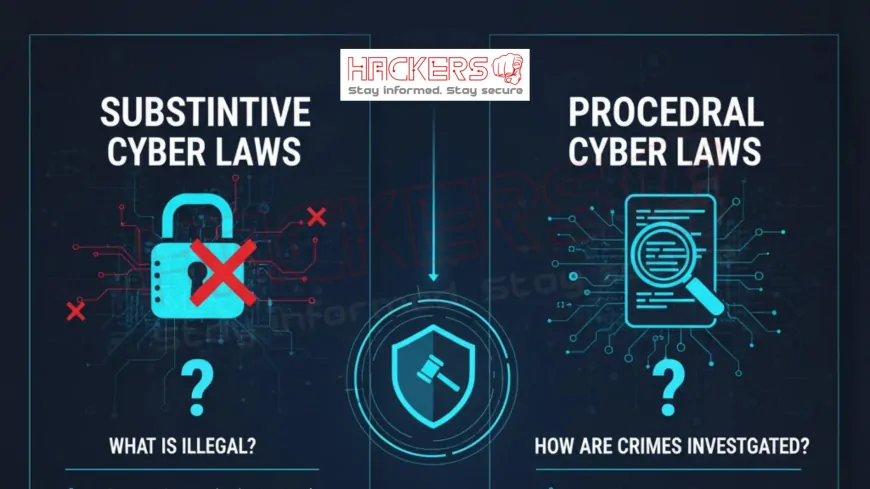
Table of Contents
- What Are Substantive Cyber Laws?
- Examples of Substantive Cyber Laws
- What Are Procedural Cyber Laws?
- Examples of Procedural Cyber Laws
- Key Differences: Substantive vs. Procedural
- Why Both Types of Laws Matter
- How Substantive and Procedural Laws Work Together
- A Global Perspective: India, US, EU
- Challenges in Balancing Both
- Future Trends in Cyber Lawmaking
- Conclusion
- FAQs
What Are Substantive Cyber Laws?
Substantive cyber laws are the "what" of digital crime. They define which actions are illegal in the online world. Think of them as the rulebook that says: "This behavior is not allowed." These laws create the actual offenses, set punishments, and establish legal boundaries.
For example, a substantive law might say: "Anyone who gains unauthorized access to a computer system commits a crime and can be jailed for up to five years." It doesn’t explain how to catch the hacker or how to prove it in court. It only says the act itself is wrong.
These laws cover a wide range of digital misconduct, including:
- Hacking into systems without permission
- Stealing personal data like credit card numbers
- Spreading viruses or ransomware
- Online fraud, phishing, or identity theft
- Cyberbullying, harassment, or child exploitation
- Denial-of-service attacks that crash websites
Substantive laws are the foundation. Without them, there would be no crime to investigate. They give clarity to citizens, businesses, and law enforcement about what crosses the line in cyberspace.
Examples of Substantive Cyber Laws
Let’s look at a few real laws that fall under the substantive category.
- India’s IT Act, 2000 (Section 66): Makes computer-related offenses like tampering with data or hacking punishable with imprisonment up to three years.
- US Computer Fraud and Abuse Act (CFAA): Criminalizes intentional access to protected computers without authorization. It’s been used in cases against hackers and insider threats.
- UK Computer Misuse Act, 1990: Defines offenses like unauthorized access, modification of data, and supplying tools for hacking.
These laws don’t tell police how to collect digital evidence. They simply declare certain actions as crimes.
What Are Procedural Cyber Laws?
Procedural cyber laws are the "how". They guide the process of enforcing substantive laws. Once a crime is defined, procedural laws explain how to investigate it, gather evidence, arrest suspects, conduct trials, and impose penalties.
Think of procedural laws as the referee, the stopwatch, and the rulebook for penalties in a football match. They ensure fairness, protect rights, and make justice possible.
Key areas covered by procedural cyber laws include:
- How police can search digital devices
- Rules for preserving electronic evidence
- Time limits for reporting cybercrimes
- Powers to intercept communications (with court approval)
- Procedures for international cooperation in cross-border cases
- Rights of the accused in digital trials
Without procedural laws, even the strongest substantive law would be toothless. You can say hacking is illegal, but if investigators can’t legally seize a laptop or recover deleted files, the law fails.
Examples of Procedural Cyber Laws
Here are some real-world examples of procedural mechanisms in cyber law:
- India’s IT Act, Section 78: Allows police officers of rank Inspector and above to investigate cybercrimes.
- Code of Criminal Procedure (CrPC), 1973 (amended): Governs search, seizure, and arrest in cyber cases, including rules for digital evidence.
- EU’s e-Evidence Regulation (2023): Allows law enforcement to request data directly from tech companies across EU borders within strict timelines.
- US Stored Communications Act: Sets rules for government access to emails and cloud data stored by service providers.
These laws focus on process, not the crime itself.
Key Differences: Substantive vs. Procedural
To make the distinction crystal clear, here’s a side-by-side comparison:
| Aspect | Substantive Cyber Laws | Procedural Cyber Laws |
|---|---|---|
| Purpose | Define what is illegal | Explain how to enforce the law |
| Focus | The crime itself | Investigation and trial process |
| Example Question | "Is hacking a crime?" | "How do we prove someone hacked?" |
| Outcome | Creates offenses and penalties | Ensures fair and effective justice |
| Real-World Analogy | "No stealing" | "How to investigate a theft" |
This table shows that both are essential, but they serve different roles in the justice system.
Why Both Types of Laws Matter
Substantive laws without procedural backing are like speed limit signs with no police. Procedural laws without substance are like a referee with no rules to enforce. Together, they form a complete legal system.
For citizens, substantive laws provide clarity: "I know not to click phishing links or share passwords." Procedural laws protect rights: "If I’m accused, I deserve a fair trial with proper evidence." For law enforcement, substantive laws give authority to act. Procedural laws give the tools and limits to act legally.
In short: substantive laws stop crime by defining it; procedural laws stop injustice by regulating enforcement.
How Substantive and Procedural Laws Work Together
Let’s walk through a real example: a ransomware attack on a hospital in India.
- Step 1 (Substantive): Section 66C and 66D of the IT Act say identity theft and cheating by personation using computer resources are crimes.
- Step 2 (Procedural): Police use Section 78 of the IT Act and CrPC to register an FIR, seize servers, and preserve logs.
- Step 3: Digital evidence (IP logs, malware samples) is collected under the Indian Evidence Act, 1872 (amended for electronic records).
- Step 4: The case goes to a special cyber court. The accused gets legal representation. Trial follows procedural rules.
- Step 5: If guilty, punishment is applied as per substantive law: up to 3 years in jail and fines.
Every step depends on both types of laws working in harmony.
A Global Perspective: India, US, EU
Different countries organize these laws differently, but the split remains.
- India: The IT Act, 2000 contains both substantive (Sections 43, 66) and procedural (Sections 76–78) provisions in one law.
- United States: Substantive offenses are in the CFAA. Procedural rules come from the Federal Rules of Criminal Procedure and the Electronic Communications Privacy Act.
- European Union: The NIS2 Directive and Cyber Resilience Act focus on substantive obligations (e.g., reporting breaches). The e-Evidence Regulation handles cross-border procedural access.
India’s approach is more centralized. The US and EU separate laws by function, but all maintain the substantive-procedural divide.
Challenges in Balancing Both
Creating harmony isn’t easy. Common challenges include:
- Technology outpacing law: Substantive laws may not cover AI-generated deepfakes. Procedural laws lag in handling blockchain evidence.
- Privacy vs. security: Procedural powers to monitor traffic can clash with data protection laws like India’s DPDP Act, 2023.
- Cross-border issues: A crime defined in India may not be recognized in another country, and procedural cooperation (like MLATs) is slow.
- Training gaps: Police may understand substantive law but lack skills in digital forensics, a procedural necessity.
Countries address these through regular amendments, judicial training, and international treaties like the Budapest Convention.
Future Trends in Cyber Lawmaking
As cyber threats grow, both types of laws will evolve:
- AI-specific substantive laws: Defining liability for autonomous hacking tools.
- Real-time procedural powers: Faster data access with strong judicial oversight.
- Global harmonization: More countries aligning definitions and evidence rules.
- Victim-centric procedures: Laws ensuring quick restitution and data recovery support.
The future demands laws that are clear, fair, and fast, without sacrificing justice.
Conclusion
Substantive and procedural cyber laws are two sides of the same coin. One defines the crime; the other delivers justice. Substantive laws tell us what not to do online, from hacking to fraud. Procedural laws ensure that when someone breaks those rules, the response is lawful, evidence-based, and fair. Together, they protect individuals, businesses, and nations in an increasingly digital world. Understanding this difference empowers citizens to stay safe, supports law enforcement in doing their job, and helps policymakers build better systems. As cyber threats evolve, so must both types of laws, always in balance, always in service of justice and security.
FAQs
What are substantive cyber laws?
They are laws that define what actions are illegal in the digital world, such as hacking, data theft, or online fraud.
What are procedural cyber laws?
They are rules that explain how to investigate, prosecute, and punish cybercrimes while protecting rights.
Can a law be both substantive and procedural?
Yes, like India’s IT Act, which defines crimes and also sets investigation powers in the same document.
Why do we need substantive cyber laws?
To clearly tell citizens and businesses what behavior is not allowed online and what the penalties are.
What happens without procedural laws?
Even if a crime is defined, police may not legally gather evidence or conduct fair trials, letting criminals go free.
Is hacking always a substantive offense?
Yes, most countries define unauthorized access as a crime under substantive cyber laws.
Who enforces procedural cyber laws?
Police, cyber cells, courts, and sometimes regulatory bodies like data protection authorities.
Do procedural laws protect privacy?
Yes, they require warrants, limit surveillance, and ensure evidence is collected legally.
Can procedural laws vary between states in India?
Cybercrime is a central subject, but state police follow CrPC and IT Act uniformly. Local courts may differ in speed and expertise.
What is digital evidence?
Data from devices, logs, or cloud storage used in court, governed by procedural laws like the Indian Evidence Act.
Are international hackers covered under substantive laws?
Yes, if the crime affects citizens or systems in the country, even if the hacker is abroad.
How do courts handle procedural mistakes?
Evidence collected illegally may be thrown out, and cases can be dismissed to protect fairness.
Is ransomware a substantive or procedural issue?
Substantive: the act of locking data for ransom is a crime. Procedural: how police trace payments and recover systems.
Do companies follow substantive or procedural laws?
Both. They must avoid illegal acts (substantive) and report breaches within time limits (procedural).
Can substantive laws change quickly?
Not easily. They require parliamentary approval. Procedural rules in guidelines can be updated faster.
What is the Budapest Convention?
An international treaty that harmonizes substantive cybercrime definitions and procedural cooperation.
Who trains police on procedural cyber laws?
Cyberdost, state cyber cells, and institutions like the Indian Cyber Crime Coordination Centre (I4C).
Can a citizen challenge a procedural law?
Yes, through public interest litigation if it violates constitutional rights like privacy or fair trial.
Are children protected under substantive cyber laws?
Yes, laws against child pornography, grooming, and cyberbullying are substantive offenses with strict penalties.
What’s the future of procedural cyber laws?
Faster cross-border data access, AI-assisted forensics, and stronger victim support mechanisms.
What's Your Reaction?