






























How Governments Began Creating Cybersecurity Agencies Worldwide
Imagine waking up one day and discovering that your country’s electricity grid, water supply, hospitals, and military communications all run on computers that can be attacked from anywhere on Earth. That is not science fiction. It became reality between the late 1990s and early 2010s. Until then, most governments treated hacking as a minor police matter. Then a series of wake-up calls (Y2K fear, the Morris Worm, 9/11, massive cyberattacks from other nations) forced leaders to admit that the internet had become critical infrastructure. Almost overnight, countries around the world started building dedicated cybersecurity agencies. Today, over 100 nations have them. This blog post tells the human story of how and why governments finally decided that protecting the digital world needed the same seriousness as protecting borders, and how those agencies grew from tiny teams to powerful organizations we all depend on.
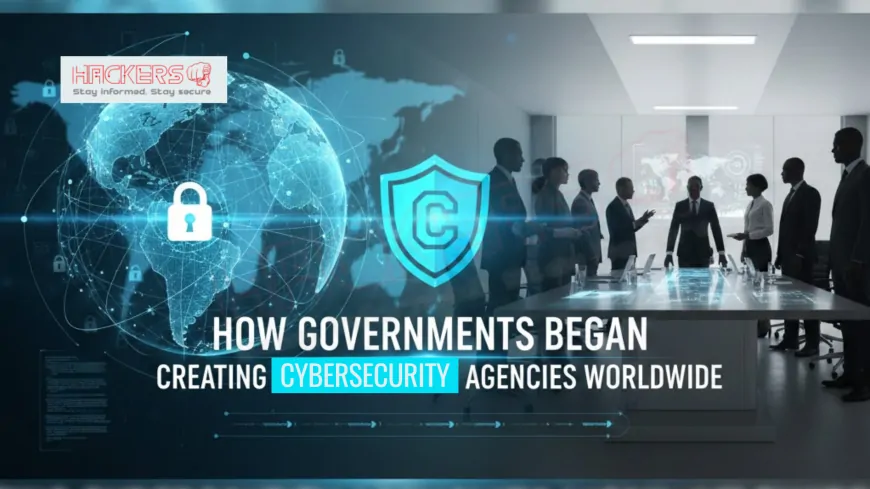
Table of Contents
- Before the 1990s: Hacking Was Just a Police Problem
- 1988–2000: Morris Worm and Y2K Force First Steps
- 2001–2003: 9/11 and the Birth of National Strategies
- 2007: Estonia Attack – The First “Cyber War”
- 2010: Stuxnet Shows Nation-States Are Playing Offense
- 2010s–2020s: The Worldwide Wave of Agencies
- Today: What These Agencies Actually Do
- Timeline of Major Government Cybersecurity Agencies
- Conclusion
- Frequently Asked Questions
Before the 1990s: Hacking Was Just a Police Problem
In the 1970s and 1980s, computer crime was rare. When it happened, regular police or the FBI handled it like any other fraud. There were no special units, no 24-hour hotlines, and almost no international cooperation. The 1986 U.S. Computer Fraud and Abuse Act was one of the first laws, but enforcement was tiny.
1988–2000: Morris Worm and Y2K Force First Steps
- 1988 – Morris Worm shuts down 10% of the internet → DARPA funds CERT/CC at Carnegie Mellon (first official response team)
- 1998 – Y2K panic → U.S. creates the National Infrastructure Protection Center (NIPC) inside the FBI
- 2000 – ILOVEYOU virus costs $15 billion → governments realize viruses can cause national-level damage
2001–2003: 9/11 and the Birth of National Strategies
After the September 11 attacks, protecting “critical infrastructure” became a top priority. Computers controlled power plants, air traffic, and banks. President George W. Bush released the first National Strategy to Secure Cyberspace in 2003. The Department of Homeland Security (DHS) was created the same year and slowly absorbed cyber responsibilities.
2007: Estonia Attack – The First “Cyber War”
In April 2007, Estonia moved a Soviet-era statue. Russia-linked groups responded with three weeks of massive DDoS attacks that knocked out banks, newspapers, parliament, and emergency services. Estonia, one of the most digital nations on Earth, was paralyzed. NATO and the EU realized that a cyberattack could cripple a country without firing a shot. The attack became the turning point for Europe.
2010: Stuxnet Shows Nation-States Are Playing Offense
Stuxnet, discovered in 2010, was a worm that physically destroyed Iranian nuclear centrifuges. It was built by the U.S. and Israel. For the first time, everyone understood that governments were not just defending – they were attacking too. Defense had to get much stronger and faster.
2010s–2020s: The Worldwide Wave of Agencies
- 2014 – UK creates National Cyber Security Centre (NCSC)
- 2016 – Germany launches Federal Office for Information Security upgrades
- 2017 – Singapore, Australia, Japan, India all launch or expand agencies
- 2018 – U.S. elevates Cyber Command to full combatant command
- 2019 – EU Cybersecurity Act creates ENISA as a permanent agency
- 2020s – Brazil, South Africa, Saudi Arabia, and dozens more follow
Today: What These Agencies Actually Do
- Run national CERTs and 24/7 watch centers
- Help companies and citizens during ransomware attacks
- Write rules for hospitals, power companies, and banks
- Train the next generation of cyber experts
- Share threat intelligence with other countries
- Sometimes conduct offensive operations (military cyber commands)
Timeline of Major Government Cybersecurity Agencies
| Year | Country / Organization | Agency or Milestone |
|---|---|---|
| 1988 | USA | CERT/CC founded after Morris Worm |
| 1998 | USA | National Infrastructure Protection Center (NIPC) |
| 2003 | USA | National Cybersecurity Strategy + DHS takes role |
| 2008 | Estonia | Cyber Defence Centre (after 2007 attacks) |
| 2010 | UK | Office of Cyber Security |
| 2014 | USA | CISA created inside DHS |
| 2016 | UK | National Cyber Security Centre (NCSC) |
| 2019 | EU | ENISA becomes permanent EU cybersecurity agency |
| 2021 | Singapore | Cyber Security Agency upgraded |
Conclusion
Less than forty years ago, almost no government on Earth had a single person whose full-time job was “cybersecurity.” Today, thousands of people in over 100 countries wake up every day to protect power plants, elections, hospitals, and citizens from digital attacks. That dramatic change did not happen because leaders love technology. It happened because real crises (the Morris Worm, Estonia 2007, Stuxnet, ransomware waves) proved that a successful cyberattack can hurt a nation as badly as bombs or invasions. The agencies born from those scares are now some of the most important defenders we have. They are still young, still learning, and still racing to keep up with new threats, but their existence shows one clear truth: the internet is no longer just a tool. It is the battlefield, the economy, and the nervous system of the modern world.
When was the first government cybersecurity team created?
1988 – CERT/CC in the USA after the Morris Worm.
What does CERT stand for?
Computer Emergency Response Team (or Readiness Team).
Why was the 2007 Estonia attack so important?
It was the first time a country was paralyzed by cyberattacks for weeks.
What is CISA?
The Cybersecurity and Infrastructure Security Agency in the U.S. Department of Homeland Security.
Which country has the oldest national cyber agency?
The United States, starting with CERT/CC in 1988.
Does every country have a cybersecurity agency?
No, but over 100 do in 2025, and the number grows every year.
What triggered the UK NCSC in 2016?
Rising nation-state attacks and the need for one clear public voice on cyber.
Did 9/11 create cybersecurity agencies?
It greatly accelerated them by linking cyber to national security.
What is ENISA?
The European Union Agency for Cybersecurity, made permanent in 2019.
Are military cyber commands separate from civilian agencies?
Usually yes; civilian agencies protect society, military ones defend (and sometimes attack).
Why did Singapore invest so heavily in cyber?
It is a small, highly digital country with no natural resources except information.
Do these agencies only defend or do they attack too?
Civilian agencies focus on defense; military cyber commands may do both.
Who pays for national cybersecurity agencies?
Taxpayers, through defense, interior, or digital ministry budgets.
Did the Y2K bug help create agencies?
Yes, it forced governments to map critical systems and create response plans.
Can private companies ignore government cyber agencies?
They can, but most cooperate during major attacks or when required by law.
What was Stuxnet’s role?
It proved nation-states were building offensive cyber weapons.
Are cyber agencies allowed to read private emails?
Only with legal warrants or during declared emergencies, rules vary by country.
Which country has the newest major agency?
Many African and Latin American countries launched theirs in the 2020s.
Will we ever have a global cybersecurity agency?
Not yet; countries guard sovereignty, but they cooperate more than ever.
What is the most important job of these agencies today?
Helping hospitals and cities recover from ransomware attacks.
What's Your Reaction?