















How Does Blockchain Help Detect and Prevent Deepfake Fraud?
Imagine scrolling through your social media feed and seeing a video of a world leader announcing a major policy change, only to find out later it was a fake created by artificial intelligence. Or picture receiving a call from a loved one in distress, asking for money, but it turns out to be a deepfake audio scam. These scenarios are not science fiction; they are happening more frequently in 2025, as deepfake technology becomes easier to use and harder to spot. Deepfakes, which are AI-generated videos, images, or audio that mimic real people, are fueling a wave of fraud that costs billions and erodes trust in digital media. But there is hope on the horizon. Blockchain technology, best known for powering cryptocurrencies, is emerging as a powerful tool to fight back. By creating immutable records and verifying authenticity, blockchain can help detect and prevent deepfake fraud before it causes harm. In this blog post, we will explore how this works, breaking it down into simple steps so even beginners can understand. Whether you are concerned about personal scams or business risks, learning about blockchain's role could be a game-changer in our increasingly digital world.
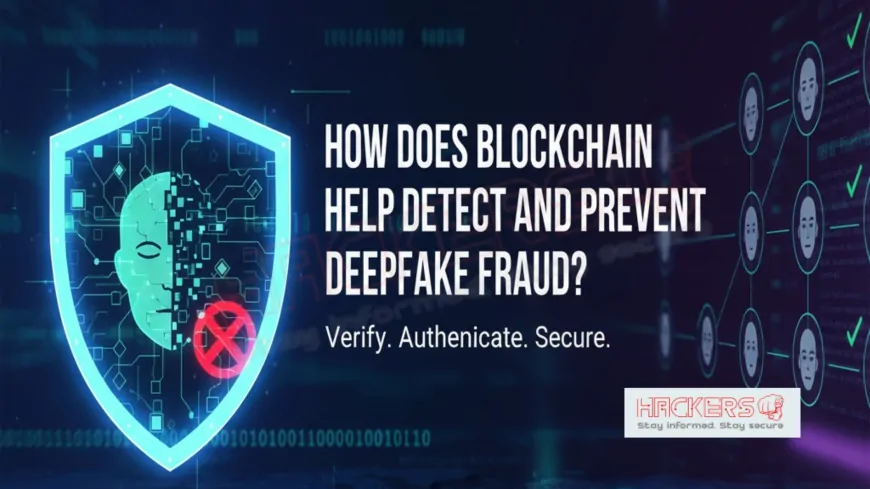
Table of Contents
- What Are Deepfakes?
- The Rise of Deepfake Fraud
- Blockchain Basics: What You Need to Know
- How Blockchain Detects and Prevents Deepfakes
- Integration with AI and Other Technologies
- Real-World Examples and Applications
- Challenges and Limitations
- Future Outlook in 2025 and Beyond
- Conclusion
- Frequently Asked Questions
What Are Deepfakes?
Deepfakes are synthetic media created using artificial intelligence to make it look or sound like someone is saying or doing something they never did. The term comes from "deep learning," a type of AI that analyzes patterns in data to generate realistic content. For example, software can swap faces in videos or mimic voices with scary accuracy. Tools like these have become widely available, allowing even amateurs to create convincing fakes.
At first, deepfakes were mostly used for fun, like putting celebrities into movie scenes. But criminals quickly saw the potential for fraud. They can create fake videos of executives approving shady deals or impersonate people in video calls to steal information. In banking, deepfakes might fool identity verification systems during account openings. The technology relies on machine learning models trained on real data, making fakes harder to detect with the naked eye.
Detecting deepfakes traditionally involves AI tools that look for inconsistencies, like unnatural blinking or audio mismatches. However, as deepfake creators improve, these detectors struggle to keep up. This cat-and-mouse game highlights the need for a more robust system, one that does not just spot fakes but proves what is real. That is where blockchain enters the picture, offering a way to anchor content in an unchangeable record.
Understanding deepfakes is crucial because their spread affects everyone. From political misinformation to personal scams, the risks are real. Reports from 2025 show a 3000 percent spike in fraud attempts using deepfakes, especially in North America. This surge demands innovative defenses, and blockchain provides a foundation for building trust in digital content.
The Rise of Deepfake Fraud
Deepfake fraud has exploded in recent years, driven by accessible AI tools and the growth of online interactions. In 2023, there were about 500,000 deepfake files circulating, but by 2025, that number has jumped to over 8 million. Criminals use them for everything from phishing scams to extortion. For instance, a scammer might create a deepfake video of a CEO to trick employees into transferring funds.
One major area hit hard is cryptocurrency and finance. Deepfake scams target crypto exchanges, where hackers impersonate trusted figures to lure users into fake investments. In 2025, these scams are part of a broader trend in crypto fraud, with blockchain analytics helping to trace stolen funds but prevention remaining key.
Businesses face risks too. Know-your-customer processes, or KYC, rely on video verification, but deepfakes can bypass them. This leads to synthetic identity fraud, where fake profiles are built using real-looking media. The financial toll is huge, with losses in the billions annually.
Socially, deepfakes spread misinformation, influencing elections or damaging reputations. Governments and companies are scrambling for solutions. While AI detection is useful, it is reactive. Blockchain offers a proactive approach by verifying originality at the source, reducing the chance for fakes to gain traction.
The rise underscores a need for layered defenses. Combining blockchain with other tech creates a stronger barrier against this evolving threat.
Blockchain Basics: What You Need to Know
Blockchain is a digital ledger that records information across many computers, making it decentralized and secure. Think of it as a chain of blocks, each holding data like timestamps or hashes, which are unique digital fingerprints. Once added, blocks cannot be altered without changing the entire chain, which requires network consensus.
The technology uses cryptography to protect data. Public and private keys allow secure transactions, and consensus mechanisms, like proof-of-work or proof-of-stake, ensure agreement among participants. This setup makes blockchain tamper-proof and transparent.
While famous for Bitcoin, blockchain has uses in supply chains, voting, and now, content verification. For deepfakes, it can timestamp media creation, proving when and how something was made. Hashes stored on the blockchain let anyone check if content has been altered.
In simple terms, blockchain acts like an unforgeable certificate of authenticity. It does not create content but verifies it, helping separate real from fake in a world full of digital deception.
How Blockchain Detects and Prevents Deepfakes
Blockchain helps in several ways. First, through immutable timestamps. When content is created, its details are recorded on the blockchain with a timestamp. This proves the original creation time, making it hard for deepfakes to mimic authenticity. If a video claims to be from a certain date but the blockchain shows otherwise, it is likely fake.
Second, digital hashing. A hash is a unique code generated from the content. Stored on the blockchain, it allows verification. If the content changes, the hash does not match, flagging alterations. This is useful for videos or images, where even small edits show up.
Third, digital signatures. Creators sign content with private keys, linking it to their identity. Viewers verify with public keys. This ensures the source is genuine, preventing impersonation.
Fourth, decentralized storage. Instead of central servers vulnerable to hacks, data is spread across nodes. This reduces breach risks and ensures records stay intact.
Fifth, integration with content platforms. Blockchain-based systems can require verification before posting, blocking unverified media.
These methods shift focus from detection to prevention, building trust from the start.
Integration with AI and Other Technologies
Blockchain alone does not detect deepfakes; it works best with AI. AI analyzes media for anomalies, like mismatched lip movements, while blockchain verifies origins. This combo is powerful for KYC in finance, where AI spots fakes and blockchain confirms identities.
Other integrations include watermarking, embedding invisible markers in content, hashed on blockchain. If altered, the watermark breaks.
Smart contracts automate processes, like releasing funds only after verified content. In journalism, blockchain timestamps articles, proving facts.
This synergy addresses limitations: AI adapts to new fakes, blockchain provides permanence. In 2025, tools like these are key in fighting fraud.
Real-World Examples and Applications
Several projects show blockchain in action. In crypto, platforms use blockchain forensics to trace deepfake scams, following funds across chains.
Companies like Elliptic provide analytics for scam detection in 2025. For media, systems timestamp content, aiding journalists.
In banking, AI-blockchain hybrids secure KYC, mitigating deepfake risks. Governments explore blockchain for secure IDs, preventing synthetic fraud.
One example is a 2025 report on crypto scams, where blockchain helps recover assets. These applications prove blockchain's practical value.
Challenges and Limitations
Blockchain has hurdles. Scalability: large networks slow down with high volumes. Adoption: not everyone uses it yet.
Privacy: public ledgers expose data, though private blockchains help. Cost: transactions can be expensive.
Integration: combining with AI requires standards. Human factors: users might ignore verifications.
New deepfakes could outpace tech. But ongoing research addresses these, making blockchain stronger.
Future Outlook in 2025 and Beyond
In 2025, blockchain-deepfake defenses will grow. More platforms will require verification, reducing fraud.
Regulations may mandate blockchain for sensitive media. AI advancements will enhance detection, paired with blockchain's immutability.
By 2030, widespread adoption could make deepfakes rare. The future is collaborative, with tech stacking for better security.
Conclusion
Blockchain offers a robust way to detect and prevent deepfake fraud through timestamps, hashes, signatures, and decentralization. Paired with AI, it creates a layered defense against this growing threat. While challenges exist, real applications show promise. As deepfakes evolve, embracing blockchain could restore trust in digital content, protecting individuals and society.
Frequently Asked Questions
What is a deepfake?
A deepfake is AI-generated media that mimics real people in videos, images, or audio.
How do deepfakes cause fraud?
They impersonate people to scam, spread misinformation, or bypass security checks.
What is blockchain?
Blockchain is a decentralized ledger that securely records data across computers.
Does blockchain detect deepfakes?
No, it verifies real content through records, not detecting fakes directly.
How does timestamping help?
It proves when content was created, spotting fakes with mismatched dates.
What is a hash?
A hash is a unique digital fingerprint of content, stored on blockchain for verification.
How do digital signatures work?
Creators sign content with private keys; viewers verify with public keys.
Why is decentralization important?
It spreads data, reducing risks from single breaches.
Can AI and blockchain work together?
Yes, AI detects anomalies, blockchain verifies origins.
What are smart contracts?
Self-executing codes on blockchain that automate verifications.
Are there examples in finance?
Yes, for secure KYC to prevent deepfake identity fraud.
What challenges does blockchain face?
Scalability, cost, and adoption are main issues.
Is blockchain expensive?
It can be, but efficiencies are improving.
Can deepfakes beat blockchain?
New ones might, but updates keep defenses strong.
What is watermarking?
Embedding markers in content, hashed on blockchain.
How many deepfakes exist in 2025?
Over 8 million files, up from 500,000 in 2023.
Does blockchain help in crypto scams?
Yes, by tracing funds and verifying identities.
What is synthetic identity fraud?
Creating fake profiles using real-looking deepfake media.
Will regulations help?
Yes, mandating verification could reduce risks.
Is blockchain user-friendly?
Apps are improving, making it accessible for beginners.
What's Your Reaction?