








How Clifford Stoll’s Tracking of Hackers Became a Landmark Case
Picture this: It's 1986, and the internet is still in its infancy, a clunky network mostly used by scientists and the military. At a national lab in California, an astronomer named Clifford Stoll stumbles upon a tiny accounting glitch, just 75 cents off in the books. What starts as a minor annoyance turns into a thrilling chase across phone lines, computers, and international borders. Stoll, with no formal training in security, becomes an unlikely detective, uncovering a hacker spying for the Soviet Union during the Cold War. His story, detailed in the book "The Cuckoo's Egg," not only caught a criminal but also woke the world to the dangers of cyber espionage. This blog post dives into how Stoll's dogged pursuit became a cornerstone in cybersecurity history, showing us that sometimes, the smallest clues lead to the biggest revelations. Even if you're new to tech, you'll see how this tale from the past shapes our digital defenses today.
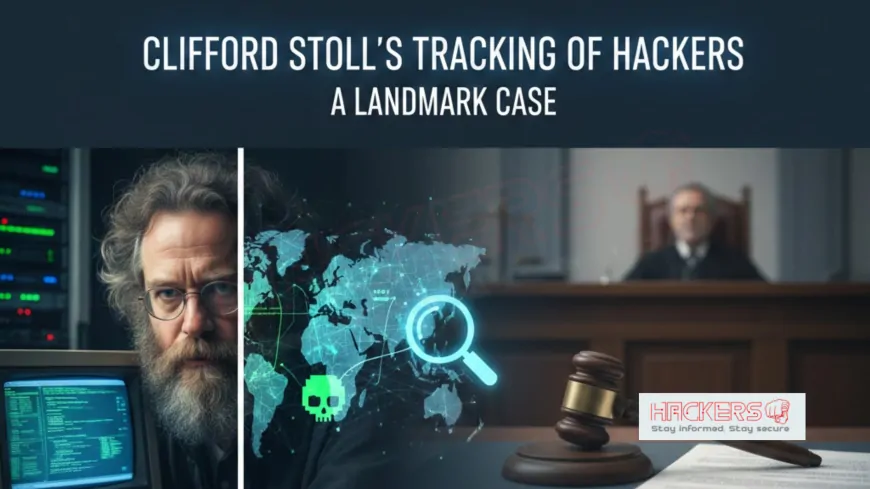
Table of Contents
- Who Is Clifford Stoll?
- The Spark: The 75-Cent Mystery
- Diving into the Investigation
- Tools and Techniques Used by Stoll
- The Hacker's Motives and Methods
- Escalating to Authorities
- The International Chase
- Setting the Trap: The Honeypot
- Unmasking the Culprit
- The Trial and Aftermath
- Why It's a Landmark Case
- Legacy and Lessons Learned
- Timeline of Key Events
- Conclusion
- FAQs
Who Is Clifford Stoll?
Clifford Stoll was not your typical cybersecurity expert. In fact, he was an astronomer by training, with a PhD from the University of Arizona. In the mid-1980s, he worked at the Lawrence Berkeley National Laboratory, or LBNL, in California. His job involved managing computer systems for research purposes, a role that put him in charge of tracking usage and billing for time on the lab's machines. Stoll was known for his quirky personality: He loved tinkering with gadgets, riding unicycles, and approaching problems with a mix of curiosity and persistence.
Back then, computers were big, slow, and connected through phone lines using modems. The internet as we know it didn't exist yet; instead, there were networks like ARPANET for academics and MILNET for the military. Security was an afterthought. Most systems had simple passwords, and many allowed guest access without any checks. Stoll's background in science made him methodical, which would prove crucial in his unexpected adventure. Little did he know that a small error in the accounts would launch him into a world of spies and hackers.
Stoll's story highlights how ordinary people can make extraordinary contributions. Without formal training in computer security, he relied on logic, observation, and a bit of luck. His work at LBNL was routine until that fateful day in 1986, but it set the stage for a pursuit that would change how we think about digital threats.
The Spark: The 75-Cent Mystery
It all began with a tiny discrepancy. In August 1986, Stoll's supervisor asked him to look into a 75-cent shortfall in the lab's computer usage logs. Users were billed for their time on the systems, and the records showed someone had used the computers without paying. At first, it seemed like a simple accounting error, perhaps a glitch in the software. But Stoll dug deeper and found that an unauthorized user had logged in using a stolen account.
This user had gained "superuser" privileges, meaning they could do anything on the system: read files, change settings, or even delete data. The intruder had exploited a vulnerability in a program called GNU Emacs, specifically in its movemail function, which allowed them to escalate their access. For beginners, think of superuser as having the master key to a building; once you have it, no door is locked.
Stoll could have just fixed the issue and moved on, but his curiosity got the better of him. He wondered who this person was and what they wanted. This small mystery sparked a ten-month investigation that would involve tracing connections across continents. The 75 cents was trivial, but it revealed a much larger problem: Someone was sneaking into sensitive networks, and no one knew why.
Diving into the Investigation
Once Stoll confirmed the intrusion, he didn't alert the intruder right away. Instead, he decided to watch and learn. He set up monitoring on the system, logging every keystroke the hacker made. This was risky; if the hacker noticed, they might disappear. But Stoll was careful. He used spare equipment from the lab to track the activity without disrupting it.
The hacker was methodical, logging in for short sessions, usually during midday Pacific Time. Stoll noted that the intruder was searching for military-related terms like "nuclear" or "SDI," which stood for Strategic Defense Initiative, a U.S. missile defense program. The hacker also tried to break into other connected systems, including military bases. This suggested the motive wasn't just mischief; it could be espionage.
Stoll's investigation was hands-on. He borrowed terminals and teleprinters from colleagues to monitor incoming phone lines. When the hacker connected, Stoll could see the line light up and trace it back. This old-school approach, combining technology with detective work, was key to his success. As he gathered more data, the puzzle pieces started fitting together, pointing to an international threat.
Tools and Techniques Used by Stoll
In the 1980s, there were no fancy cybersecurity tools like we have today. Stoll had to improvise. He used basic logging software to record the hacker's actions. He also employed a technique called "tracing," following the connection path from his lab to the source.
One clever method was attaching teleprinters to phone lines. These devices printed out data in real time, allowing Stoll to see exactly what the hacker was doing. He worked with Tymnet, a network service provider, to trace calls. Tymnet helped him see that the connection routed through a defense contractor called MITRE in Virginia.
Stoll also analyzed timing patterns. The hacker's sessions suggested they were in a time zone east of the U.S. East Coast, likely Europe. He confirmed this by noting the use of satellite links to West Germany. These techniques, though simple, were innovative for the time and laid the groundwork for modern digital forensics.
The Hacker's Motives and Methods
The hacker, later identified as Markus Hess, used several tricks to stay hidden. He exploited weak passwords and default accounts on systems. For example, many military computers had "guest" logins with no password. Hess would copy password files and use dictionary attacks, trying common words to crack them.
His motive was financial and ideological. Hess was part of a group selling information to the KGB, the Soviet intelligence agency. During the Cold War, this was big news: A hacker in West Germany spying for the East. Hess targeted U.S. military networks for secrets on weapons and strategies. Stoll discovered this by watching Hess search for specific terms and install "Trojan horses," programs that disguise themselves to steal data.
Understanding the hacker's methods helped Stoll anticipate moves. It showed how vulnerabilities in one system could lead to breaches in others, a lesson still relevant today.
Escalating to Authorities
As the evidence mounted, Stoll knew he needed help. He contacted the FBI, but they were initially uninterested because no major damage or theft had occurred. The CIA and NSA got involved when military connections were revealed, but there was confusion over jurisdiction. Who handles computer crimes across networks?
Stoll persisted, providing logs and details. The Air Force Office of Special Investigations joined in. This collaboration was messy at first, with agencies arguing over who led the case. But Stoll's documentation was crucial, convincing them of the threat's seriousness. This escalation marked one of the first times U.S. agencies coordinated on a cyber issue.
The International Chase
The trail led overseas. With Tymnet's help, Stoll traced the connection to West Germany. He worked with the Deutsche Bundespost, Germany's postal and telecom service, to pinpoint the calls. They narrowed it to a university in Bremen, then to Hanover.
This international aspect was groundbreaking. Cyber crimes don't respect borders, and Stoll's case showed the need for global cooperation. He communicated with German authorities, sharing evidence despite language barriers and time differences. The chase highlighted how connected the world was becoming through technology.
Setting the Trap: The Honeypot
To gather more evidence, Stoll created a "honeypot," a fake setup to lure the hacker. He invented a fictitious department called SDInet, complete with bogus files about the Strategic Defense Initiative. These documents looked real but were filled with nonsense.
The hacker took the bait, spending hours downloading them. This kept him online long enough for traces to complete. Even better, a Hungarian agent contacted the fake department, confirming the info was being sold to the KGB. The honeypot was a masterstroke, providing undeniable proof of espionage.
Unmasking the Culprit
With the traces complete, German police identified Markus Hess in Hanover. Hess was part of a hacker ring including Dirk Brzezinski and Peter Carl. They hacked for profit, selling data to the KGB for money and drugs.
Stoll's logs showed Hess had accessed over 30 U.S. military systems. This unmasking was thrilling; after months of work, the face behind the screen emerged. It proved that hackers, no matter how clever, leave trails.
The Trial and Aftermath
In 1990, Hess and his accomplices were tried in Germany. Stoll flew over to testify, presenting his logs and methods. Hess was convicted of espionage and sentenced to nearly three years, though he served less. The case set precedents for handling cyber crimes legally.
Afterward, Stoll wrote "The Cuckoo's Egg" in 1989, a bestseller that brought the story to the public. He continued in science but became a speaker on security, warning about digital risks.
Why It's a Landmark Case
Stoll's pursuit was landmark for several reasons. It was one of the first documented cases of cyber espionage, showing how computers could be weapons in international conflicts. It exposed vulnerabilities in networks, like poor passwords and unpatched software.
The case also demonstrated the value of individual initiative in security. Stoll's work led to better coordination among agencies and inspired laws on computer crimes. In a time when few understood the risks, it raised awareness that shaped the industry.
Legacy and Lessons Learned
Today, Stoll's story teaches us vigilance. Lessons include monitoring systems closely, using strong authentication, and collaborating across borders. His honeypot technique is standard in cybersecurity. The case reminds us that threats can come from anywhere, and curiosity can be our best defense.
In 2025, with AI and quantum computing, the principles remain: Watch for anomalies, trace them, and act. Stoll's legacy lives in every security professional who hunts threats.
Timeline of Key Events
Here's a table outlining the major milestones in Stoll's investigation:
| Date | Event |
|---|---|
| August 1986 | Stoll discovers 75-cent discrepancy at LBNL. |
| Fall 1986 | Sets up monitoring, traces to Tymnet and MITRE. |
| Winter 1986-1987 | Contacts authorities; traces to West Germany. |
| Spring 1987 | Creates honeypot with fake SDI files. |
| May 1987 | Hess identified and arrested in Hanover. |
| 1989 | "The Cuckoo's Egg" published. |
| 1990 | Hess convicted in Germany. |
Conclusion
Clifford Stoll's tracking of Markus Hess turned a small accounting error into a global wake-up call. From his makeshift lab setup to the international arrest, the case showcased the emerging threats in a connected world. It emphasized the need for better security practices, agency cooperation, and individual tenacity. As we face modern cyber challenges, Stoll's story reminds us that vigilance starts with noticing the little things. His landmark case paved the way for today's cybersecurity field, proving that one person's pursuit can protect us all.
What was the initial clue that started Stoll's investigation?
A 75-cent discrepancy in computer usage billing at LBNL in 1986.
Who was Clifford Stoll before the hacker chase?
An astronomer managing computer systems at a national lab.
What vulnerability did the hacker exploit?
A flaw in the movemail function of GNU Emacs to gain superuser access.
How did Stoll trace the hacker's connection?
By monitoring phone lines with terminals and working with Tymnet.
What time patterns helped identify the hacker's location?
Midday Pacific Time activity, suggesting Europe.
What was the hacker searching for?
Military terms like "nuclear" and "SDI."
Who was the hacker working for?
The KGB, selling stolen information.
What is a honeypot in this context?
A fake system or files to lure and trap the hacker.
Which agencies did Stoll contact?
FBI, CIA, NSA, and Air Force OSI.
Why was there initial reluctance from authorities?
No major financial loss or classified data stolen at first.
Where was the hacker based?
Hanover, West Germany.
What was Markus Hess convicted of?
Espionage, sentenced to nearly three years.
What book did Stoll write about the case?
"The Cuckoo's Egg," published in 1989.
Why is this case considered landmark?
One of the first documented cyber espionage incidents.
How many systems did the hacker access?
Over 30 U.S. military systems.
What technique did the hacker use to crack passwords?
Dictionary attacks on copied password files.
How long did the investigation last?
About ten months.
What role did the Deutsche Bundespost play?
Traced calls within Germany to Hanover.
What confirmed KGB involvement?
A Hungarian agent contacting the honeypot setup.
What lessons does the case teach today?
Importance of monitoring, strong passwords, and international cooperation.
What's Your Reaction?