














How Can Power Companies Detect Malware Before It Shuts Them Down?
It's 2:37 a.m. A control room operator notices something odd: a substation in a remote county just reported a voltage spike, then went silent. The system says everything is fine. But the operator’s gut says otherwise. Within minutes, alarms flood the screen. Transformers overheat. Circuit breakers open in sequence. A city of 300,000 people loses power. The cause? Not a storm. Not equipment failure. Malware. In today’s digital power grid, malware isn’t just a nuisance: it’s an existential threat. From ransomware locking billing systems to wipers erasing control logic, malicious code can turn lights off with a single click. But here’s the good news: power companies don’t have to wait for disaster. With the right tools, processes, and awareness, they can detect malware long before it triggers a shutdown. This blog walks you through practical, real-world strategies to spot threats early, written clearly for engineers, managers, and anyone who wants to keep the lights on.
Table of Contents
The Growing Malware Threat to Power Systems
Malware in power systems isn’t new, but it’s evolving fast. In 2015, the BlackEnergy malware helped Russian hackers shut down parts of Ukraine’s grid. In 2021, the Colonial Pipeline ransomware attack (though not a utility) showed how quickly operations can grind to a halt. And in 2023, a new strain called Pipedream was found targeting industrial control systems, including those in electric utilities.
Why power companies? Because the impact is massive. A single hour of downtime can cost millions. A day-long blackout disrupts hospitals, traffic, and commerce. And unlike banks or retailers, power systems can’t just “go offline” to fix a problem. They must stay running, even during an attack.
Malware types targeting utilities include:
- Ransomware: Locks files or systems until a ransom is paid
- Wipers: Deletes critical data or firmware
- Trojans: Hides in legitimate software to open backdoors
- Logic Bombs: Triggers destructive actions at a specific time or condition
The goal isn’t always theft. Sometimes it’s disruption. Nation-state actors, criminals, and even insiders use malware to sabotage, extort, or send a message.
How Malware Gets Into Power Company Networks
Malware doesn’t magically appear. It walks through open doors. Here are the most common entry points:
- Phishing Emails: An employee clicks a fake invoice. Malware downloads silently.
- USB Drives: A contractor plugs in a thumb drive to transfer logs. It’s infected.
- Third-Party Access: A vendor logs in remotely using weak credentials. Their laptop is compromised.
- Outdated Software: A control system running Windows XP has known flaws. Malware exploits them.
- Supply Chain Attacks: A software update from a trusted vendor contains hidden malware.
Once inside, malware spreads laterally: from the corporate network to the operational technology (OT) network that controls substations and generators. This crossover is dangerous because OT systems were never designed for internet-era threats.
Proven Methods to Detect Malware Early
Detection is about seeing the invisible. Malware hides, but it leaves traces. Here are the best ways to find it before it strikes:
| Detection Method | How It Works | Why It Matters for Power Companies |
|---|---|---|
| Signature-Based Scanning | Compares files to a database of known malware patterns | Fast and reliable for common threats like ransomware |
| Behavioral Analysis | Watches for unusual actions, like a program deleting system files | Catches new or unknown malware that signatures miss |
| Network Traffic Monitoring | Analyzes data packets for signs of command-and-control communication | Spots malware phoning home to a hacker’s server |
| File Integrity Monitoring | Alerts when critical files (like PLC logic) are changed | Detects wipers or logic bombs before activation |
| Endpoint Detection and Response (EDR) | Monitors every device for threats and allows remote isolation | Stops spread from a single infected laptop |
Power companies should use all of these in layers. One method catches what another misses. This is called defense in depth.
Tools and Technologies That Work
You don’t need a PhD to use modern malware detection. Here are tools that real utilities rely on:
- Next-Gen Antivirus (NGAV): Goes beyond signatures. Uses AI to spot suspicious behavior. Examples: CrowdStrike, SentinelOne.
- Security Information and Event Management (SIEM): Collects logs from all systems. Flags anomalies like logins at 3 a.m. from unknown IPs. Splunk and Elastic are popular.
- Intrusion Detection Systems (IDS): Watches network traffic. Snort and Suricata are open-source options tailored for OT protocols like Modbus and DNP3.
- Deception Technology: Plants fake files or servers. If malware touches them, an alert fires. Thinkst Canary and Attivo Networks lead here.
- OT-Specific Solutions: Dragos, Nozomi, and Claroty are built for industrial environments. They understand PLCs, RTUs, and SCADA without causing downtime.
Many utilities start small: deploy EDR on office laptops, then add OT monitoring in substations. Scale up as budget allows.
Building a Malware-Aware Culture
Technology is only half the battle. People are the first and last line of defense. Here’s how to train them:
- Phishing Simulations: Send fake emails monthly. Track who clicks. Retrain the ones who do.
- USB Policies: Ban personal drives. Use encrypted, company-issued ones only.
- Patch Cadence: Update office systems monthly. Test OT patches in a lab first.
- Red Team Exercises: Hire ethical hackers to try breaching your network. Learn from their path.
- Tabletop Drills: Simulate a ransomware attack. Practice who calls who, and when to isolate systems.
One mid-sized utility reduced phishing click rates from 30 percent to under 5 percent in a year through gamified training. Another caught a wiper because a technician noticed a file named “erase_all.bat” and reported it.
What to Do When Malware Is Detected
Detection without response is useless. Every power company needs an incident response plan:
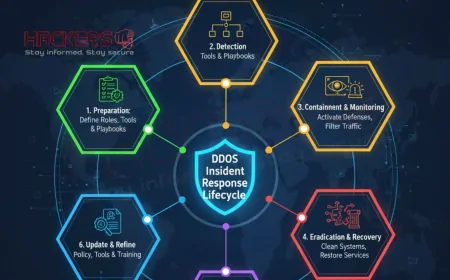
- Step 1: Contain – Isolate the infected device or network segment immediately.
- Step 2: Assess – Determine what the malware does. Is it spreading? Stealing data? Preparing to wipe?
- Step 3: Eradicate – Remove the malware. Restore from clean backups.
- Step 4: Recover – Bring systems back online safely. Monitor for re-infection.
- Step 5: Learn – Document what happened. Update policies and tools.
Have offline backups of critical control logic. Keep a “golden image” of every PLC configuration. And know how to switch to manual operations if SCADA fails.
The Future of Malware Detection in Power Systems
The future is proactive. AI will predict attacks by analyzing global threat data. Zero trust will replace “trust but verify” with “never trust, always verify.” Digital twins will let utilities test malware response in virtual grids.
New standards like IEC 62443 and NERC CIP are pushing mandatory detection capabilities. Regulators now require utilities to report cyber incidents within 72 hours. And sharing threat intelligence through groups like the Electricity ISAC is becoming standard.
But the best defense? Vigilance. Malware evolves, but so do we.
Conclusion
Malware doesn’t announce itself with fanfare. It creeps in quietly, waits patiently, and strikes when least expected. But power companies can fight back. By understanding how malware enters, deploying layered detection tools, training staff, and planning responses, utilities can catch threats before they cause chaos.
This isn’t about building an unbreakable wall. It’s about building a smart one: one that sees, learns, and adapts. The grid runs on electricity, but its safety now runs on awareness. Start today. Run a phishing test. Check your backups. Talk to your OT team. Because the next alarm might not be a false one. And when it rings, you’ll be ready.
What is malware in the context of power companies?
Malware is malicious software designed to harm, disrupt, or gain unauthorized access to computer systems, including those controlling power generation and distribution.
Can malware shut down an entire power grid?
Yes, if it reaches critical control systems and issues false commands, like opening breakers or overloading equipment.
What was the Ukraine grid attack?
In 2015 and 2016, hackers used malware to disconnect substations, causing blackouts for hundreds of thousands of people.
How does phishing lead to malware infection?
A fake email tricks an employee into clicking a link or opening an attachment, which downloads malware onto their computer.
What is OT versus IT in power systems?
IT is office systems (email, billing). OT is operational technology (SCADA, PLCs) that directly controls physical equipment.
Why can’t power companies just use regular antivirus?
Traditional antivirus can disrupt OT systems or miss industrial-specific malware. Specialized tools are needed.
What is a SIEM?
Security Information and Event Management: a system that collects and analyzes logs to detect threats.
Can USB drives really infect a power plant?
Yes. The Stuxnet worm spread via USB in air-gapped nuclear facilities.
What is behavioral analysis in malware detection?
It watches for unusual actions, like a program trying to modify PLC logic at midnight.
Should power companies allow software updates on control systems?
Yes, but only after thorough testing in a lab to avoid downtime.
What is a deception technology or honeypot?
A fake system that lures malware into revealing itself by interacting with it.
How often should backups be tested?
At least quarterly. A backup that can’t be restored is useless.
What is NERC CIP?
North American Electric Reliability Corporation Critical Infrastructure Protection: standards for securing the U.S. power grid.
Can AI really detect malware?
Yes. AI spots patterns humans miss, like subtle changes in network traffic.
What is a zero-day attack?
Malware that exploits a flaw before developers know about it or release a patch.
Who should lead malware response in a utility?
A cross-functional team: IT, OT, security, operations, and legal.
Is ransomware a real threat to power companies?
Absolutely. It can lock billing, customer data, or even control interfaces.
Can malware spread through smart meters?
Yes, if meters are compromised, malware can pivot into the utility’s network.
What is file integrity monitoring?
A tool that alerts when critical files are changed, helping catch wipers early.
How long does it take to recover from a malware attack?
Days to weeks, depending on backups, system complexity, and response speed.
What's Your Reaction?