












How Can Organizations Secure Their Supply Chain from Cyber Risks?
One quiet Friday in 2020, a small IT company in Texas updated a single piece of software. Within weeks, 18,000 organizations (including Fortune 500 companies and government agencies) were hacked. The attack is known as SolarWinds. The scary part? The hackers did not break into those 18,000 companies directly. They broke into one trusted supplier and rode the update straight into everyone’s network. Today, supply chain attacks are the fastest-growing threat in cybersecurity. Criminals and nation-state groups realized it is often easier to attack the “little guy” who has access to the “big guy” than to attack the big guy directly. This article explains, in plain language, why supply chain security matters and gives you practical steps any organization can start using tomorrow.
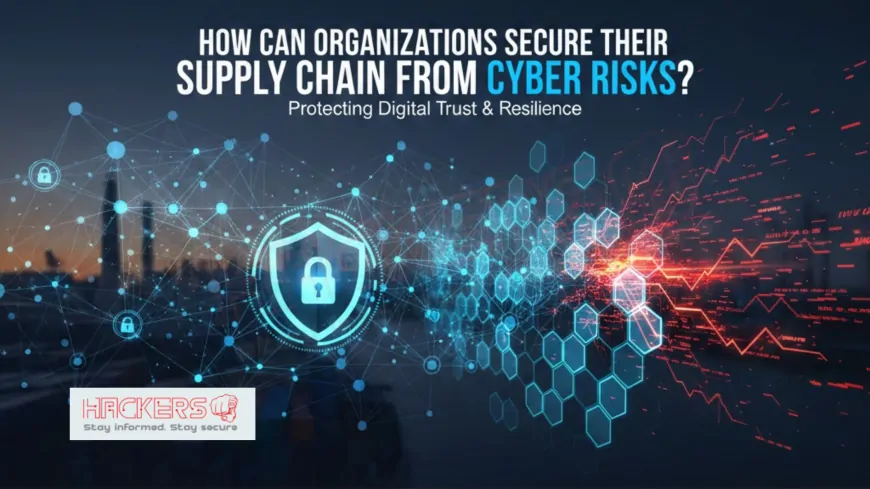
Table of Contents
Why Supply Chain Attacks Are Exploding
- Modern companies use hundreds or thousands of third-party vendors
- Many vendors have direct network access or privileged credentials
- Small vendors often have weaker security than large customers
- One successful compromise can give attackers thousands of new targets
- Nation-states (Russia, China, North Korea) now prefer supply chain over direct attacks
The Four Main Types of Supply Chain Attacks
| Attack Type | How It Works | Famous Example | Success Rate |
|---|---|---|---|
| Software supply chain (code tampering) | Malware inserted into legitimate update | SolarWinds 2020, Codecov 2021, XZ Utils 2024 | Very High |
| Managed Service Provider (MSP) breach | Hack the IT company that manages many clients | Kaseya 2021 (1,500+ companies hit) | High |
| Hardware supply chain | Malicious chip or firmware added during manufacturing | Bloomberg Supermicro story (disputed), Huawei concerns | Rare but devastating |
| Third-party data breach | Vendor loses credentials or API keys you use | Okta 2023, MOVEit 2023 (2,000+ organizations) | Very Common |
Famous Real-World Examples
- SolarWinds (2020) → Russian hackers → 18,000+ customers compromised
- Kaseya (2021) → REvil ransomware → 1,500+ companies encrypted in one day
- Log4j (2021) → Vulnerability in open-source library → millions of servers exposed
- MOVEit (2023) → Clop ransomware → 2,700+ organizations, 93 million people affected
- Okta identity breach (2023) → Attackers stole session tokens used by 100+ customers
How to Assess Your Own Supply Chain Risk
- List every vendor with access to your network, data, or systems
- Ask: “If this vendor is hacked tomorrow, what can the attacker reach?”
- Prioritize vendors with privileged access, large customer bases, or poor reputation
- Use free tools like BitSight, SecurityScorecard, or UpGuard for basic vendor ratings
12 Practical Controls Every Organization Can Use
- Inventory all third-party connections and review yearly
- Require multi-factor authentication (MFA) for every vendor login
- Never give standing admin rights – use just-in-time access
- Segment vendor access (they should only reach what they need)
- Enforce software bill of materials (SBOM) for critical software
- Use code signing and verify signatures on every update
- Monitor vendor breach news and have an off-boarding plan
- Include security requirements and right-to-audit clauses in contracts
- Deploy Zero Trust Network Access (ZTNA) for all third parties
- Ask vendors for SOC 2, ISO 27001, or similar reports
- Test your vendors – run your own phishing or penetration tests (with permission)
- Have an incident response plan that includes “what if a vendor is breached?”
Maturity Levels of Supply Chain Security
| Level | Description | % of Companies (2025) |
|---|---|---|
| Level 1 – Blind Trust | No vendor risk program | ~40% |
| Level 2 – Basic Questionnaire | Send annual security questionnaire | ~35% |
| Level 3 – Continuous Monitoring | Automated risk scoring + evidence review | ~20% |
| Level 4 – Zero Trust Supply Chain | No trust by default, just-in-time access, SBOMs | ~5% |
What Is Coming Next
- Governments will require SBOMs and vendor risk reporting (U.S. SEC rules 2024, EU NIS2 2025)
- Insurance companies already charge higher premiums for poor supply chain controls
- Software vendors will be legally liable for breaches caused by negligence
- AI-powered vendor risk platforms will become standard
Conclusion
Your organization is only as secure as the weakest link in your supply chain. The good news is that you do not need a huge budget to make a big difference. Start with visibility (know who has access), reduce trust (use MFA and least privilege), and prepare for the worst (have a vendor breach response plan).
Supply chain security is no longer optional. It is the new reality of doing business in a connected world. The companies that treat their vendors as extensions of their own network will survive the next big attack. The ones that don’t will make tomorrow’s headlines.
Start today. Your future self (and your board) will thank you.
What is a supply chain cyber attack?
It is when hackers compromise a third-party vendor or supplier to reach your organization indirectly.
Am I at risk if I am a small company?
Yes. Attackers love small vendors because they usually have weaker security but trusted access.
Which vendors are the riskiest?
IT/MSP providers, HR/payroll systems, cloud storage, and any software with privileged access.
Do I need to audit every single vendor?
No. Focus on the 5-20 that have the most access or impact first.
Is open-source software a supply chain risk?
Yes. Log4j and XZ Utils proved even free software can be weaponized.
What is an SBOM?
Software Bill of Materials – a list of every component in a piece of software, like an ingredients label.
Can insurance cover supply chain attacks?
Some policies do, but many now exclude attacks caused by unpatched or misconfigured vendors.
Should I stop using cloud services?
No. Major cloud providers are usually more secure than on-premises, but you still need to secure your part.
How often should I review vendors?
At least annually, and immediately after any major incident or contract renewal.
Is Zero Trust the answer?
It is the best framework. Never trust, always verify – even for vendors.
Do contracts actually help?
Yes. Include security requirements, right to audit, and breach notification within 24 hours.
What if a vendor refuses to share security details?
Consider switching or at least reducing their access and monitoring them closely.
Can I trust vendor security questionnaires?
Only partially. Many are self-attested. Ask for evidence (SOC 2 report, penetration test summary).
Are hardware supply chain attacks real?
Rare for most companies, but nation-state actors have done it.
Is there a free tool to monitor vendor risk?
Yes. BitSight, SecurityScorecard, and UpGuard offer free basic ratings.
Do I need a full-time supply chain security person?
Large companies yes. Small companies can assign it to an existing IT/security person.
What is the biggest mistake companies make?
Trusting vendors without verification and giving permanent admin access.
Will regulations fix this problem?
They help, but you cannot regulate your way out of needing good hygiene.
Can I outsource supply chain security?
Yes. Many managed security providers now offer vendor risk management as a service.
What is the first step I should take today?
Make a simple spreadsheet of every vendor that can touch your data or network. That list is your starting point.
What's Your Reaction?