















How Blockchain Forensics Helps Trace Cybercriminals Worldwide
Most people think cryptocurrency is anonymous and perfect for crime. In reality, Bitcoin and many other blockchains are completely public ledgers. Every single transaction is recorded forever and can be viewed by anyone. This transparency has created an entirely new field called blockchain forensics, and it has become one of the most powerful tools law enforcement has against cybercriminals. In the last five years alone, agencies have seized over $15 billion worth of cryptocurrency from ransomware gangs, darknet markets, fraud rings, and even nation-state hackers. From the 2021 Colonial Pipeline recovery to the 2024 takedown of major ransomware groups, blockchain forensics has turned what criminals thought was invisible money into one of the easiest trails to follow. This blog post explains, in simple language, what blockchain forensics is, how investigators actually do it, and why it is changing the fight against cybercrime worldwide.
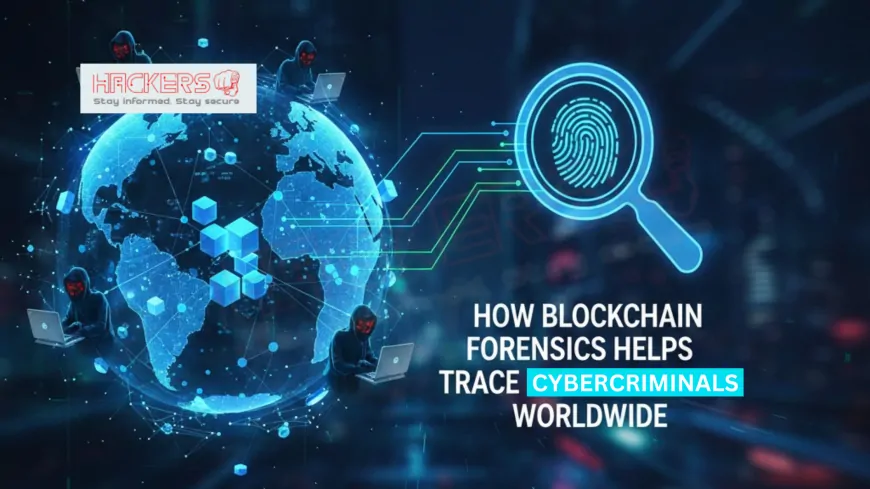
Table of Contents
- What Is Blockchain Forensics?
- Why Public Blockchains Are a Gift to Investigators
- The Main Tools Investigators Use
- Step-by-Step: How Investigators Trace Criminal Crypto
- Famous Cases Solved with Blockchain Forensics
- What About Privacy Coins and Mixers?
- Global Impact and International Cooperation
- The Future of Blockchain Forensics
- Conclusion
- Frequently Asked Questions
What Is Blockchain Forensics?
Blockchain forensics is the science of analyzing public blockchain data to track the flow of cryptocurrency. Investigators use special software to follow coins from wallet to wallet, identify patterns, cluster addresses that belong to the same person or group, and connect them to real-world entities like exchanges, merchants, or individuals. The three biggest companies doing this work are Chainalysis, Elliptic, and TRM Labs. Governments, police forces, and even many exchanges now use their tools daily.
Why Public Blockchains Are a Gift to Investigators
- Every transaction is permanent and public
- Addresses can be grouped (“this cluster of 10,000 addresses belongs to Binance”)
- Deposits to exchanges usually require KYC (Know Your Customer) identity
- Once one address is linked to a real person, the whole history becomes evidence
The Main Tools Investigators Use
| Tool / Company | What It Does | Used By |
|---|---|---|
| Chainalysis Reactor | Visual tracing and clustering | FBI, IRS, Europol, 1000+ agencies |
| Elliptic Lens & Navigator | Real-time risk scoring | Banks, exchanges, police |
| TRM Labs | Cross-chain tracing and sanctions screening | U.S. Treasury, many crypto businesses |
| Crystal Blockchain | Bitcoin and Ethereum focus | European police, Asian exchanges |
| Blockseer / WalletExplorer | Free public clustering tools | Journalists, researchers |
Step-by-Step: How Investigators Trace Criminal Crypto
- Start with a known criminal address (ransom payment, darknet market deposit, etc.)
- Follow outgoing transactions forward and incoming backward
- Cluster addresses that spend together (common-input-ownership heuristic)
- Label clusters when they touch exchanges with KYC
- Issue subpoenas to exchanges for real names and bank details
- Watch for “peel chains” and other laundering patterns
- Seize funds when they land on a compliant exchange
Famous Cases Solved with Blockchain Forensics
- Colonial Pipeline (2021): FBI traced ransom to a Bitcoin address controlled by DarkSide, seized $2.3 million
- Bitfinex 2016 hack (2022 arrest): Couple arrested after 6 years because one address linked to their real names
- Silk Road (2013-2023): Ross Ulbricht caught, later agents who stole Bitcoin also traced and jailed
- Twitter hack 2020: Teenagers traced in weeks via exchange KYC
- NetWalker ransomware (2021-2024): Multiple arrests in Canada, Bulgaria, and seizures of millions
- ChipMixer seizure (2023): German and U.S. police took down a major laundering service
- Bitcoin Fog (2024): Operator sentenced to prison after 10-year investigation
What About Privacy Coins and Mixers?
Criminals try to hide using:
- Monero (XMR): truly private by default
- Tornado Cash and other mixers
- Cross-chain bridges and privacy protocols
Investigators counter by:
- Timing analysis when coins enter/exit Monero
- Seizing mixer servers and logs (ChipMixer, Helix)
- Using advanced clustering even on mixed coins
- Waiting for criminals to make mistakes (cash out to KYC exchange)
Global Impact and International Cooperation
More than 70 countries now have dedicated crypto investigation units. Europol’s “Trace an Asset” program and the U.S. IRS-CI coordinate worldwide. When criminals move money across borders, investigators simply send requests to exchanges in any country. This has led to arrests in Russia, Ukraine, Germany, Canada, South Korea, and many more places that used to feel safe.
The Future of Blockchain Forensics
- AI and machine learning to spot new laundering patterns faster
- Real-time monitoring on all major chains
- Better tools for Monero and privacy protocols
- More exchanges sharing data voluntarily
- Possible regulation requiring all exchanges to keep records
Conclusion
Blockchain forensics has completely changed the game for catching cybercriminals. What started as an anonymous payment system has become one of the most traceable forms of money ever created. Every ransom payment, darknet purchase, or stolen fund leaves a permanent trail that trained investigators can follow. While privacy tools still exist, the combination of public ledgers, KYC exchanges, and international cooperation means most criminals eventually get caught when they try to spend or cash out their cryptocurrency. The message is clear: crime may pay in the short term, but the blockchain never forgets.
Frequently Asked Questions
Is Bitcoin really anonymous?
No, it is pseudonymous. Transactions are public and can be traced.
Which company does the FBI use most?
Chainalysis is the primary partner for U.S. law enforcement.
Can Monero be traced?
It is much harder, but investigators use timing and exchange on/off ramps.
How long do blockchain records last?
Forever. They are immutable.
What is clustering?
Grouping addresses that belong to the same person or entity.
How did they catch the Bitfinex hackers after 6 years?
One of the couple used an exchange with their real identity.
Are privacy coins illegal?
No, but many exchanges delist them under regulatory pressure.
Can criminals avoid tracing completely?
Very difficult if they ever want to spend the money in the real world.
What was the biggest seizure ever?
Over $3.6 billion from the 2016 Bitfinex hack recovered in 2022.
Do police need a warrant to trace Bitcoin?
No, because the blockchain is public information.
How do investigators know which cluster belongs to Binance?
Exchanges publish deposit addresses or are subpoenaed.
Why do criminals still use Bitcoin?
It is widely accepted and liquid, and many believe they can launder it.
Has any country banned blockchain forensics tools?
No, they are considered investigative software like any other.
Can I do blockchain forensics myself?
Yes, free tools like WalletExplorer and Blockchair let you trace basic flows.
What is a peel chain?
A laundering technique that sends most funds to a new address and “peels” off small amounts.
Do decentralized exchanges stop tracing?
They slow it down, but funds usually return to centralized services eventually.
How much crypto has law enforcement seized?
Over $15 billion worldwide since 2018.
Is Ethereum easier or harder to trace than Bitcoin?
Similar difficulty, but smart contract interactions can reveal more information.
Will privacy coins win in the end?
Unlikely for large-scale crime, because converting back to fiat almost always leaves a trace.
What is the best advice for victims of ransomware?
Report to police immediately; many ransoms have been recovered through tracing.
What's Your Reaction?