


























How Blockchain Can Stop Data Manipulation in Critical Infrastructure
Imagine a hacker quietly changes one number inside a power grid control system. The grid thinks a substation is running at 50 % load when it is actually at 98 %. Minutes later, transformers explode, a city goes dark, and millions lose power for days. This is not science fiction. In 2015 and 2016, Russia did exactly that to Ukraine’s electricity grid. In 2021, the Colonial Pipeline ransomware attack showed how fragile fuel supply can be. In 2024, Chinese hackers were caught inside U.S. water, port, and energy systems for months. The scariest part? In most cases, the operators did not even know their data had been altered until it was too late. In 2025, governments and companies are turning to blockchain, the same technology behind Bitcoin, to make sure that once a sensor reading, command, or log entry is recorded, no one on Earth can silently change it. This blog post explains in simple, human terms how blockchain is becoming the ultimate tamper-proof shield for power grids, water plants, railways, airports, and every system we cannot live without.
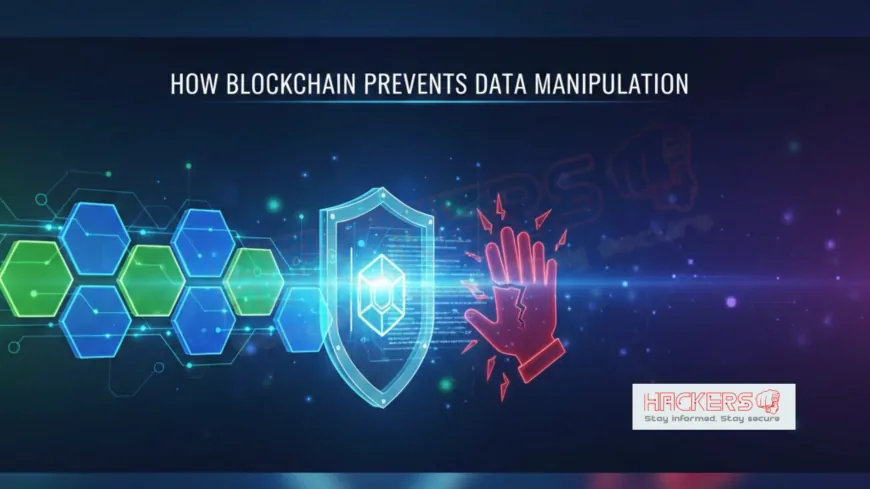
Table of Contents
- What Is Critical Infrastructure and Why Is It a Target?
- How Data Manipulation Happens Today
- How Blockchain Stops Manipulation Dead
- Five Real-World Uses in Critical Systems (2025)
- Traditional Systems vs. Blockchain-Protected Systems
- Real Projects and Countries Already Doing It
- Benefits Beyond Security
- Challenges We Still Face
- The Future: Fully Immutable Infrastructure
- Conclusion
- Frequently Asked Questions
What Is Critical Infrastructure and Why Is It a Target?
- Electricity grids, nuclear plants, oil and gas pipelines
- Water treatment and distribution
- Airports, railways, traffic control systems
- Hospitals and emergency networks
- Financial payment clearing systems
Nation-states attack them because taking one down can cause more damage than missiles, with less risk of retaliation.
How Data Manipulation Happens Today
- Hackers gain access to industrial control systems (ICS/SCADA)
- They change sensor values, logs, or commands
- Operators see fake “everything is normal” while damage builds
- Even insiders can alter records to hide mistakes
How Blockchain Stops Manipulation Dead
- Every sensor reading and command gets a cryptographic timestamp and hash
- The hash is written to a blockchain (often private/permissioned)
- Any change to the original data makes the hash mismatch instantly
- Thousands of independent nodes hold copies
- Even if every server is hacked, the historical truth remains provable
Five Real-World Uses in Critical Systems (2025)
- Immutable sensor logging for power grids
- Tamper-proof command authentication (only valid commands execute)
- Supply-chain integrity for spare parts and fuel
- Secure firmware and software updates
- Incident response and forensic proof after attacks
Traditional Systems vs. Blockchain-Protected Systems
| Risk | Traditional ICS/SCADA | With Blockchain Protection |
|---|---|---|
| Can sensor data be altered silently? | Yes | Detected instantly |
| Logs survive total compromise? | No | Yes |
| Prove what happened after an attack? | Hard or impossible | Cryptographic proof |
| Fake commands accepted? | Possible | Rejected without valid signature |
| Works offline? | Yes | Writes locally, syncs when possible |
Real Projects and Countries Already Doing It
- U.S. Department of Energy: 15+ blockchain pilots for grid resilience
- European Union ENISA and TIBER-EU frameworks include blockchain logging
- Australia: EnergySecure project with Power Ledger
- South20South Korea: Nuclear plant safety logs on blockchain
- Guardtime/NATO: Cyber defense for 32 countries
- Xage Security: Used by U.S. Air Force, Tampa water, and Saudi Aramco
- Israel Electric Corporation: Full grid sensor integrity
Benefits Beyond Security
- Faster insurance claims after incidents
- Lower regulatory fines (proof of compliance)
- Real-time anomaly detection
- Cheaper audits and forensics
- Trust between operators and regulators
Challenges We Still Face
- Legacy systems from the 1980s–1990s cannot connect easily
- Real-time performance requirements
- Key management in air-gapped environments
- Most solutions are private blockchains, not public
- Training engineers who grew up without this tech
The Future: Fully Immutable Infrastructure
- Every new power plant built with blockchain logging by default
- Global standards (IEC, IEEE) mandating immutable records
- Zero-trust grids where no command executes without on-chain proof
- Cross-border energy trading with provable integrity
- Public verification dashboards for citizens
Conclusion
Critical infrastructure is only as strong as the data it trusts. When that data can be silently changed by a hacker half a world away, blackouts, explosions, and chaos follow. Blockchain does not stop every attack, but it makes tampering detectable in seconds instead of months. In 2025, the countries and companies that have deployed it already sleep better. The ones that have not are playing Russian roulette with the systems that keep society running. The choice is simple: add a tamper-proof layer now, or explain later why the lights went out.
Frequently Asked Questions
Does blockchain need internet to work in a power plant?
No. Data is hashed locally and synced when connection returns.
Is this the same as Bitcoin?
No. These are private/permissioned blockchains with no public tokens.
Can it stop physical attacks?
No, but it proves exactly what happened afterward.
Who runs the blockchain nodes?
Utility companies, regulators, universities, and military in a consortium.
Is it expensive?
More than normal logging, but far cheaper than a major incident.
Does the U.S. government mandate it yet?
Not yet, but CISA and DOE strongly recommend it.
Can old systems use it?
Yes, with gateway devices that hash data without changing software.
Is Xage the main company?
One of the leaders, along with Guardtime, Chronicled, and Siemens.
Does it slow down the grid?
By microseconds. Only hashes are sent, not full data.
Can citizens check the blockchain?
Some projects offer public dashboards of grid health proofs.
Is Europe ahead of the U.S.?
Similar pace. Both have dozens of active projects.
What about quantum computers?
New systems use post-quantum cryptography.
Can water plants use it?
Yes. Florida and Singapore already do.
Does it replace firewalls?
No. It is a detection and integrity layer on top.
Who pays for it?
Usually the operator, sometimes with government grants.
Is it only for electricity?
No. Oil, gas, rail, aviation, and hospitals use it too.
Can attackers shut down the blockchain?
They can disrupt new writes, but old records remain forever.
Is there a global standard?
IEEE and IEC are finalizing them in 2025–2026.
Will my electric bill go up?
Possibly a tiny amount, offset by fewer outages.
When will it be everywhere?
New plants already include it. Full retrofit will take 10–20 years.
What's Your Reaction?