











How Does Blockchain Enable Secure Supply Chain Tracking?
Have you ever wondered where your morning coffee comes from, or if the diamonds in your engagement ring are ethically sourced? In today's global economy, supply chains are complex webs spanning continents, involving countless hands from farm to table or mine to market. But this complexity brings risks: fraud, counterfeiting, delays, and even safety issues like contaminated food. Traditional tracking methods, relying on paper trails and centralized databases, often fall short, leading to billions in losses each year. Enter blockchain technology. Famous for powering cryptocurrencies like Bitcoin, blockchain is now revolutionizing supply chains by providing a secure, transparent way to track goods every step of the way. By creating an unchangeable record that everyone can verify but no one can tamper with, blockchain helps ensure authenticity, reduces errors, and builds trust. In 2025, with the blockchain supply chain market projected to grow rapidly, companies like Walmart and IBM are already seeing benefits in tracing products from source to store. This blog post explains how blockchain enables secure supply chain tracking, using simple language so beginners can follow along. We will cover the basics, benefits, real examples, and more, showing why this technology is a game-changer for businesses and consumers alike.
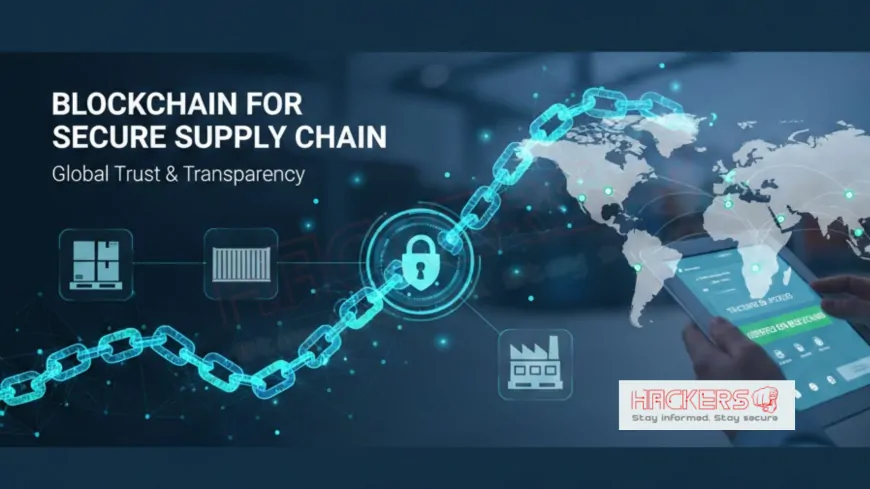
Table of Contents
- The Basics of Supply Chain Tracking
- Challenges in Traditional Supply Chains
- What Is Blockchain?
- How Blockchain Enables Secure Tracking
- Key Benefits of Blockchain in Supply Chains
- Real-World Examples
- How to Implement Blockchain Tracking
- Challenges and Solutions
- Conclusion
- Frequently Asked Questions
The Basics of Supply Chain Tracking
A supply chain is the journey a product takes from raw materials to the end consumer. It involves suppliers, manufacturers, distributors, retailers, and customers. Tracking means monitoring this journey to ensure everything goes smoothly. Good tracking helps spot issues like delays or defects early, saving time and money.
In simple terms, tracking records where a product is, who handled it, and its condition at each step. For example, in food supply chains, tracking ensures produce is fresh and safe. In electronics, it verifies parts are genuine.
Traditional tools include barcodes, RFID tags, and software like ERP systems. These work, but they have limits. Data can be siloed, meaning different parts do not share information well. Errors or fraud can slip in, like fake labels on counterfeit goods.
With global supply chains, involving many countries and regulations, tracking gets harder. The COVID-19 pandemic showed this, with disruptions causing shortages. Secure tracking is vital for resilience, and blockchain steps in to make it better by adding layers of security and transparency.
By understanding these basics, we see why improving tracking matters. It is not just about efficiency; it is about safety, trust, and sustainability in our connected world.
Challenges in Traditional Supply Chains
Traditional supply chains face several hurdles that blockchain can help overcome. One big issue is lack of transparency. With many players involved, it is hard to see the full picture. For instance, a retailer might not know if a supplier used ethical labor.
Fraud and counterfeiting are common. Fake products cost brands billions. In pharmaceuticals, counterfeit drugs endanger lives. Traditional systems rely on trust, which can be broken.
Inefficiency from paperwork and manual checks slows things down. Delays in verifying documents can hold up shipments. Errors in data entry lead to mistakes, like wrong inventory counts.
Compliance with regulations is tough. Different countries have different rules, and proving adherence requires lots of records that can be lost or altered.
Environmental concerns add pressure. Consumers want sustainable products, but tracking carbon footprints or waste is challenging without reliable data.
Security risks include data breaches. Centralized databases are vulnerable to hacks, exposing sensitive info. In 2025, supply chain attacks are rising, with cybercriminals targeting weak links.
These challenges highlight the need for a better system. Blockchain addresses them by providing a shared, secure ledger that everyone can trust.
What Is Blockchain?
Blockchain is a digital technology that records information in a way that is secure and transparent. Think of it as a chain of blocks, where each block holds data like transaction details or product info. Once added, a block cannot be changed without altering the whole chain, which requires agreement from the network.
It is decentralized, meaning no single company or person controls it. Instead, copies exist on many computers, called nodes, around the world. This makes it hard to hack or tamper with.
Key features include immutability: data cannot be altered once recorded. Transparency: everyone can see the data, but privacy tools can hide sensitive parts. Cryptography: uses codes to secure information.
Smart contracts are self-running programs on blockchain that automate actions when conditions are met, like releasing payment when goods arrive.
Originally for cryptocurrencies like Bitcoin, blockchain now applies to voting, healthcare, and supply chains. In supply chains, it creates a single source of truth, where all parties see the same data in real time.
For beginners, blockchain is like a shared Google Doc that no one can edit without permission, and all changes are tracked forever. This builds trust without needing middlemen.
How Blockchain Enables Secure Tracking
Blockchain enables secure supply chain tracking by addressing traditional flaws. It starts with recording data at each step. When a product moves, like from farm to factory, details are added to a block: timestamp, location, handler.
Immutability ensures no one can change records later. If an insider tries to fake a shipment, the network rejects it. Transparency lets all parties verify data in real time, spotting issues fast.
Decentralization means no central database to hack. Data is spread across nodes, requiring massive effort to alter.
Smart contracts automate processes. For example, a contract pays a supplier only when goods are verified at the next stop, reducing fraud.
Cryptographic hashes fingerprint each block, linking them. Changing one breaks the chain, alerting everyone.
Integration with IoT devices, like sensors on shipments, feeds real-time data to blockchain for accurate tracking.
In essence, blockchain creates a tamper-proof, shared record that enhances security and efficiency in supply chains.
Key Benefits of Blockchain in Supply Chains
Blockchain brings many advantages to supply chain tracking.
Enhanced security: Immutability and encryption protect against tampering and breaches.
Improved transparency: All parties see the same data, building trust and reducing disputes.
Increased efficiency: Automation via smart contracts speeds up processes, cutting paperwork.
Better traceability: Track products from origin to end, aiding recalls or audits.
Cost savings: Fewer errors and fraud mean lower losses. The market is projected to grow to $3.2 trillion by 2026.
Sustainability: Verify ethical practices, like fair trade or eco-friendly sourcing.
Resilience: Decentralized data withstands disruptions better.
These benefits make blockchain a powerful tool for secure tracking.
Real-World Examples
Blockchain is already in use for supply chain tracking. IBM Food Trust, used by Walmart, tracks produce from farm to store. It reduces recall times from weeks to seconds, enhancing safety.
For diamonds, Everledger uses blockchain to verify authenticity, fighting counterfeits and ensuring ethical sourcing.
In pharmaceuticals, companies like Pfizer explore blockchain to track drugs, preventing fakes that endanger health.
AWS offers Track and Trace with Managed Blockchain for general use, showing versatility.
In waste management, IBM's system tracks recycling, ensuring transparency.
These examples show blockchain's practical impact across industries.
How to Implement Blockchain Tracking
Implementing blockchain starts with assessing needs. Identify pain points like fraud or delays.
Choose a platform: Public for transparency, private for control.
Integrate with existing systems using APIs.
Pilot on one product line, then scale.
Train staff on new processes.
Partner with experts like IBM for setup.
Monitor and adjust based on performance.
Implementation takes time, but benefits justify it.
Challenges and Solutions
Blockchain has hurdles. Scalability: Handles limited transactions per second. Solutions: Layer-2 tech for faster processing.
Cost: High initial setup. Start small to manage expenses.
Integration: With old systems. Use hybrid approaches.
Regulation: Varies by country. Stay compliant with legal advice.
Adoption: Partners may resist. Educate on benefits.
Data privacy: Public chains expose info. Use private or zero-knowledge proofs.
These can be overcome with planning.
Conclusion
Blockchain enables secure supply chain tracking by providing immutability, transparency, and automation. It solves traditional challenges like fraud and inefficiency, offering benefits in security and cost savings. Real examples from Walmart to IBM show its value. While implementation has obstacles, solutions exist. As supply chains grow complex, blockchain is key to security and trust.
Frequently Asked Questions
What is a supply chain?
A supply chain is the process of getting a product from raw materials to the consumer.
Why is tracking important?
Tracking ensures safety, efficiency, and authenticity of products.
What are traditional challenges?
Lack of transparency, fraud, inefficiency, and security risks.
What is blockchain?
A secure, decentralized digital ledger for recording data.
How does immutability help?
It prevents tampering with records.
What are smart contracts?
Automated code that executes when conditions are met.
How does decentralization secure tracking?
It eliminates single points of failure for hacks.
What benefits does it offer?
Security, transparency, efficiency, and cost savings.
Give an example.
Walmart uses IBM Food Trust to track produce.
How to implement it?
Assess needs, choose platform, pilot, and scale.
What is scalability issue?
Limited transactions per second; solved by layer-2.
Is it expensive?
Initial costs are high, but savings follow.
How does it help sustainability?
Verifies ethical and eco-friendly practices.
What is cryptography in blockchain?
Using codes to secure data.
Can small businesses use it?
Yes, with affordable platforms.
What is IoT integration?
Using sensors to feed real-time data to blockchain.
How does it reduce fraud?
By providing verifiable records.
What is a private blockchain?
A controlled network for specific users.
Does it improve compliance?
Yes, with transparent audits.
What is the market projection?
Growth to $3.2 trillion by 2026.
What's Your Reaction?