











How Do Cybersecurity Standards Protect Blockchain Startups?
Imagine you have just raised $20 million to build the next big decentralized finance app. Your code is beautiful, your token is live, and users are pouring in. Then one Tuesday morning you wake up to find $120 million gone because a junior developer left a private key in a public GitHub repository. This is not a hypothetical. It has happened to Parade, Ronin, Wormhole, and dozens of others. In 2025, over $3.8 billion has already been stolen from blockchain projects, most of them startups. The painful truth is that building on blockchain does not automatically make you secure. It makes you a bigger target. This is exactly why boring, old-fashioned cybersecurity standards (SOC 2, ISO 27001, NIST, CCSS, and others) are becoming the best friends of smart blockchain founders. They are not just checkboxes for enterprise clients. They are the difference between surviving your first year and becoming another cautionary tale. This blog post explains in simple language why standards matter, which ones actually help blockchain companies, and how following them can save your startup, your reputation, and your users’ money.
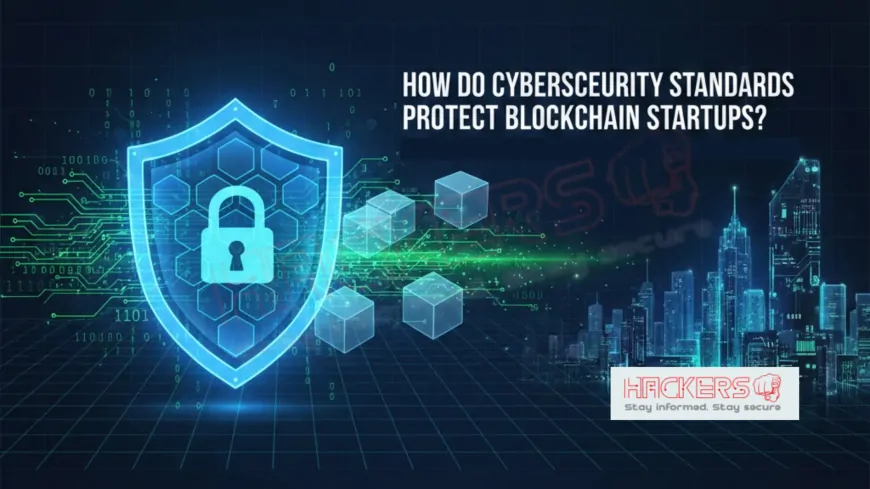
Table of Contents
- Why Blockchain Startups Are Especially Vulnerable
- What Are Cybersecurity Standards, Really?
- The Top 6 Standards Every Blockchain Startup Should Know
- How Standards Compare for Blockchain Companies
- Real Benefits (Beyond Just Looking Professional)
- Startups That Lived (or Died) Because of Standards
- How to Get Started Without Spending a Fortune
- The Future: Standards Written Specifically for Blockchain
- Conclusion
- Frequently Asked Questions
Why Blockchain Startups Are Especially Vulnerable
- Young teams with little security experience
- Code ships fast, often without proper review
- Private keys and admin functions in smart contracts
- Huge amounts of money accessible through one bug
- Open-source code means attackers study it 24/7
- Remote, distributed teams using personal laptops
- Pressure from investors to launch yesterday
What Are Cybersecurity Standards, Really?
Cybersecurity standards are agreed-upon checklists and processes created by experts, governments, or industry groups. They tell you exactly what you need to do to protect systems and data. Companies hire independent auditors who check if you actually follow the rules, then issue a public report or certificate.
The Top 6 Standards Every Blockchain Startup Should Know
| Standard | Full Name | Best For | Cost (approx.) | Time to Achieve |
|---|---|---|---|---|
| SOC 2 Type 1 & 2 | Service Organization Control 2 | U.S. enterprise clients, custodians | $30k–$120k | 4–12 months |
| ISO 27001 | International Information Security Standard | Europe, Asia, global enterprises | $40k–$150k | 6–18 months |
| CCSS | CryptoCurrency Security Standard | Wallets, exchanges, key management | $15k–$50k | 3–9 months |
| NIST CSF / 800-53 | National Institute of Standards and Technology | U.S. government contracts, defense | $20k–$80k | 6–15 months |
| PCI-DSS (if you touch cards) | Payment Card Industry Data Security Standard | On/off-ramp businesses | $50k+ | 6–12 months |
| CISA Zero Trust | U.S. Cybersecurity & Infrastructure Security Agency | Free guidelines, great for early startups | Free | Ongoing |
How Standards Compare for Blockchain Companies
| Need | SOC 2 | ISO 27001 | CCSS |
|---|---|---|---|
| Raise institutional money | Essential | Strong | Helpful |
| List on Coinbase/Binance | Often required | Accepted | Big bonus |
| Protect private keys | Basic coverage | Basic coverage | Deep crypto focus |
| Work with European banks | Good | Best | Less known |
Real Benefits (Beyond Just Looking Professional)
- Insurance companies offer lower premiums (or any coverage at all)
- Institutional investors and VCs open their checkbooks
- Big exchanges and custodians list you faster
- Your team actually learns secure habits (multi-sig, HSMs, code review)
- When a bug is found, you have incident response plans ready
- Users trust you more → higher TVL and volume
- You avoid the “we got hacked because we were early” excuse
Startups That Lived (or Died) Because of Standards
- Fireblocks, Ledger Vault, and Copper.co became multi-billion companies partly because they got SOC 2 and CCSS early
- Coinbase spent millions on compliance and is now a public company
- Many 2021-2023 DeFi projects with $100m+ TVL died in months because they ignored basic key management
- Aave, Compound, and MakerDAO all invested heavily in audits and operational security and survived multiple bear markets
How to Get Started Without Spending a Fortune
- Start with free frameworks: NIST CSF, CIS Controls, OWASP Top 10
- Use tools like Vanta, Drata, or Secureframe to automate 70 % of SOC 2 evidence
- Hire a part-time compliance lead instead of a big firm
- Get CCSS Level 1 or 2 first (cheaper and crypto-specific)
- Make security part of your culture from day one
The Future: Standards Written Specifically for Blockchain
- C4 (CryptoCurrency Certification Consortium) is expanding CCSS
- ISO TC 307 working on blockchain-specific security standards
- Enterprise Ethereum Alliance and Hyperledger security working groups
- Smart Contract Security Alliance (SCSA) creating common audit frameworks
Conclusion
Cybersecurity standards are not red tape. For blockchain startups they are armor. The projects that treat security as a core feature rather than an afterthought are the ones that survive hacks, bear markets, and regulatory scrutiny. In 2025, having SOC 2, ISO 27001, or CCSS is no longer optional if you want institutional capital, exchange listings, or simply to sleep at night. The good news is that the tools and playbooks are now mature and more affordable than ever. Build securely from day one, get the certifications that matter to your customers, and turn “we’re decentralized” from an excuse into a genuine strength.
Frequently Asked Questions
Do I really need certifications if my code is open source?
Yes. Open code helps find bugs, but operational security (keys, servers, people) is where most money is lost.
Which standard should I get first?
SOC 2 Type 2 if you’re U.S.-focused. ISO 27001 if you’re global. CCSS if you custody keys.
How much does SOC 2 really cost a startup?
$30k–$80k first year with automation tools, then $15k–$30k yearly.
Can’t I just do audits instead?
Smart contract audits are essential, but they don’t cover keys, servers, or employees.
Will investors fund me without compliance?
Retail yes. Professional VCs and funds increasingly say no.
Is CCSS recognized outside crypto?
Less than SOC 2 or ISO, but very respected inside the industry.
Do I need a full-time compliance person?
Not at first. Many startups use fractional consultants (10–20 hours/month).
Does being decentralized make standards easier?
No. You still have admin keys, treasuries, and upgrade functions.
Can I get insurance without SOC 2?
Rarely for meaningful amounts. Insurers love certifications.
How long is a SOC 2 report valid?
Type 2 covers a 6–12 month period and must be renewed yearly.
Are there free standards I can follow?
Yes. NIST CSF, CIS Controls, and CISA Zero Trust guidelines are free and excellent.
Do DAOs need compliance?
If they hold treasury funds or interact with regulated entities, yes.
Will standards slow down my team?
Short-term yes, long-term no. Secure processes save weeks of panic later.
Which auditor should I choose?
Top firms for blockchain: Deloitte, EY, PwC, KPMG, or boutique ones like Halborn, Trail of Bits.
Can I say I’m “SOC 2 compliant” before the report?
No. That’s a quick way to get sued. Say “in process” instead.
Do layer-2 projects need the same standards?
Yes, especially if they custody bridged assets or run sequencers.
Is compliance worth it for a $5 million project?
Absolutely. One hack can wipe you out completely.
Will regulators accept anything less in 2026?
Unlikely. MiCA in Europe and U.S. bills all reward certified companies.
Where can I see example SOC 2 reports?
Companies like Coinbase, Kraken, and Gemini publish redacted versions.
What is the fastest I can get certified?
4–6 months with good tools and focus. Most take 9–12 months.
What's Your Reaction?








![How to Prepare for RHCSA Exam on RHEL 10 [Complete Guide]](https://www.hackers4u.com/uploads/images/202508/image_430x256_68b051f191a14.webp)