



























How Cybersecurity Education Evolved From Basics to Specializations
Think about a time when computers were massive machines in locked rooms, and the idea of hacking seemed like science fiction. Fast forward to today, where cyber threats can strike from anywhere in the world, targeting everything from personal emails to national infrastructure. Cybersecurity education has come a long way to keep up with this changing landscape. It started with simple lessons on basic computer safety and has grown into a field full of specialized paths, like ethical hacking or digital forensics. This evolution reflects how our digital world has expanded, and with it, the need for smarter, more focused training to protect our information. In this blog post, we'll take a journey through the history of cybersecurity education. We'll look at its humble beginnings, key turning points, and how it now offers tailored specializations for different career goals. Whether you're a student considering a career in tech, a professional looking to upskill, or just curious about how we got here, this guide will break it down in easy terms. By the end, you'll see why staying educated in cybersecurity is more important than ever in 2025, as threats become more advanced with tools like artificial intelligence. Let's dive in and explore how education in this field has adapted to meet the demands of a connected world.
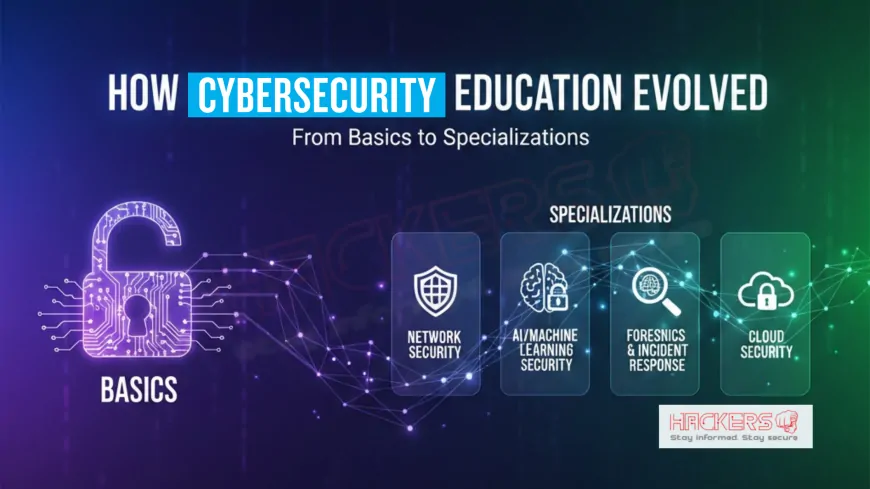
Table of Contents
- Early Beginnings: Basics in the 20th Century
- The Rise of Formal Education in the 1990s and 2000s
- Introduction of Frameworks and Standards
- Shift to Hands-On and Practical Training
- Emergence of Specializations
- Current State in 2025: Integrating AI and Beyond
- Future Directions in Cybersecurity Education
- Timeline of Key Milestones
- Best Practices for Learners Today
- Conclusion
- FAQs
Early Beginnings: Basics in the 20th Century
Cybersecurity education didn't start with fancy degrees or online courses. In the 1960s and 1970s, when computers were just becoming common in businesses and research labs, the focus was on basic protection. Think of it as learning to lock your door before leaving home. Early lessons came from computer scientists who shared ideas about securing data in shared systems. For example, the concept of passwords and access controls emerged as people realized multiple users on one machine could lead to unauthorized peeks at information.
One key moment was in 1971, when a programmer named Bob Thomas created the Creeper program, which moved between computers on a network. It wasn't harmful, but it showed how code could travel, sparking thoughts on defense. Soon after, Ray Tomlinson wrote Reaper to chase and delete Creeper, marking an early antivirus effort. These experiments weren't formal classes, but they laid the groundwork. By the 1980s, with personal computers spreading, education shifted to self-study. Enthusiasts read books or tinkered with code, learning about viruses through trial and error.
The 1988 Morris Worm changed everything. This program spread across the internet, slowing down thousands of machines. It wasn't meant to destroy, but it highlighted vulnerabilities. Universities began offering short workshops on network security, often as part of computer science programs. Governments got involved too, with the U.S. Department of Defense funding research. Education was basic: Understand threats like malware, use strong passwords, and update software. There were no specializations yet; it was all about grasping the fundamentals in a world where the internet was still young. This era set the stage for more structured learning as cyber threats grew with technology.
As we look back, these early days were about awareness. People needed to know that digital spaces, like physical ones, required safeguards. Without this foundation, the field couldn't have expanded. Today, we build on these basics, but back then, it was revolutionary just to teach that computers could be at risk.
The Rise of Formal Education in the 1990s and 2000s
By the 1990s, the internet boom turned cybersecurity from a niche interest into a necessity. Businesses went online, and so did threats. Education responded by becoming more formal. Universities launched dedicated courses within computer science departments. For instance, Purdue University started one of the first information security programs in 1998. These classes covered topics like encryption, which is scrambling data to keep it secret, and firewalls, virtual barriers that block unauthorized access.
Certifications emerged as a way to prove skills. The Certified Information Systems Security Professional (CISSP) launched in 1994, testing knowledge in areas like risk management. It became a standard for professionals. In the 2000s, degrees followed. Bachelor's and master's programs appeared, blending theory with practice. Community colleges offered affordable options, making education accessible. The focus shifted from just basics to understanding systems holistically.
Government initiatives helped. In the U.S., the National Security Agency designated Centers of Academic Excellence in 1999, recognizing schools with strong programs. This encouraged standardization. By the mid-2000s, education included case studies of real breaches, like the 2003 Slammer worm that disrupted global networks. Students learned not just what threats were, but how to respond. This period marked a transition: From ad-hoc learning to structured paths that prepared people for jobs in a growing field.
Enrollment surged as awareness grew. Reports showed cybercrimes costing billions, pushing more into the field. Education evolved to include ethics, teaching that security isn't just technical, but about responsibility. This era bridged basics to more advanced concepts, setting up for specializations as threats diversified.
Introduction of Frameworks and Standards
As cybersecurity matured, so did the need for consistent education. Enter frameworks like the National Initiative for Cybersecurity Education (NICE), launched in 2011 by the U.S. government.
Other standards followed. In 2013, the ACM/IEEE guidelines added Information Assurance and Security to computer science curricula, dividing topics into core and advanced.
These frameworks addressed gaps. Employers complained graduates lacked practical knowledge, so education incorporated them. For example, the Department of Labor's competency model complemented NICE, covering general to specialized skills. This standardization made education more effective, preparing students for real-world roles. It also promoted interdisciplinary approaches, pulling from law or business.
In Europe and elsewhere, similar efforts emerged, like the UK's Cyber Security Body of Knowledge in 2019. These tools evolved education from scattered courses to cohesive programs, paving the way for specializations by defining what "advanced" meant.
Shift to Hands-On and Practical Training
Gone are the days of pure lectures. By the 2010s, education emphasized practice. Virtual labs let students simulate attacks safely, like using tools to test network defenses. Platforms like Cybrary or Coursera offered interactive modules.
This shift came from industry feedback: Theory alone wasn't enough. Programs included capture-the-flag exercises, where teams solve security puzzles. Ethical hacking courses taught penetration testing, finding weaknesses before bad actors do.
The pandemic accelerated online learning, with remote labs becoming standard. In 2025, AI-driven simulations create realistic scenarios, adapting to student progress. This hands-on approach builds confidence and skills, bridging education to jobs.
Partnerships with companies provide internships, ensuring relevance. This evolution made learning engaging and effective, moving from basics to applicable knowledge.
Emergence of Specializations
As threats specialized, so did education. In the late 2000s, programs introduced tracks like digital forensics, analyzing evidence from breaches. The NICE framework helped by defining roles like threat analyst.
Graduate programs led the way. For example, specialties in cyber intelligence focus on predicting threats using data. Health care security addresses protecting patient data under laws like HIPAA. Data analysis specialization teaches handling logs with tools like SIEM systems.
This responded to demands. With IoT and cloud growth, experts in those areas emerged. Certifications like Certified Ethical Hacker (CEH) support these paths. Specializations allow deep dives without overwhelming basics, making graduates job-ready in niches.
Current State in 2025: Integrating AI and Beyond
In 2025, education integrates AI and machine learning. Courses teach using AI for threat detection, like spotting anomalies in traffic. Specializations include AI security, protecting against manipulated algorithms.
Diversity is key, with programs encouraging underrepresented groups. Online accessibility has exploded, with micro-credentials for quick upskilling. Industry collaborations ensure curricula match needs, like cloud security for AWS or Azure.
Statistics show demand: The field needs millions more professionals.
Future Directions in Cybersecurity Education
Looking ahead, education will use VR for immersive training and AI for personalized paths. Global standards will unify programs. Ethics and soft skills will gain prominence, alongside cross-disciplinary learning.
Continuous adaptation is essential, with updates for quantum threats. Inclusivity will drive innovation. The future promises dynamic, responsive education.
Timeline of Key Milestones
To visualize the evolution, here's a table of major milestones:
| Year | Milestone | Description |
|---|---|---|
| 1971 | Creeper Program | Early demonstration of self-spreading code, sparking basic security awareness. |
| 1988 | Morris Worm | First major internet worm, leading to initial formal workshops. |
| 1994 | CISSP Certification | Standard for professional skills, formalizing education. |
| 1999 | Centers of Academic Excellence | NSA program recognizing quality education. |
| 2011 | NICE Framework | Standardized skills and roles, enabling specializations. |
| 2013 | ACM/IEEE Guidelines | Integrated security into CS curricula. |
| 2020s | AI Integration | Courses on AI for security, advanced specializations. |
Best Practices for Learners Today
Start with basics like free online courses. Get certified in entry-level areas. Practice in labs. Network through communities. Stay updated with news. Consider specializations based on interests, like forensics if you like puzzles.
- Build a home lab for experiments.
- Join forums like Reddit's cybersecurity group.
- Pursue internships for real experience.
- Focus on ethics and soft skills.
Conclusion
Cybersecurity education has transformed from basic awareness in the 1970s to specialized programs today. Key frameworks like NICE guided this shift, while hands-on training and AI integration keep it relevant. As threats evolve, so does learning, emphasizing specializations like forensics or intelligence. This journey shows education's role in building a secure digital future. Whether starting out or advancing, embracing this evolution ensures you're prepared. Stay curious and proactive.
What were the early focuses of cybersecurity education?
Early education focused on basics like passwords, access controls, and understanding simple threats like viruses in shared computer systems.
When did formal cybersecurity degrees begin to appear?
Formal degrees started in the late 1990s and early 2000s, with programs like Purdue's in 1998.
What is the NICE framework?
NICE is a U.S. government initiative from 2011 that outlines cybersecurity roles, tasks, and skills to standardize education.
How has hands-on training changed cybersecurity learning?
It shifted from lectures to virtual labs and simulations, allowing safe practice of skills like ethical hacking.
What are some popular cybersecurity specializations?
Specializations include digital forensics, cyber intelligence, health care security, and threat hunting.
Why is AI important in 2025 cybersecurity education?
AI teaches threat detection and personalization, addressing advanced attacks using machine learning.
What role do certifications play in evolution?
Certifications like CISSP and Security+ provide proof of skills, evolving from general to specialized.
How do frameworks help with specializations?
They define categories like "Analyze" or "Protect," guiding programs to offer targeted tracks.
What future trends are expected?
Trends include VR training, global standards, and emphasis on ethics and soft skills.
Are there interdisciplinary elements in modern education?
Yes, incorporating law, business, and health care for comprehensive understanding.
How has the pandemic affected education?
It boosted online and remote learning, making hands-on labs accessible virtually.
What is ethical hacking in education?
It's teaching to find vulnerabilities legally, often through certifications like CEH.
Why focus on diversity in cybersecurity?
Diversity brings varied perspectives, fostering innovation and addressing skills gaps.
What are micro-credentials?
Short, focused courses or badges for quick skill-building in specific areas.
How to start in cybersecurity?
Begin with free basics online, then pursue certifications and hands-on practice.
What is digital forensics specialization?
It involves analyzing digital evidence from breaches, like recovering data from devices.
Why lifelong learning in this field?
Threats change rapidly, requiring continuous updates to stay effective.
What government roles in education?
Governments fund programs, set standards, and designate excellence centers.
How do industry partnerships help?
They provide real-world input, internships, and ensure curricula match job needs.
What is the Morris Worm's significance?
It was a 1988 event that highlighted internet vulnerabilities, spurring formal education.
What's Your Reaction?